IT Labor Market in 2025
71.6% companies rate their hiring pool as strong. At the same time, 53.7% struggle to find candidates with the required skills.
This contradiction defines the IT labor landscape in 2025: while talent is available, finding the right fit is increasingly challenging. Skills evolve faster than roles, salary expectations are rising, and hiring outcomes vary by specialization and timing. As a result, workforce decisions for IT service companies are becoming more complex each year.
This research was conducted by Techreviewer, an independent platform that analyzes and ranks IT service companies. We leverage a network of over 9,500 service providers to help IT services executives, owners, and HR leaders understand current hiring conditions and benchmark workforce strategies.
At the beginning of 2026, we analyze the results of 2025 to provide an up-to-date view of the IT labor market and its ongoing changes. This research is the second IT labor market report published by Techreviewer. The first study, IT Labor Market in 2024, explored hiring demand, retention approaches, labor market expectations, and more. This year’s report continues that work, allowing us to track how expectations and practices evolve over time.
In this report, readers will find:
- An assessment of talent availability, skill expectations, and hiring practices.
- A year-over-year view of hiring demand and recruitment pressure.
- An analysis of retention drivers, work models, and productivity.
- A forward-looking outlook on AI impact and demand for IT professionals in 2026.
Key Research Takeaways
- Talent availability is rated positively by 71.6% of companies, and technical interviews remain the dominant validation method, used by 94.0% of respondents.
- Upskilling and reskilling are standard operating practices that companies implement to get expertise, with 83.6% of respondents running internal development programs.
- Hiring demand shows high volatility, with 43.3% of companies reporting growth in 2025 and 26.8% reporting a decline.
- Recruitment pressure focuses on skill fit, with 53.7% of companies reporting difficulty finding candidates with the required expertise.
- Companies address hiring challenges primarily through internal capability building, led by training initiatives at 50.7% and remote work adoption at 49.3%.
- Most respondents view their implemented retention strategies as highly or moderately effective, with 77.6% rating their retention approach positively.
- Companies cite daily work conditions as the main drivers of worker retention, led by work-life balance at 61.2% and salary and benefits at 55.2%.
- Hybrid and remote work models dominate preferences, and productivity remains stable or improves for 79.1% of companies.
Methodology
This research is based on an online survey conducted in December 2025 among IT services companies.
We collected responses through Techreviewer’s internal network of service providers. The survey ran over the course of one month and targeted executives, owners, and senior decision-makers in IT services organizations.
In total, the study includes responses from more than one hundred IT services companies across multiple regions and company sizes. The questionnaire covered hiring demand, talent availability, recruitment practices, retention, work models, and expectations around AI and skills.
This report is built on our survey results. We add three external publications to strengthen the context and interpretation of the global job market, particularly regarding demand drivers, AI's impact, and skills.
- World Economic Forum – The Future of Jobs Report 2025. The World Economic Forum’s report serves as a global benchmark that examines the drivers in labor markets till 2030. The report aggregates views of 1,000+ global employers representing 14+ million workers across 55 economies.
- Gartner – 9 Future of Work Trends for 2026. Used as a practitioner lens for HR in 2026. This report provides information on how AI affects recruiting risks and talent practices. The report helps to assess modern factors that influence hiring and retention.
- Linux Foundation Research – 2025 State of Tech Talent Report. Used as a tech-talent benchmark for assessing skills gaps and workforce strategies: AI/ML, cloud, cybersecurity, upskilling, and how employers assess evidence of skills.
With the initial info settled, let’s move on to the research results on the IT job market.
Respondent & Company Profile
Respondent’s Role Within the Company
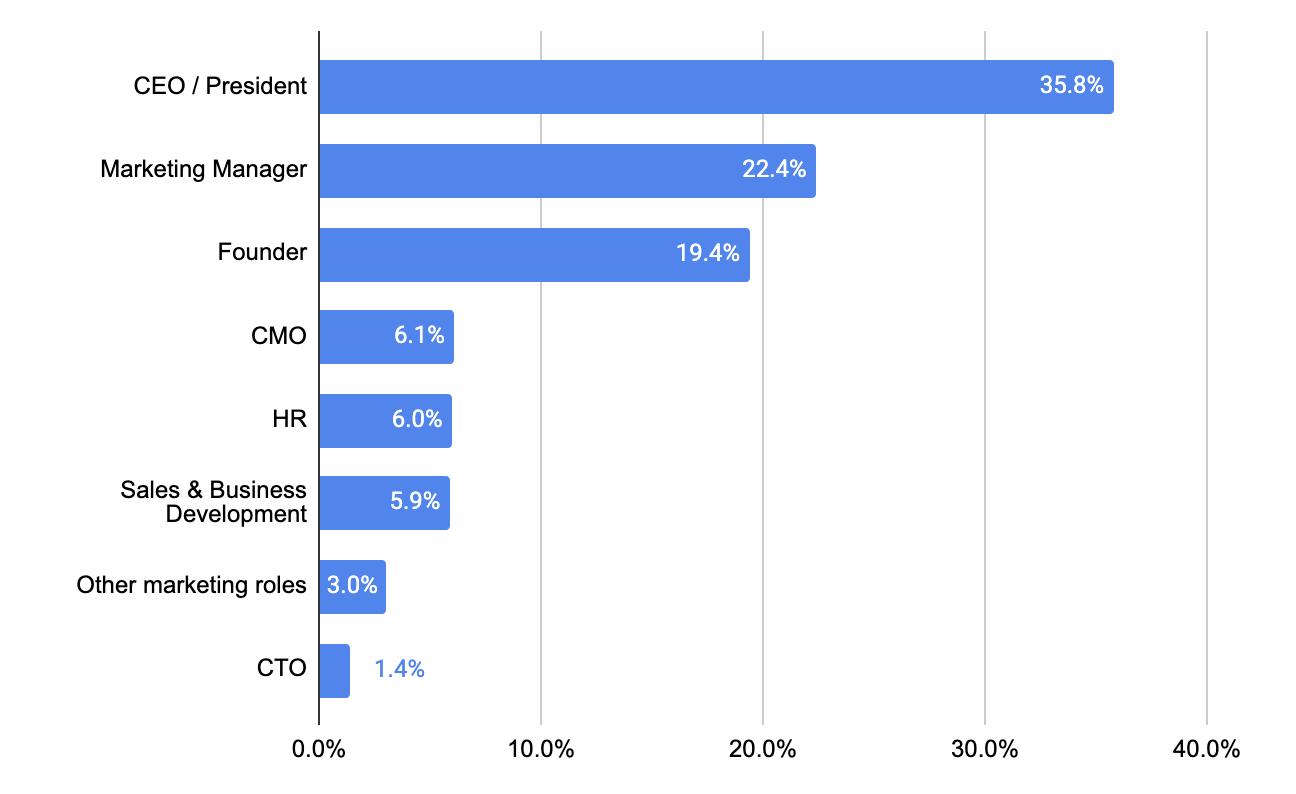
Overall, the data reflects a business-led view of the IT job market.
- Most respondents are owners and senior decision-makers, including CEOs and founders, accounting for 55.2% of the sample.
- Marketing roles account for 31.5% of respondents, covering managers, CMOs, and other marketing specialists.
- HR roles contribute 6.0% of responses.
- Sales and business development roles make up 5.9%, combining sales representatives and business development leads with a shared commercial focus.
- CTOs account for only 1.4% of respondents, so technical leadership is minimally represented in this review.
Overall, the data reflects a business-led view of the IT job market.
Experience Level of Survey Respondents
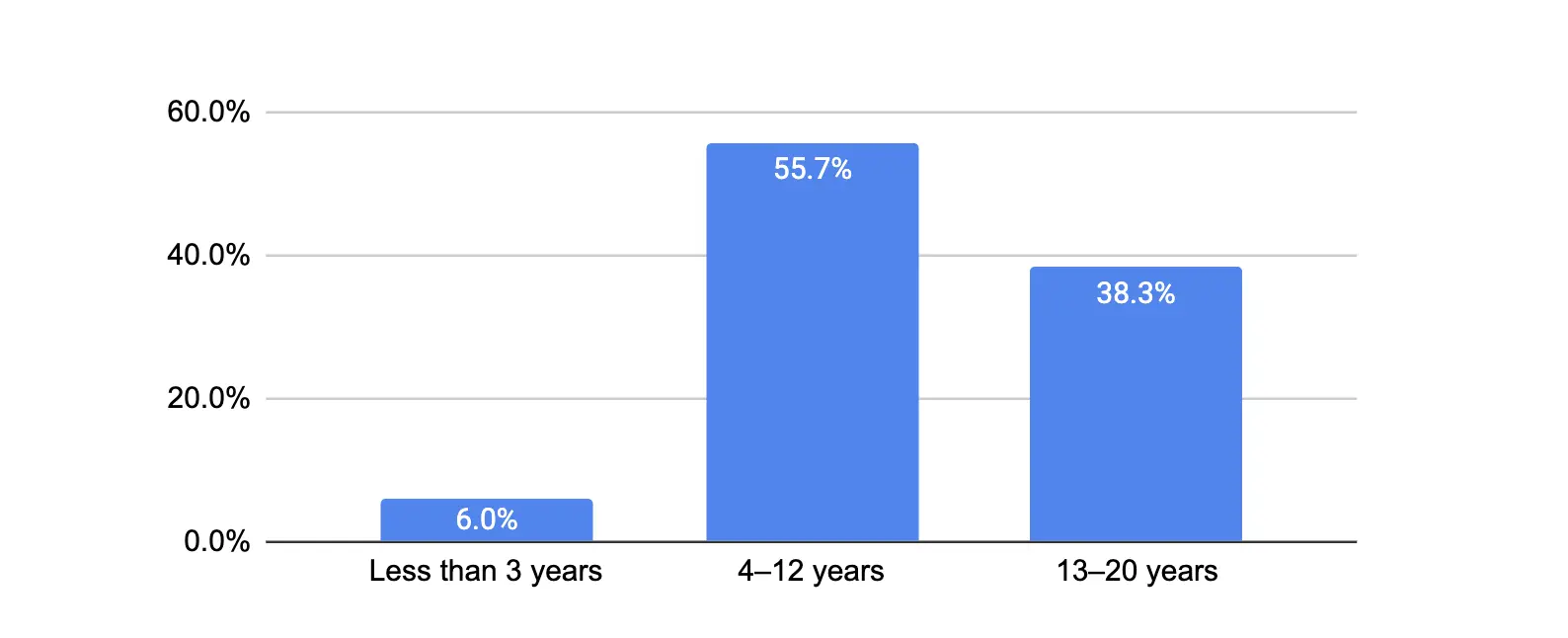
The survey primarily captured responses from experienced professionals.
55.7% of respondents report having 4-12 years of IT experience. Another 38.3% have 13-20 years. Early-career respondents are rare: 6.0% have under 3 years of experience.
Overall, 64.3% of respondents have more than eight years of IT experience, making the results more representative of mature, informed perspectives than entry-level views.
Company Size of Respondent Companies
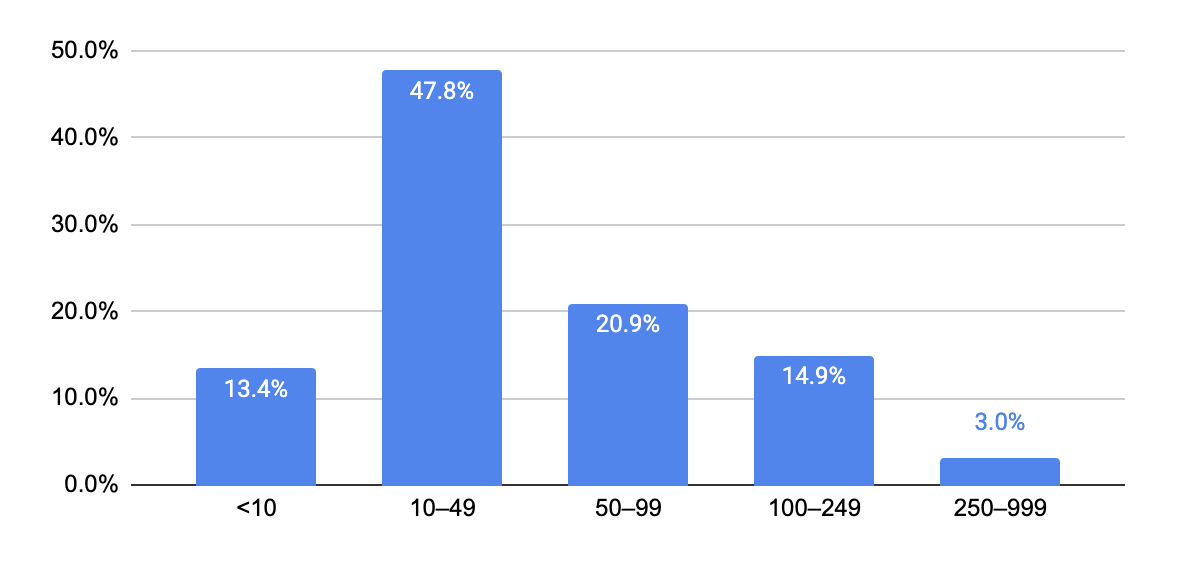
47.8% of respondents work in companies with 10-49 employees. Another 13.4% come from teams with fewer than 10 people.
Mid-sized companies are also well represented. 35.8% of companies fall into the 50–249 employee category, split between 50–99 employees at 20.9% and 100–249 employees at 14.9%.
Large companies are rare: 3.0% of respondents report 250-999 employees.
Geographic Distribution of Respondent Companies
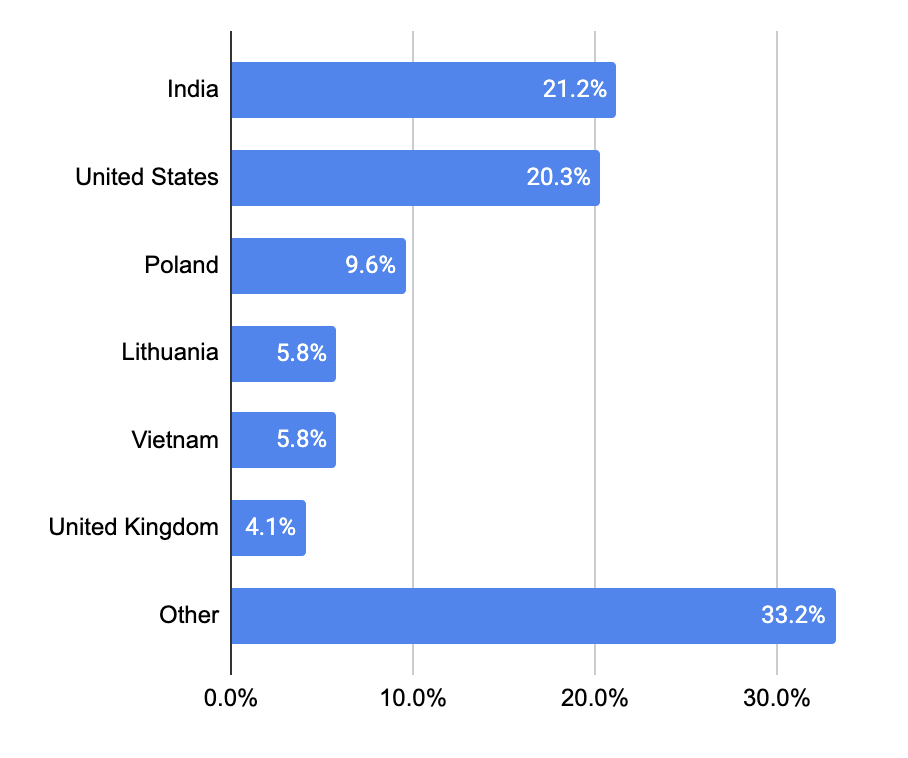
The survey has a broad international reach.
India accounts for 21.2% of respondents, and the United States for 20.3%, making them the two largest hubs and together representing over 40% of responses.
Europe is represented primarily by Poland (9.6%), Lithuania (5.8%), and the United Kingdom (4.1%). Vietnam contributes 5.8% and is the largest Asian hub outside India.
The remaining 33.2% of responses come from other European countries and the Asia-Pacific region, with smaller contributions from Latin America and the Middle East, each representing only a minor share individually.
Talent Availability & Skill Expectations
Key Insights:
- Respondents describe a hiring environment that functions but rarely feels easy. Candidates are generally available, as 71.6% of respondents support this view, while finding the right fit in seniority, skills, and salary often takes time.
- Assessment focuses on hands-on experience and practical knowledge. Technical interviews are the lead, with 94.0% of respondents using them, supported by coding tests and hands-on tasks. Portfolios add value, while certifications and references usually play a supporting role.
- Employers take a pragmatic approach to soft skills. They prioritize problem-solving at 37.3%, followed by communication and teamwork. Adaptability carries more weight than process-oriented traits.
- Upskilling has become part of standard practice. 83.6% of companies run learning programs and treat continuous development as a basic requirement for retention and competitiveness.
Satisfaction With Talent Availability
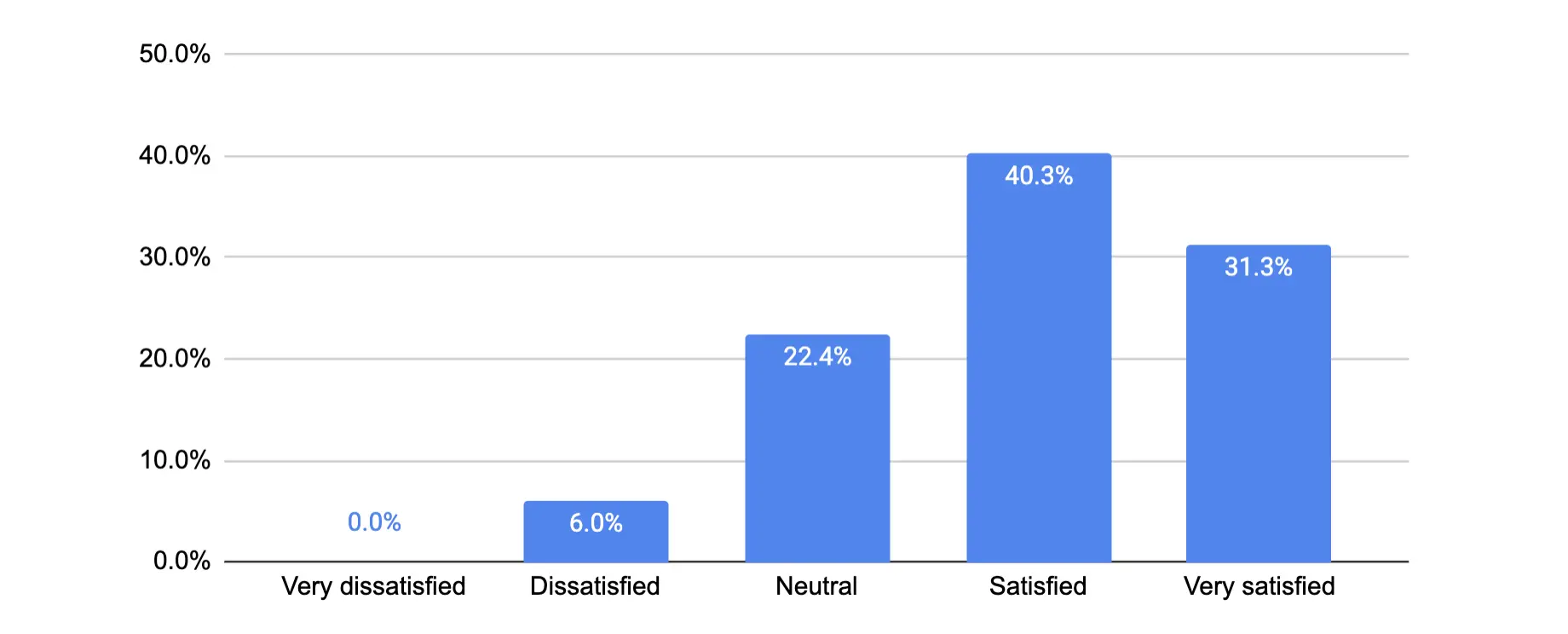
Respondents generally describe the availability of experienced specialists as satisfactory. 71.6% express satisfaction with their current hiring pool, indicating that qualified candidates are usually available.
At the same time, 22.4% of respondents report reservations, indicating recurring friction over skill fit, seniority, and salary expectations. These responses reflect a form of dissatisfaction rather than confidence in availability.
Clear dissatisfaction remains limited. Only 6.0% describe talent availability as poor, suggesting that severe shortages affect a relatively small share of companies.
Overall, companies view the hiring pool as workable. A large satisfied group coexists with a smaller dissatisfied segment, reinforcing the view that candidates are available, while smooth hiring remains uneven.
How Companies Evaluate Technical Skills
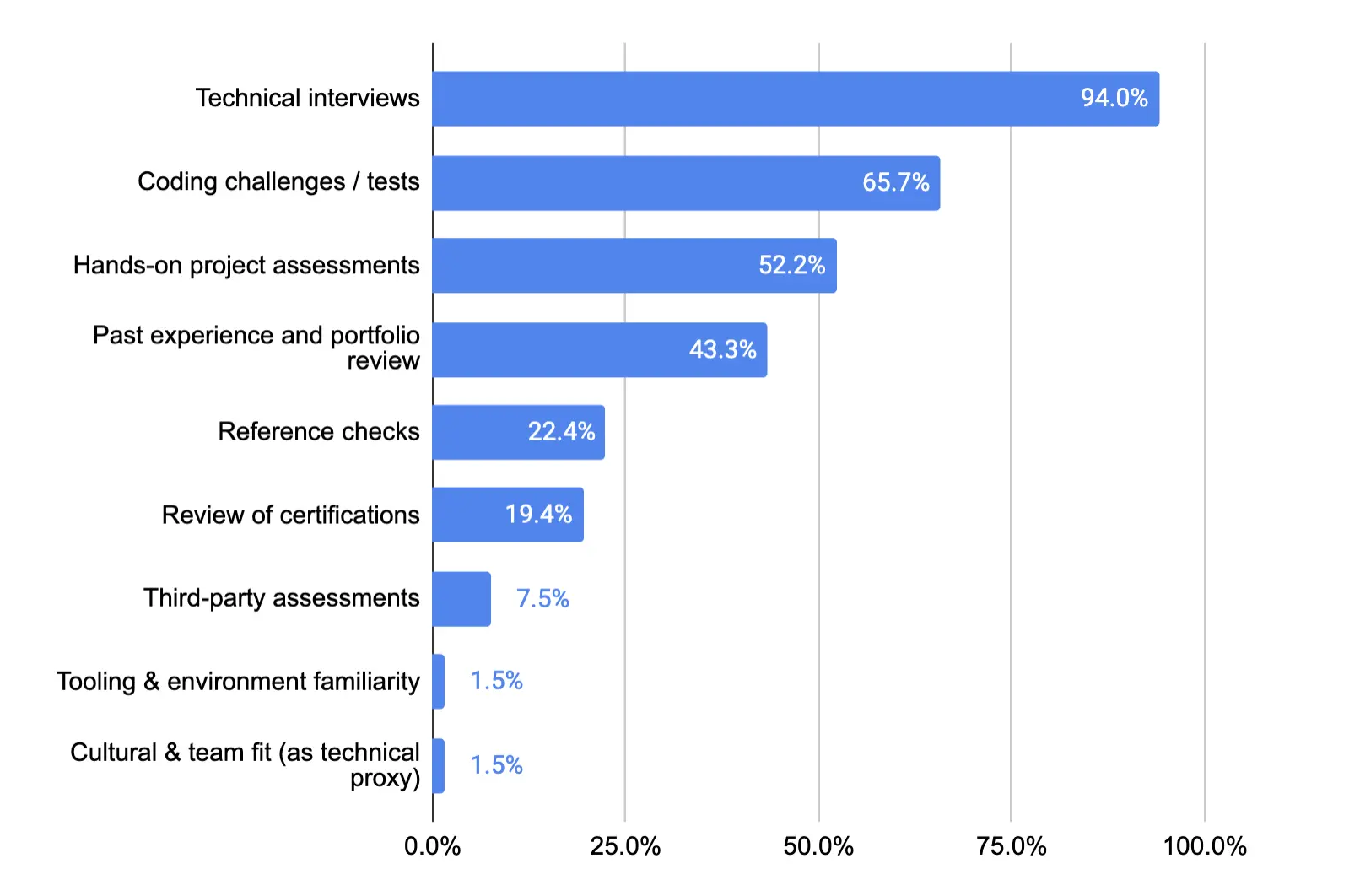
- Technical interviews dominate: 94.0% of companies use them as the primary filter.
- Many teams add proof-based checks. 65.7% run coding tests, and 52.2% use hands-on project assessments.
- Signals from past work are also standard: 43.3% of respondents review experience and portfolios to confirm real delivery.
- Certifications and reference checks play a secondary role, with 19.4% and 22.4% mentioning them, respectively.
- Third-party assessments remain uncommon, with 7.5% of respondents reporting use. Tooling familiarity and team fit as technical proxies appear rarely, each cited by 1.5%.
The pattern is clear: interview first, practice second, paperwork last.
Soft Skills Prioritized in Hiring
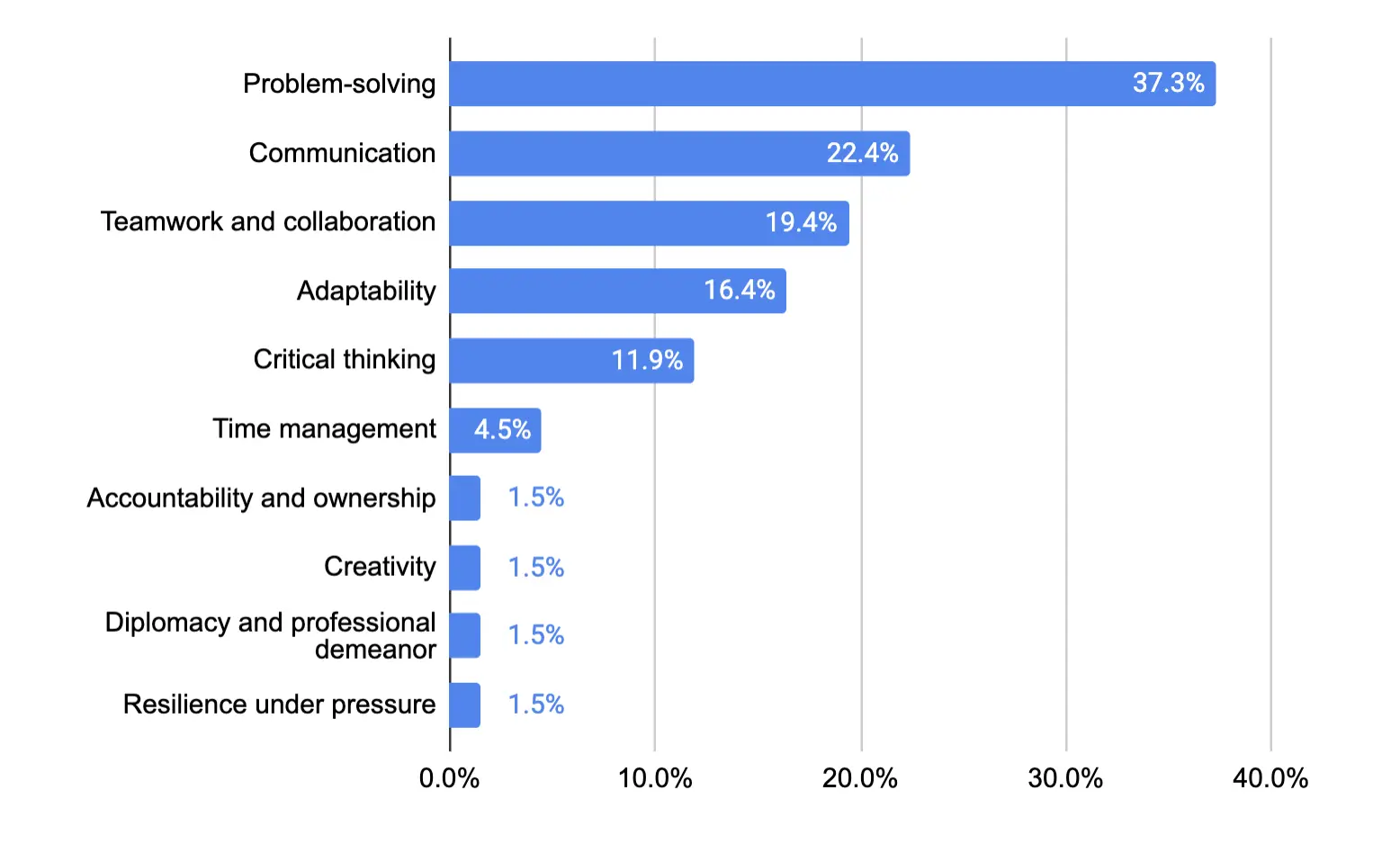
Soft-skill expectations focus on thinking and collaboration.
- Problem-solving comes first. 37.3% of respondents say employers prioritize the ability to work through new tasks, even when requirements shift, or obstacles appear.
- Communication and teamwork follow as common expectations, cited by 22.4% and 19.4% of respondents, respectively. These skills reflect the realities of distributed and cross-functional IT work.
- Adaptability and critical thinking reinforce the same demand. 16.4% of respondents cite adaptability, and 11.9% highlight critical thinking, signaling the need for engineers who can adapt quickly to new technologies and challenge weak assumptions when proposing solutions.
- Time management and similar process traits appear less often. Personality traits receive minimal attention across responses.
Overall, companies prioritize flexible thinking and team fit over individual personality traits.
Availability of Upskilling and Reskilling Programs
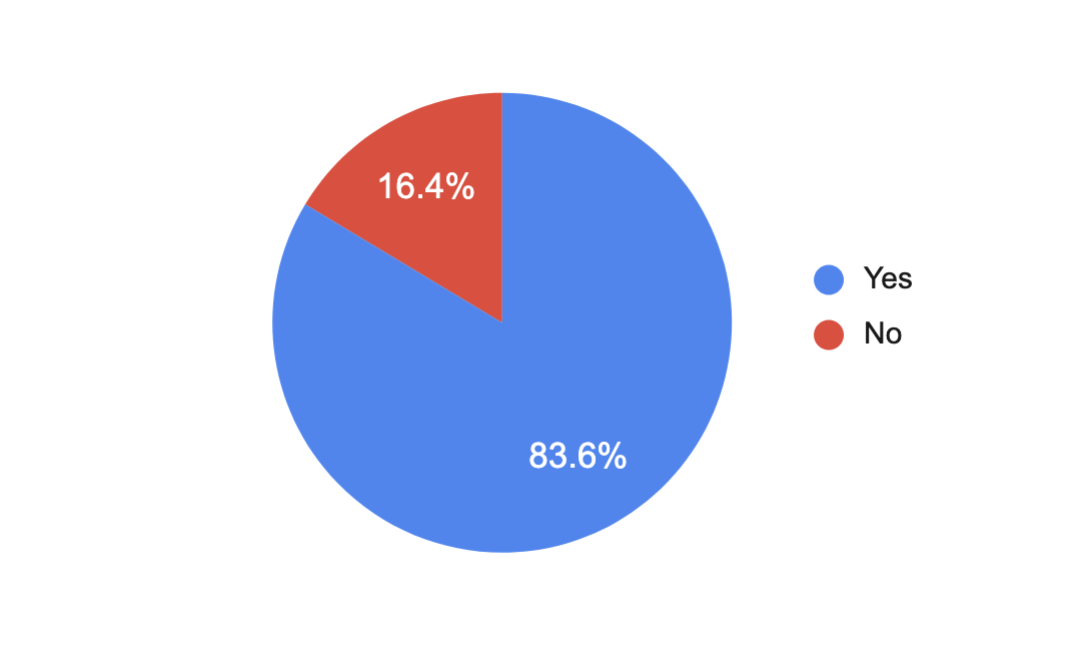
Upskilling and reskilling programs are widely adopted.
83.6% of companies invest in structured learning to keep employees up to date with evolving technologies. This indicates that continuous skill development is expected from the employee side.
Only 16.4% of respondents report having no such programs, suggesting limited tolerance for skill stagnation in the IT services market.
The data shows that internal skill development is now a key mechanism for retention and competitiveness.
Linux Foundation research reinforces this pattern. In its 2025 Linux tech talent study, 97% of organizations describe upskilling as strategically important, and 90% already run technical training programs.
Recent Changes in IT Hiring Demand
Key Insights:
- Hiring demand over the past year shows net growth: 29.9% of companies report stable demand, 43.3% report growth, and 26.8% report decline. Compared to 2024, stability fell, and volatility increased. There is no clear trend – the situation depends on specific companies.
- Central recruitment pressure shifted to finding the right skills. The share of respondents reporting difficulty finding candidates with the right skills increased from 38.1% до 53.7% compared to 2024. The reported shortage of qualified candidates jumped from 28.6% to 49.3%.
- Companies respond primarily through capability-building measures. 50.7% of companies rely on training and development as a core response to recruitment challenges. 44.8% focus on upskilling current employees, up from 38.0% in the previous year.
- Remote work rose the fastest to 49.3% from 29.0%. Regional expansion fell, and salary increases became less common.
- Overall, demand remains net-positive, but hiring is increasingly uneven and skill-driven. Companies are shifting from paying more and expanding searches to focusing on training and smarter hiring.
Change in Hiring Demand Over the Past Year
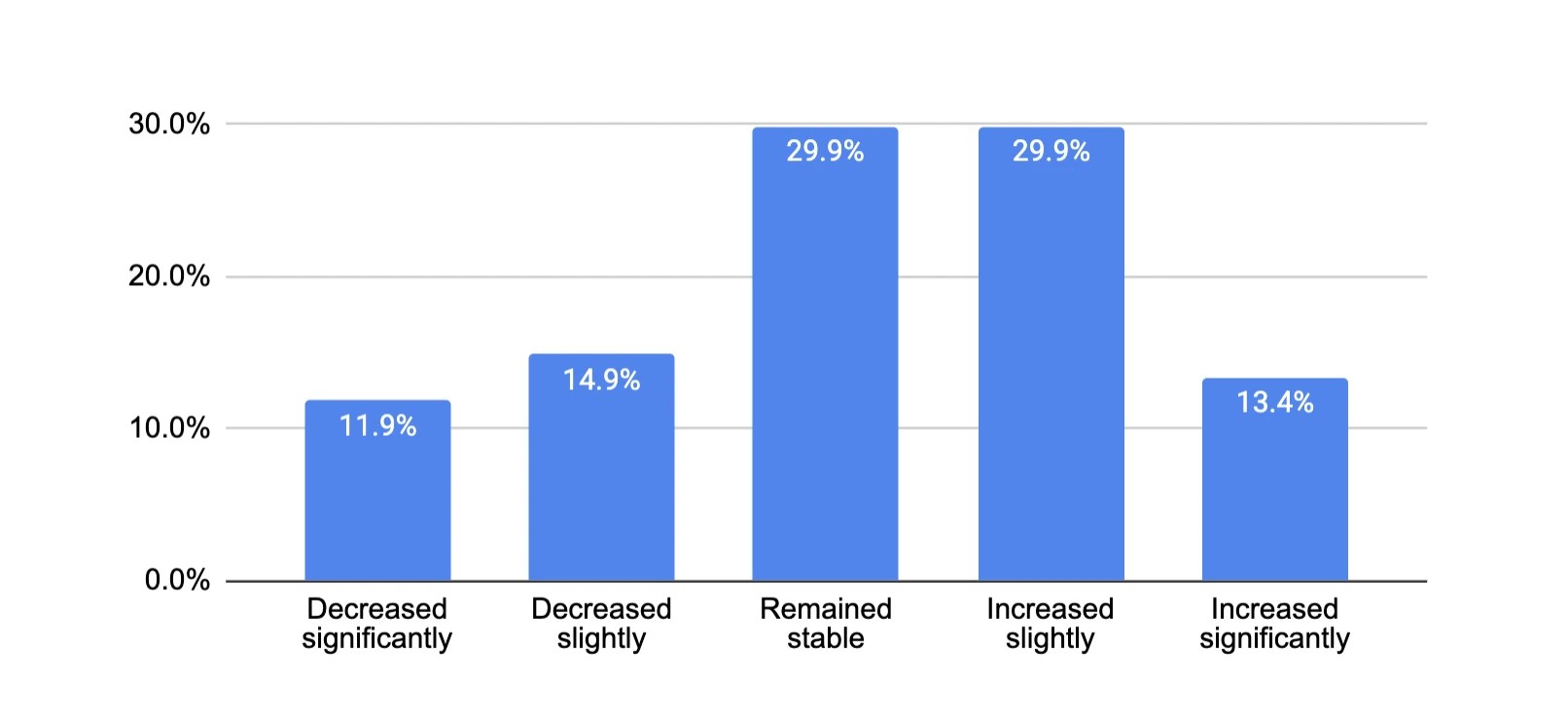
Hiring demand over the past year has been split.
29.9% of companies report stable demand. An equal share reports a slight increase. Another 13.4% saw a substantial increase.
Declines are less common overall. 26.8% of companies report a decrease, either slight or significant.
Overall, 43.3% of companies report growth, outweighing the 26.8% reporting decline. This indicates selective hiring and cautious expansion.
Hiring Demand: Year-Over-Year Comparison
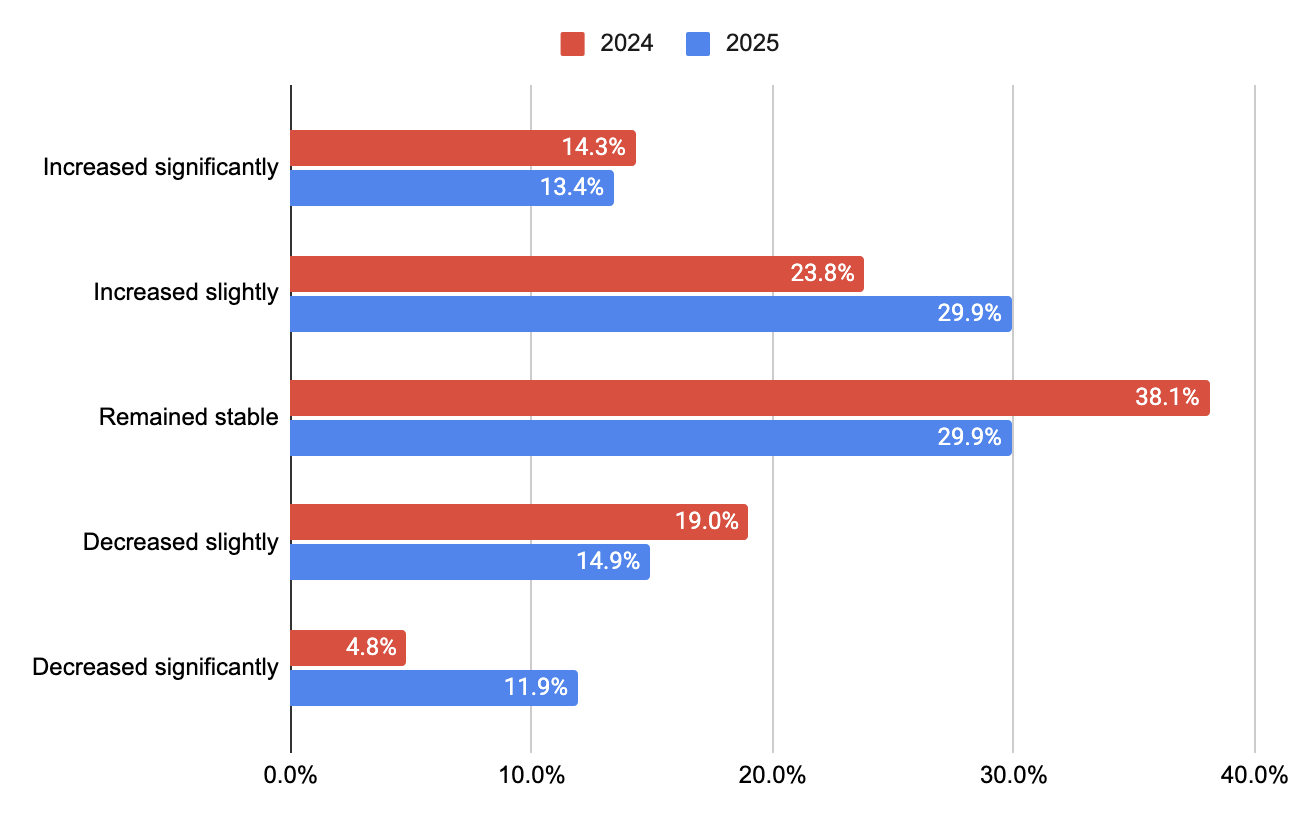
Compared to 2024, the share of companies with stable demand has declined, while slight growth has become more common. At the same time, significant declines have increased, indicating higher volatility.
Still, demand for IT professionals remains net-positive, but the landscape shows more volatility than last year, with fewer companies in a stable state and more reporting hiring pressure or contraction.
Research from World Economic Forum supports this pattern at the global level. Technology roles, including software developers, AI specialists, and data specialists, remain among the fastest-growing worldwide.
Growth continues, yet it concentrates in specific roles and projects. Companies that rely on static hiring plans face a higher risk, while those that align recruitment closely with delivery pipelines and skill demand can navigate volatility more effectively.
Key Recruitment Challenges in 2025
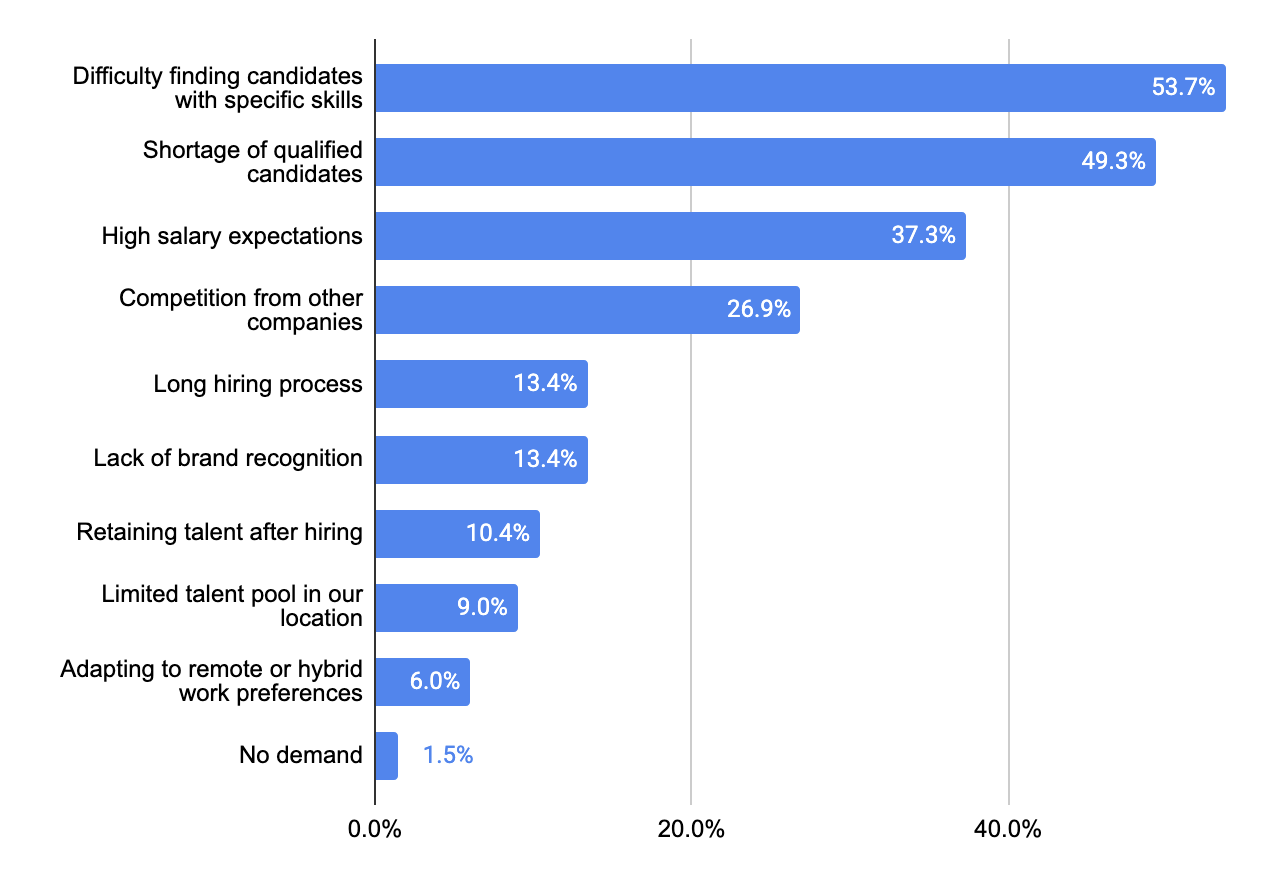
Recruitment challenges in 2025 cluster around skills and pay.
- The biggest issue is fit. 53.7% of companies report difficulty finding candidates with the required skills, and 49.3% of companies point to a general shortage of qualified professionals. This reflects a specialization gap rather than a lack of available engineers.
- Cost adds pressure. 37.3% of companies face high salary expectations, often reinforced by competition from other employers, cited by 26.9% of respondents.
- Process and brand issues matter less. Around 13–14% of companies mention long hiring cycles or weak brand recognition. Location constraints and remote work adaptation affect a smaller share of companies.
Recruitment Challenges: Year-to-Year Comparison
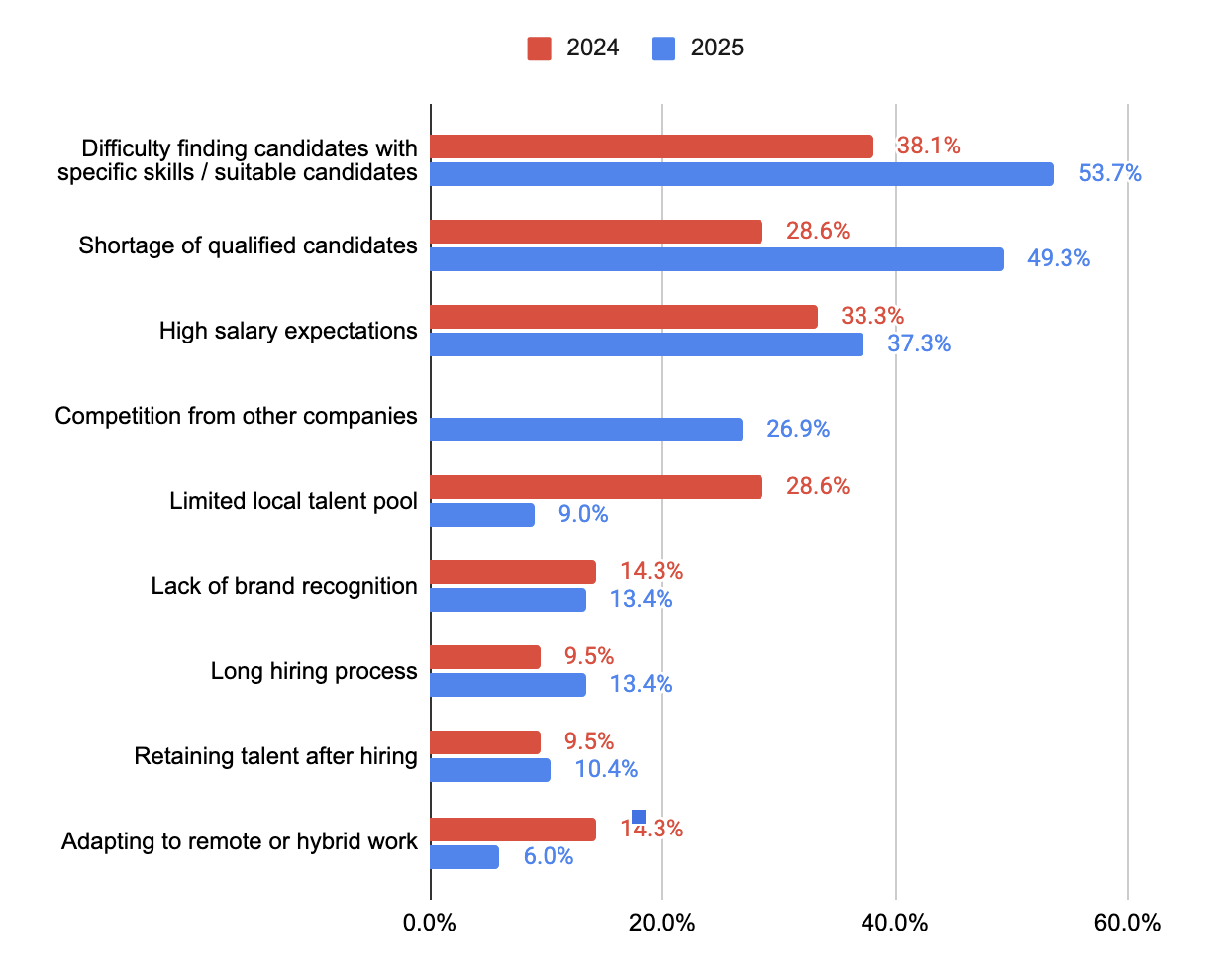
Compared to 2024, in 2025, challenges moved from “where to hire” to “who fits.”
- Skill fit became harder. The share of companies reporting a lack of candidates with the right skills rose from 38.1% to 53.7%. The reported shortage of qualified candidates also jumped, from 28.6% to 49.3%. The gap is growing.
- Salary pressure stays high and increased slightly year over year.
- Location barriers weakened. Limited local talent and remote-work adaptation are mentioned much less in 2025, which suggests distributed hiring is now routine.
- Process and retention issues rose modestly, adding friction as companies chase a narrower set of specialists.
Challenges have become less geographic and more structural, driven by deeper specialization, higher expectations, and increased competition for scarce skills.
Gartner highlights a structural source of this pressure. Its research shows that AI-assisted hiring has increased resume inflation, candidate misrepresentation, and noise in early screening. As a result, employers spend more time validating real expertise.
Measures Used to Address Recruitment Challenges
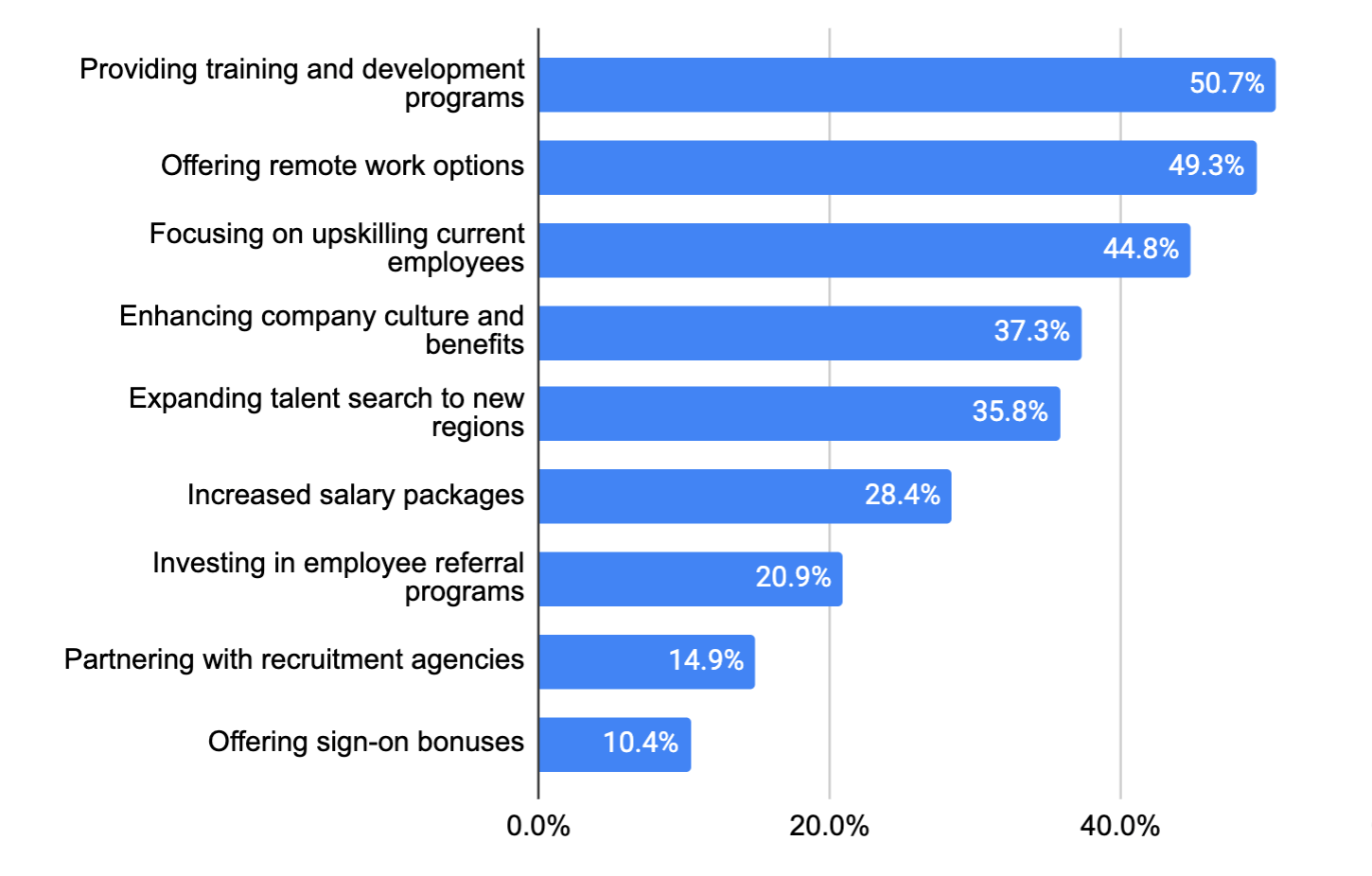
Companies address recruitment pressure through a combination of short-term access measures and longer-term capability investments.
1. Fast-response measures
To expand the candidate pool quickly, companies rely on remote work and geographic reach.
Remote work options are used by 49.3% of respondents, allowing access to talent beyond local markets.
35.8% of companies apply regional expansion to increase reach in locations with stronger talent supply.
2. Capability-building measures
At the same time, companies invest in strengthening internal capacity.
50.7% of respondents use training and development programs to build skills aligned with delivery needs.
44.8% of companies practice upskilling current employees to address emerging skill gaps.
Investments in culture and benefits appear in 37.3% of responses and support both attraction and retention.
3. Financial measures
Direct financial incentives play a supporting role.
28.4% of companies increase salaries, while 10.4% use sign-on bonuses to address specific hiring gaps.
Overall, the data shows that companies combine rapid hiring tools with structural investments in skills and engagement, reflecting a preference for sustainable recruitment.
Measures to Address Recruitment Challenges: Year-to-Year Comparison
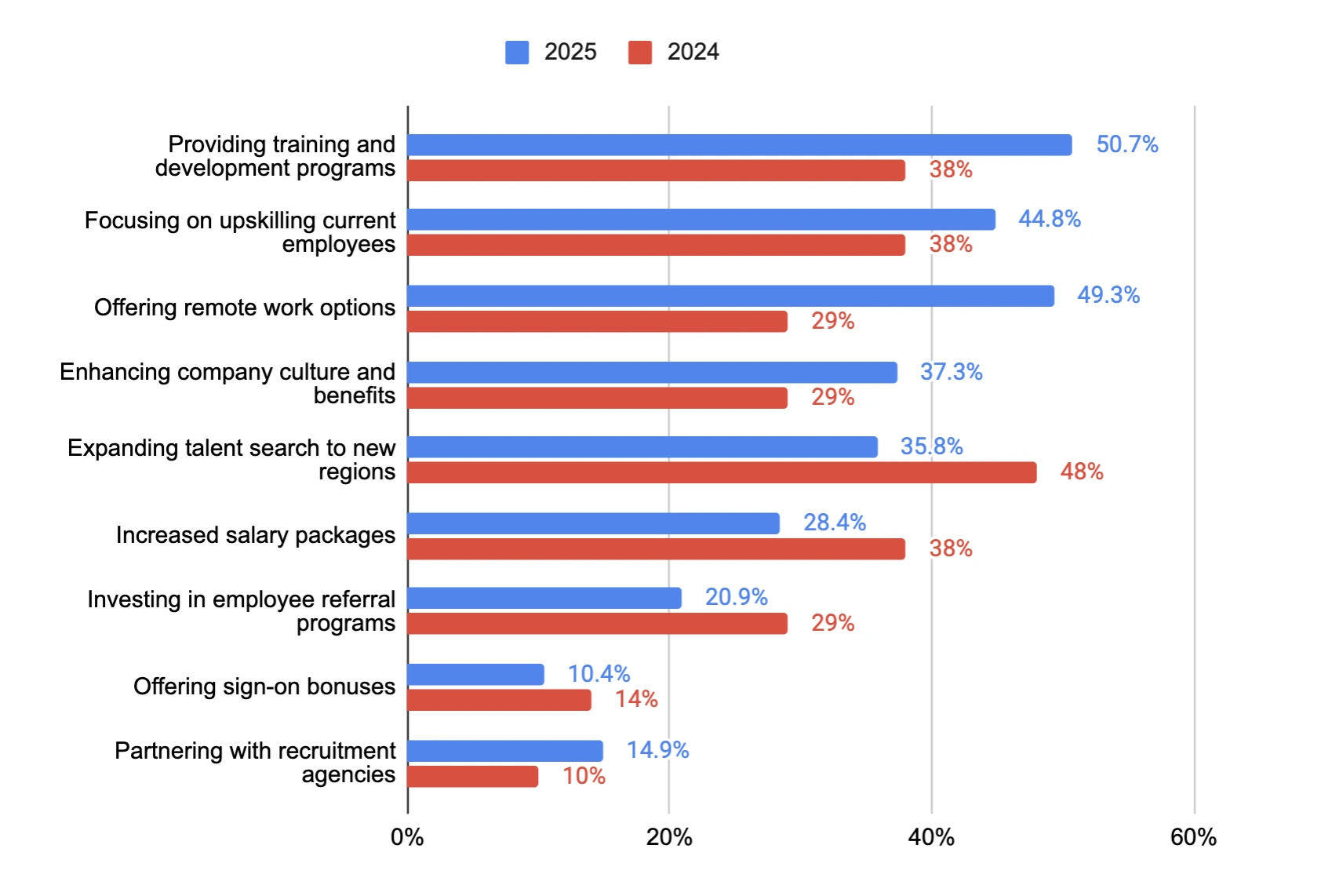
From 2024 to 2025, companies shifted toward building talent in-house.
Training and development grew the most and became the top response. Upskilling current employees also gained weight, showing a move toward growing skills internally.
Remote work saw the fastest rise, nearly doubling. Flexibility is now a standard hiring tool.
Companies rely less on regional expansion and salary increases than they did a year earlier.
Compared to 2024, responses moved from quick hiring fixes to longer-term solutions.
This pattern also appears at a global scale. Linux Foundation research shows that organizations are 3.2× more likely to invest in upskilling existing employees than to rely on external hiring. Remote and flexible work practices are widely used to expand access to talent while keeping compensation growth under control.
Companies increasingly treat training, upskilling, and flexibility as core operating levers rather than HR add-ons. The ability to develop and redeploy skills internally now defines hiring resilience more than aggressive pay tactics or geographic expansion.
Effectiveness of IT Talent Retention Strategies
Key Insights:
- Most respondents rate their retention strategies as effective. 77.6% of companies describe their retention approach as either effective or highly effective.
- Attraction and retention rely on the same base. 64.2% of companies point to flexible work as a key attraction factor. 61.2% of respondents identify work-life balance as the main factor supporting retention, alongside competitive pay and flexible work arrangements. Beyond these basics, employees seek career growth and job stability.
- When describing optional benefits, companies mention extra time off and remote flexibility, health and mental support, learning budgets, and long-term incentives. These benefits strengthen commitment, while salary and growth remain the foundation.
Perceived Effectiveness of Retention Strategies
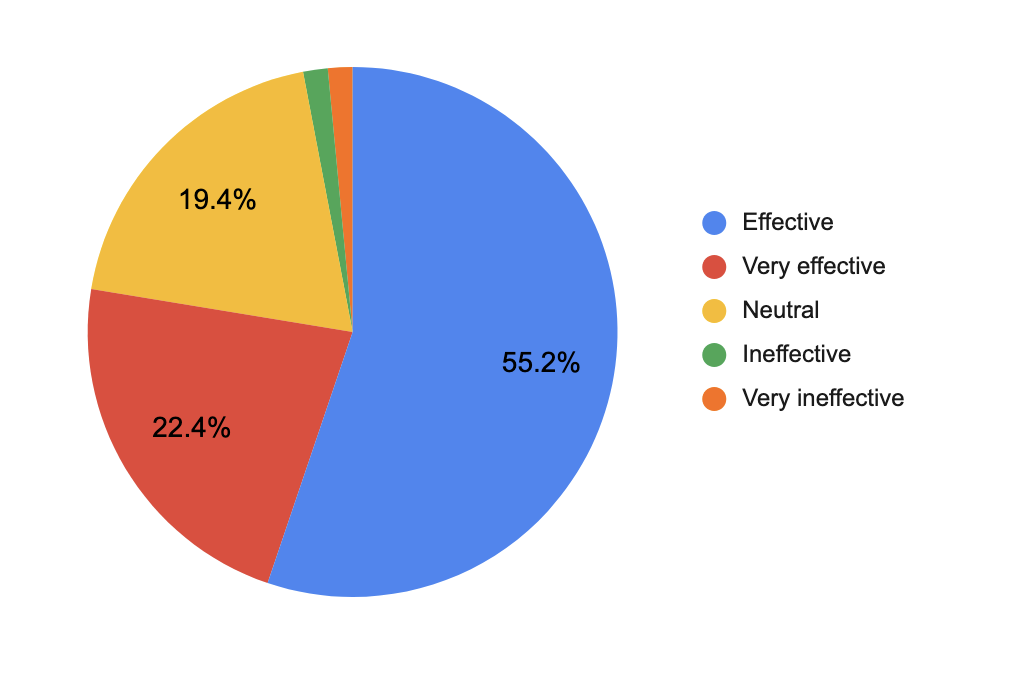
Most respondents describe their retention strategies as effective, with 77.6% of companies expressing a positive assessment. This suggests that many companies rely on a workable combination of compensation, growth opportunities, and work conditions.
A smaller share of 19.4% of respondents expresses neutral views, which may point to gaps in engagement or clarity around career paths.
Clear dissatisfaction remains rare. Only 3.0% of respondents describe their retention strategies as ineffective.
Overall, companies report satisfactory results from their current retention approaches.
Effectiveness of Retention Strategies: Year-to-Year Comparison
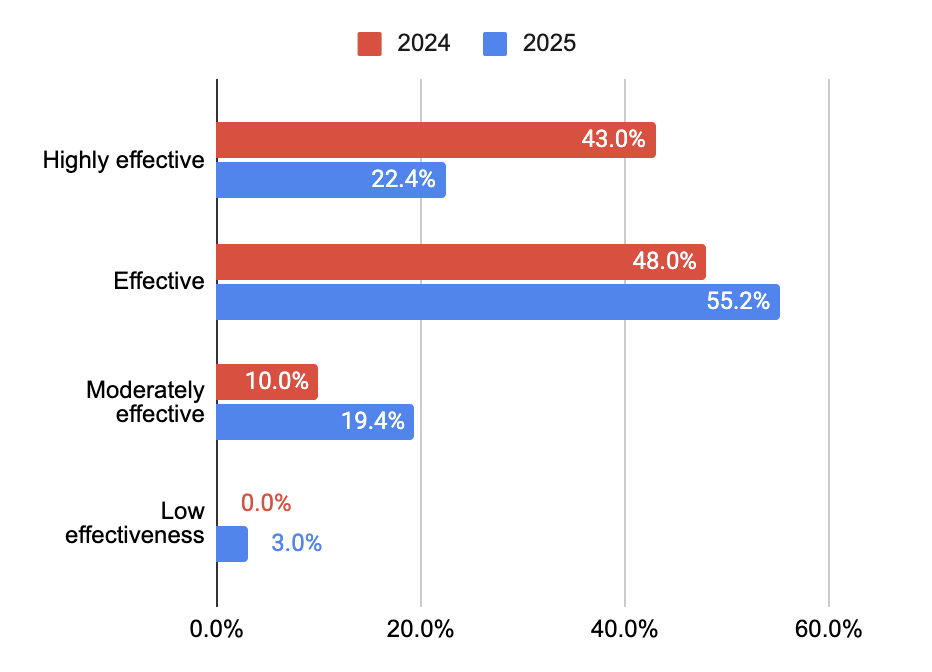
However, confidence weakened year over year. The share of “highly effective” ratings dropped sharply from 43.0% to 22.4% of respondents, while neutral assessments nearly doubled. Low scores remain rare, yet they now appear.
Retention strategies remain effective, but fewer companies view them as best-in-class, indicating tighter retention margins.
Gartner research helps explain this shift. Its future-of-work analysis shows that AI-driven restructuring, faster performance cycles, and rising cognitive load increase employee stress and reduce perceived stability. Even when compensation and growth paths remain competitive, employees raise expectations around transparency, predictability, and mental sustainability.
As a result, retention programs are now viewed as adequate rather than exceptional.
Standard packages still prevent churn, but they no longer create a substantial emotional buffer. Companies that pair pay and flexibility with clearer career signals, realistic workload design, and visible leadership communication are better positioned to maintain retention effectiveness as expectations rise.
Key Factors That Attract IT Talent
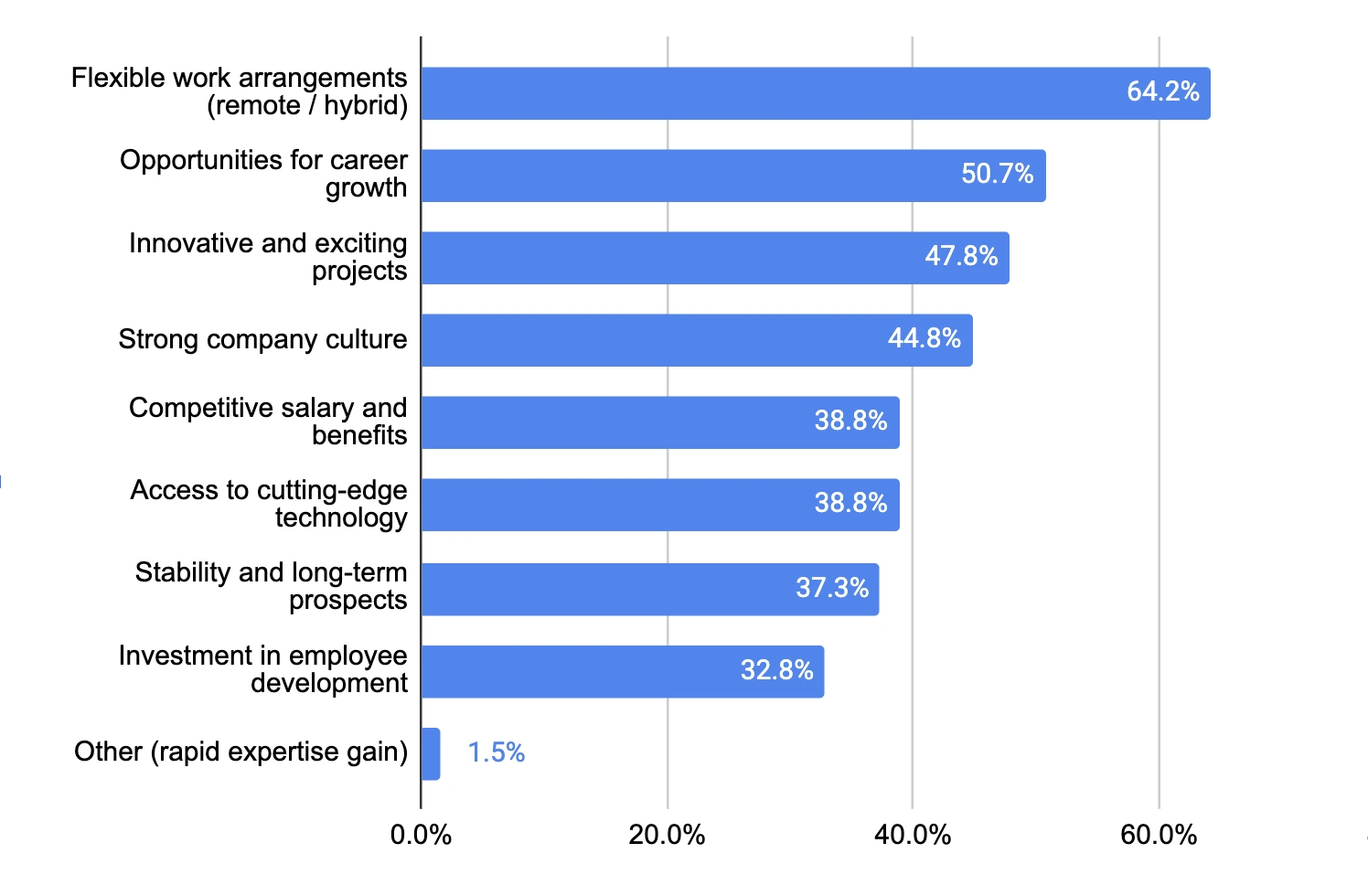
Talent attraction is driven by flexibility and growth.
- Flexible work leads. 64.2% of respondents mention flexible work arrangements, making remote and hybrid formats a baseline expectation.
- Growth signals come next. 50.7% of respondents point to career development, and 47.8% of respondents mention innovative projects. Candidates look for opportunities to build skills and work on engaging tasks.
- Culture and economics support the offer. 44.8% of companies highlight company culture, while 38.8% of respondents mention salary and benefits and the same share point to a modern tech stack. These factors support attraction, yet rarely decide on their own.
Companies attract talent through flexibility, learning opportunities, and engaging projects. Competitive pay remains essential but is rarely a differentiator on its own.
Key Drivers of Employee Retention
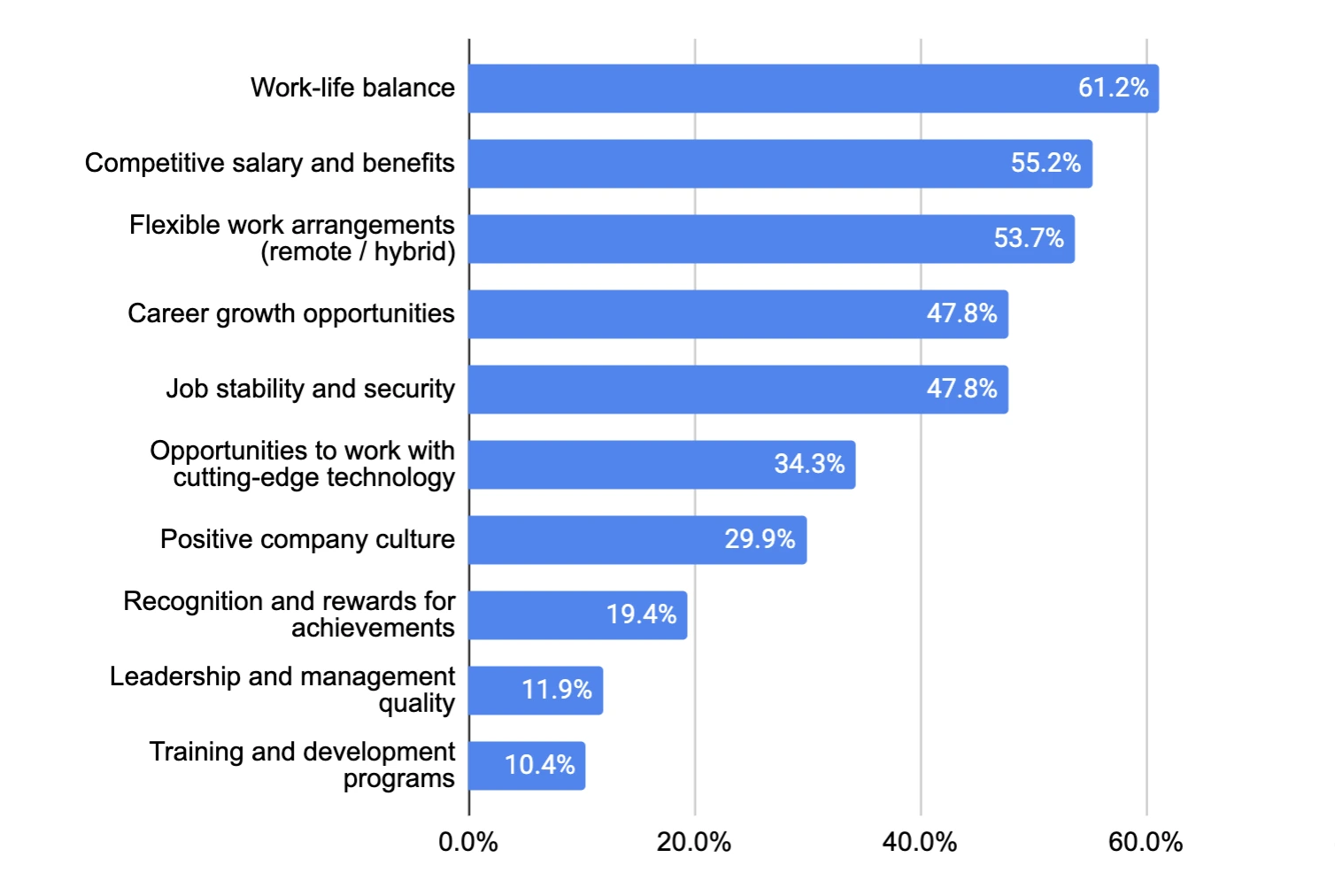
Retention in 2026 depends on day-to-day conditions.
- Work-life balance leads. 61.2% of respondents identify it as the main retention factor, linking it to predictable workload and burnout control.
- Competitive pay and flexible work form the baseline. 55.2% of respondents point to compensation, and 53.7% of respondents mention flexible work arrangements.
- After these basics, people look for a future. Many respondents mention career progression and job stability, highlighting the importance of clear growth paths and confidence in the company.
- Culture and management support retention, while formal training programs matter less.
- Stability and flexible work arrangements are more important than additional perks.
Research from Gartner links these retention priorities to rising work strain. AI adoption, faster performance cycles, and uncertainty after restructurings increase cognitive and emotional load. As tolerance for chaos declines, people choose employers that offer balance, flexibility, and a sense of security. Growth opportunities and exposure to advanced tech matter after these basics.
Salaries and interesting projects remain essential, but they stop working as a “cover” for an unstable workload and unclear expectations. Companies retain better when they set predictable delivery rhythms, protect focus time, and communicate stability.
Additional Benefits or Perks That Companies Offer
Optional benefits work as add-ons to pay and career growth.
- Most perks support daily comfort and retention. Respondents most often mention flexibility: more paid time off, flexible schedules, fully remote work, and location freedom.
- Health and well-being perks are also common: private healthcare, mental health support, wellness budgets, and fitness reimbursement.
- Learning perks often include education budgets, paid certifications, conferences, and access to online platforms. They reinforce long-term development.
- Some companies offer long-term financial incentives, such as bonuses, profit sharing, and stock options. These aim to keep people longer.
- Culture perks appear less often: retreats, communities, recognition, and informal events. They build belonging.
Work Model & Productivity
Key Insights:
- Equally distributed work models. Each setup (hybrid, remote-first, and on-site-first) got close to one-third of responses, so no single model dominates.
- 79.1% report no change or higher productivity, with gains more common than losses.
- For 2026, policies look stable. 47.8% expect no change, and planned adjustments focus on providing more flexibility rather than tightening rules.
Preferred Work Model
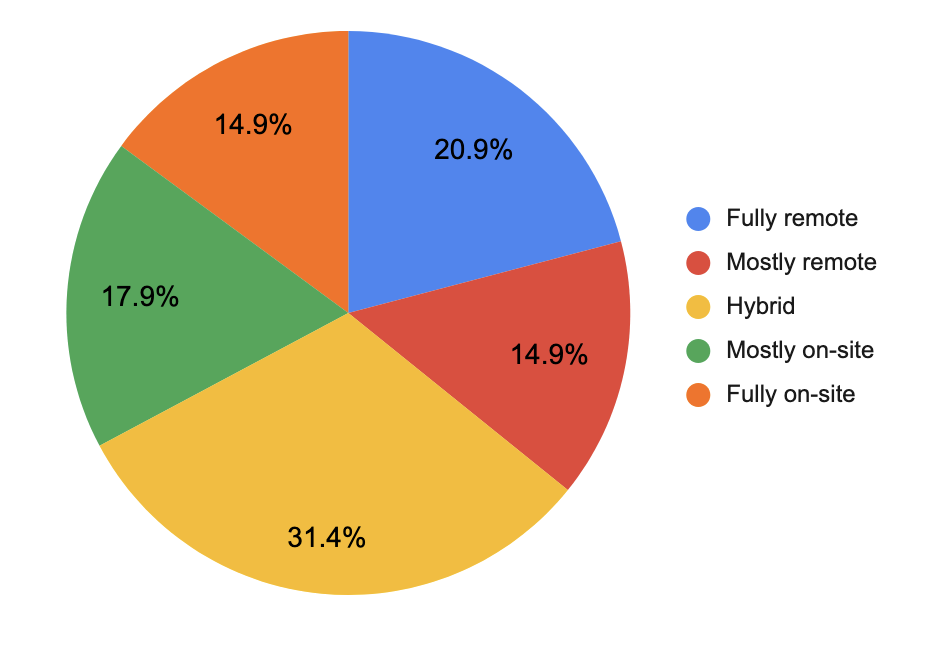
Hybrid is the most common choice.
31.4% of respondents prefer a hybrid model that combines remote work with office time.
Remote-first is also widespread. 35.8% of respondents chose fully or mostly remote setups, which makes remote work part of the norm.
On-site work still matters for many teams. 32.8% of respondents lean toward mostly or fully on-site work.
Preferences remain close across models. Hybrid and flexible formats occupy the center of current work-model choices.
Work Model: Year-to-Year Comparison
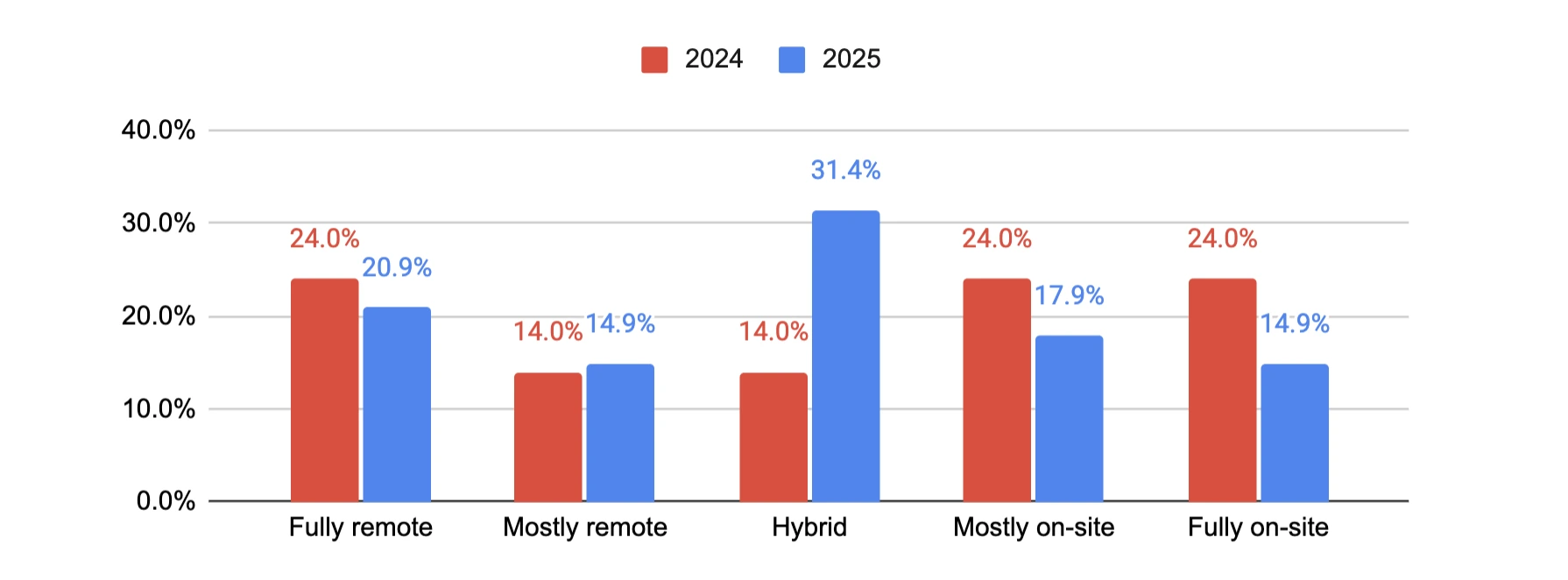
In 2024, 48% of respondents leaned toward on-site work and 38% toward remote work. Only 14% of respondents adopted the hybrid work model.
In 2025, companies moved to the middle.
Hybrid was the top choice among respondents at 31.4%. On-site achieved 34.8% adoption, while remote achieved 35.8%.
Overall, the software engineer job market in 2025 was distributed equally between hybrid, remote, and on-site work models.
The World Economic Forum describes the move to hybrid as a long-term compromise. Employers increasingly treat hybrid models as the default for balancing flexibility with coordination, collaboration, and knowledge transfer. Remote work remains a strong attraction lever, while office time returns where the role benefits from it.
A single, employer-imposed work format increases mismatch risk: it can conflict with employee expectations and reduce delivery effectiveness.
Impact of Remote Work on Productivity
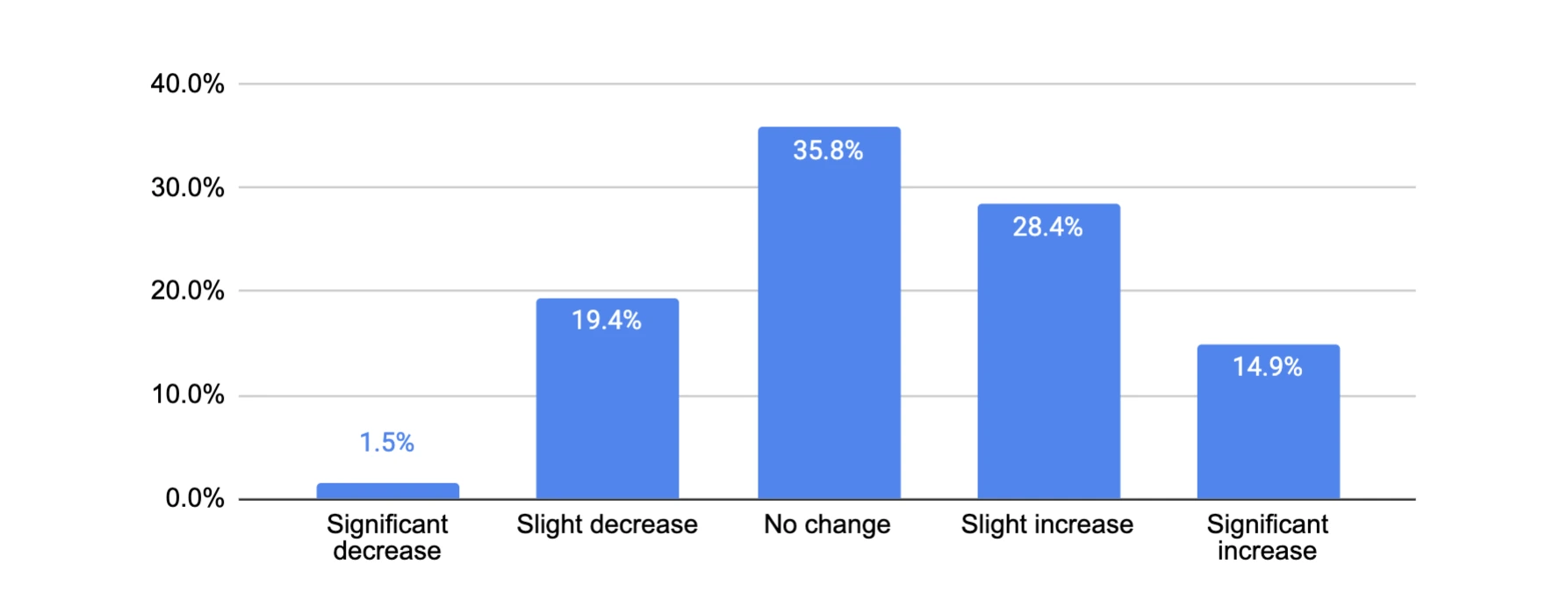
Remote work mostly keeps productivity steady or improves it.
79.1% of respondents report no change or productivity growth, with 28.4% reporting a slight increase and 14.9% a significant one.
Declines are limited. 19.4% of respondents note a slight drop, and only 1.5% report a significant decrease.
Remote work does not reduce productivity at scale. For most teams, the effect is neutral or mildly positive, supporting remote work as a long-term model.
How Do You Anticipate Your Remote Work Policies Will Change in 2026?
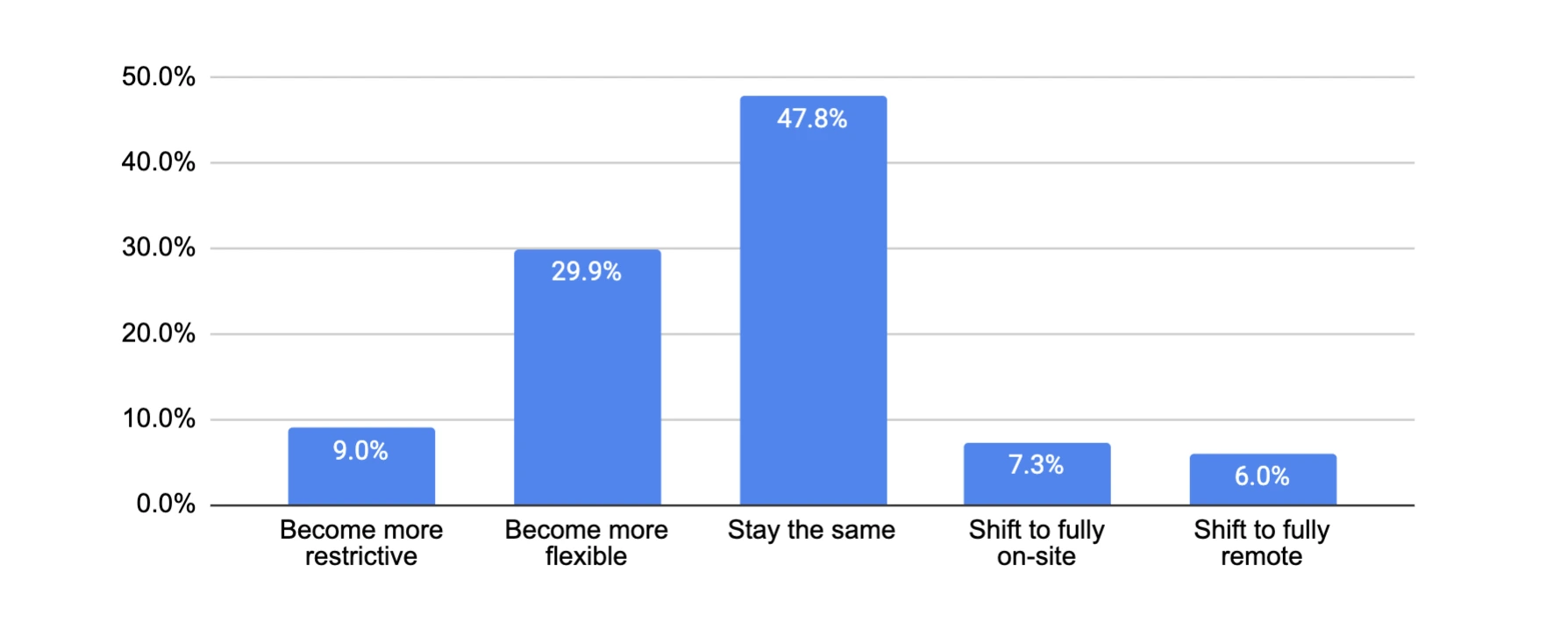
Most companies plan to keep their remote-work policy.
47.8% of respondents expect no change, which signals that the applied work model performs well.
29.9% of respondents expect to loosen remote-work rules, while 9.0% expect tighter policies. It seems that any plan for changes will give more flexibility in the working model.
Big shifts are rare. Fewer than 8% plan a move to fully on-site work, and 6.0% expect to go fully remote.
2026 is expected to be a period of minor adjustments, with remote and hybrid work likely to remain in place.
Future Outlook: Market, AI, and Skills
Key Insights:
- The largest group of respondents expects AI to increase productivity. 47.8% of respondents link AI adoption with higher output.
- Job replacement remains a minority view, and cost reduction appears rarely in responses. Respondents mostly associate AI with changes in how work is done and with faster execution.
- This view of AI as a productivity driver remains consistent with last year’s findings.
- Expectations around skills have intensified. 52.2% of respondents now expect significant changes in required IT skills.
- The demand outlook for IT specialists remains net-positive, with growing caution. 58.3% of respondents expect demand to increase, mainly through moderate growth.
- Lower expectations of stability and higher expectations of decline point to a shift toward more selective demand patterns.
Expected Impact of AI and Automation
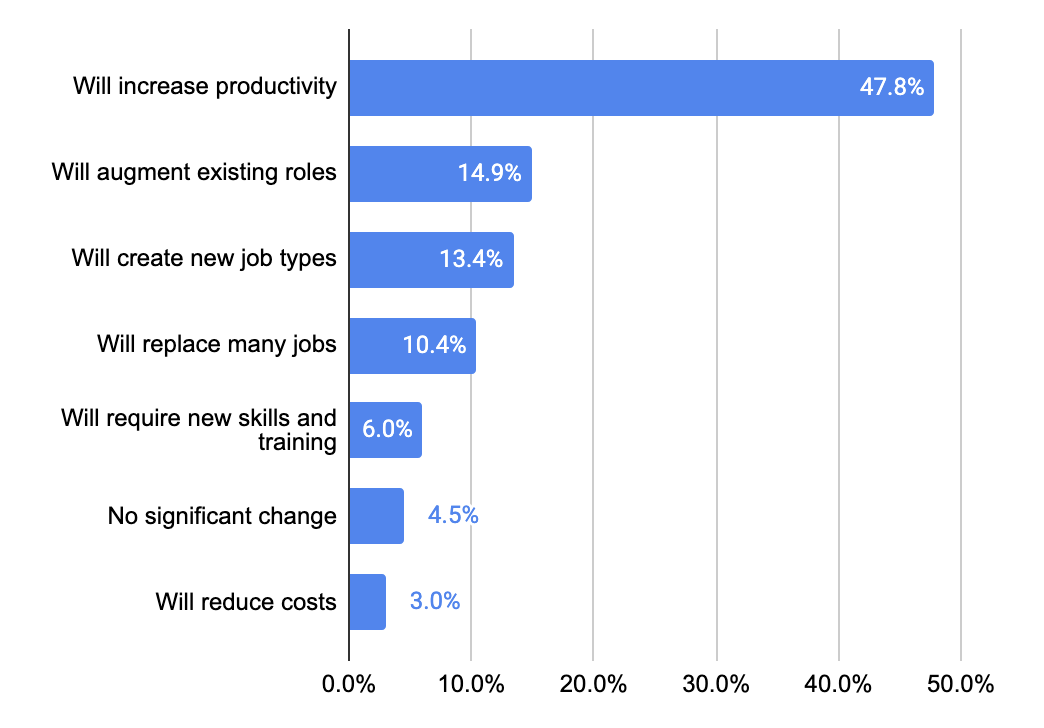
Expectations about AI and automation are primarily positive.
- 47.8% of respondents see AI as a productivity boost. Another 28.3% of respondents expect role changes and the emergence of new job types. These responses show that most respondents associate AI with higher output and new software development roles.
- 10.4% of respondents expect significant job replacement, indicating that job-loss concerns exist within a limited part of the sample.
- Few respondents expect no impact. 4.5% report no noticeable effect, while 6.0% of respondents explicitly point to new skills and training needs, suggesting that many treat reskilling as part of the transition.
- Only 3.0% of respondents expect AI to reduce costs.
Overall, respondents expect AI to change how work is done, with productivity gains and role evolution shaping expectations more than workforce reduction.
Expected Impact of AI: Year-to-Year Comparison
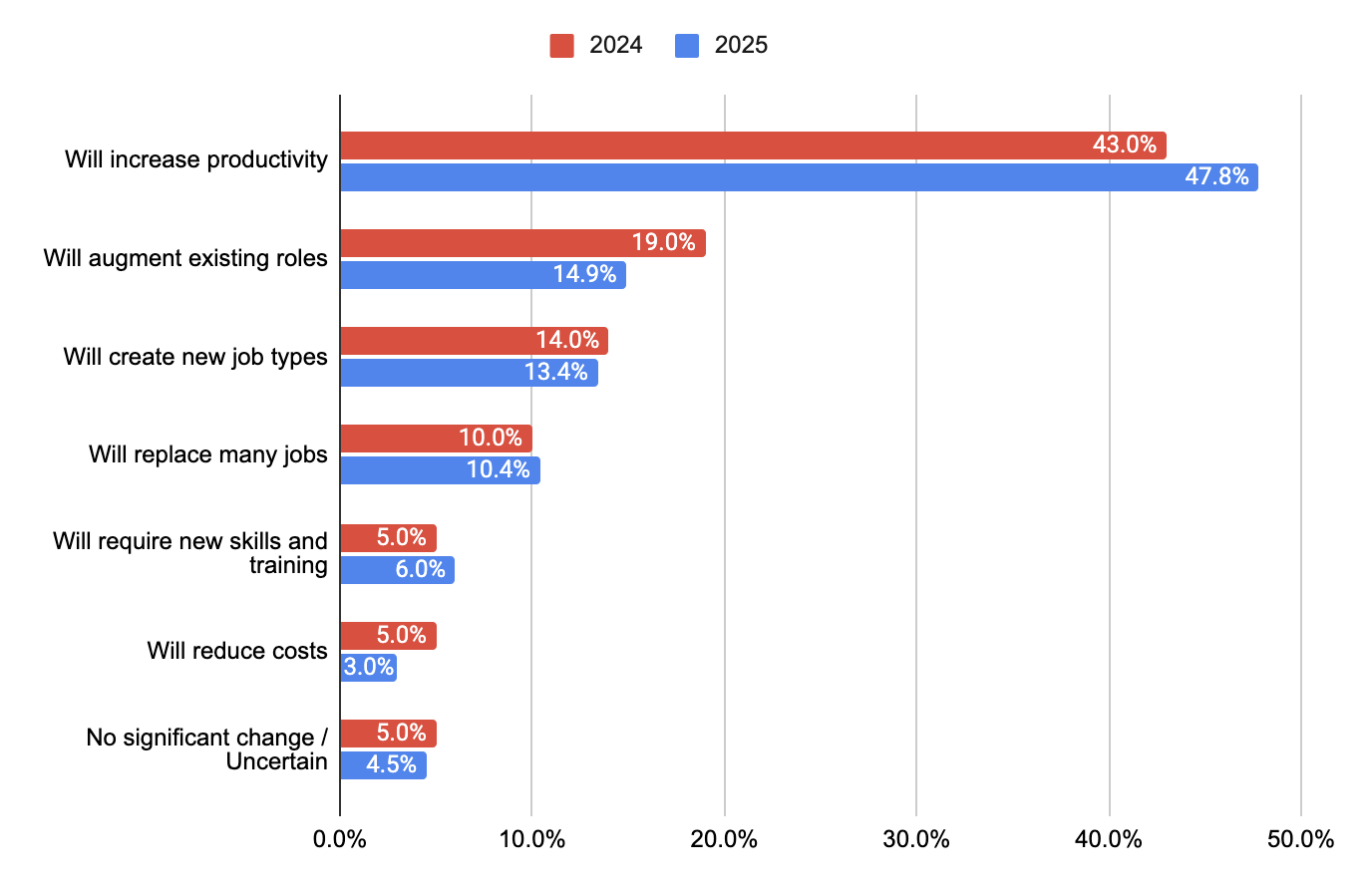
Views on AI and automation stayed stable year over year.
More respondents consistently frame AI as a productivity booster, from 43.0% of respondents in 2024 to 47.8% in 2025.
Job-change expectations shifted slightly. Role augmentation dipped a bit, while new job creation stayed about the same. The signal is a gradual change, no disruption.
Job replacement concerns hold at around 10% of all answers, so anxiety did not grow.
Mentions of new skill needs increased slightly, suggesting ongoing reskilling as AI spreads.
The landscape looks like maturation: AI is treated as an efficiency tool and a driver of role evolution, without a mass-displacement narrative.
Gartner research adds an essential qualification to our conclusion. Its analysis shows that most organizations currently deploy general-purpose AI tools that accelerate output but also introduce quality issues, rework, and coordination overhead.
This helps explain why respondents associate AI with higher productivity and role change, yet rarely with cost reduction or explicit reskilling programs. AI improves speed and flexibility first; efficiency gains and skill redefinition follow later and unevenly.
Expected Impact of AI on Required IT Skills
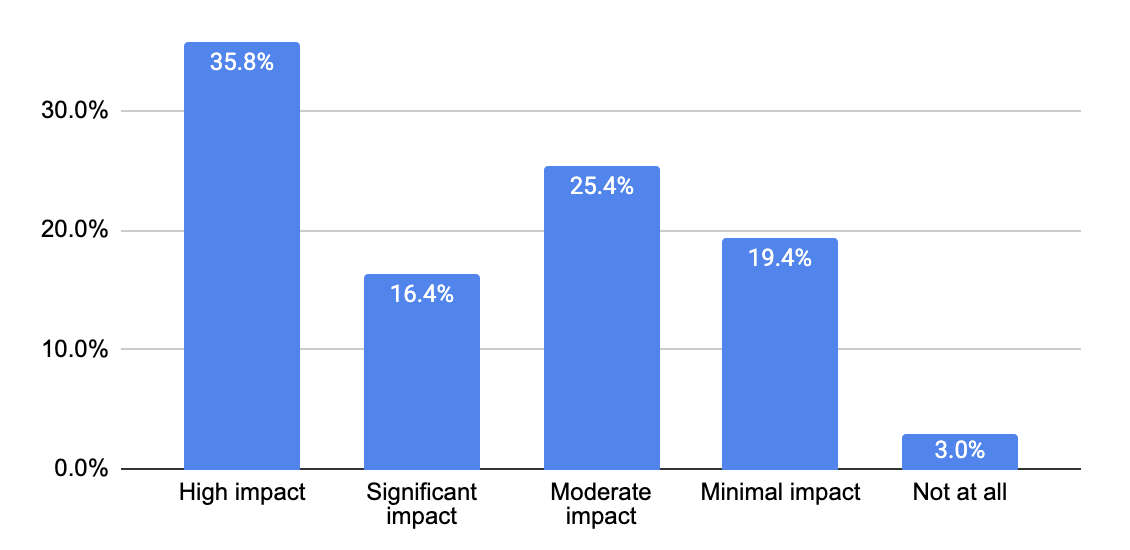
Respondents expect skill requirements to change soon.
Most foresee a substantial impact: 52.2% of respondents rate it high or significant. They link AI adoption with new day-to-day skills, especially AI-assisted work, automation, and integration.
Another 25.4% of respondents expect a moderate impact, meaning adjustment without a complete role reset.
Only 22.4% of respondents expect little or no change.
The data indicates that IT specialists see near-term skill recalibration and continuous learning as necessary amid AI development.
Expected AI Impact on Skills: Year-to-Year Comparison

Compared to the previous year, the perception of AI’s impact on IT skills shifted toward a high-impact view.
In 2024, 57.1% of respondents described the impact as moderate. In 2025, this share fell to 25.4% of respondents, while expectations of a high impact rose from 19.0% to 35.8%. The share expecting a significant impact also increased.
Minimal-impact views grew as well. 19.4% of respondents now expect a limited impact, up from 9.6% of respondents a year earlier.
Overall, IT workforce expectations in 2025 indicate a significant shift in required skills, increasing the need for reskilling and role adaptation in the coming year.
The World Economic Forum quantifies this trend globally. Employers estimate that around 39% of workers’ core skills will change or become outdated by 2030, with technology roles experiencing earlier and faster disruption. AI, data, and cybersecurity skills rank among the fastest-growing, alongside analytical thinking and adaptability.
Leaders should plan for accelerated reskilling cycles, role redesign, and continuous capability updates over the next one to two years. Organizations that delay adaptation risk losing competitiveness, even if current delivery performance remains strong.
Expected Change in Demand for IT Professionals
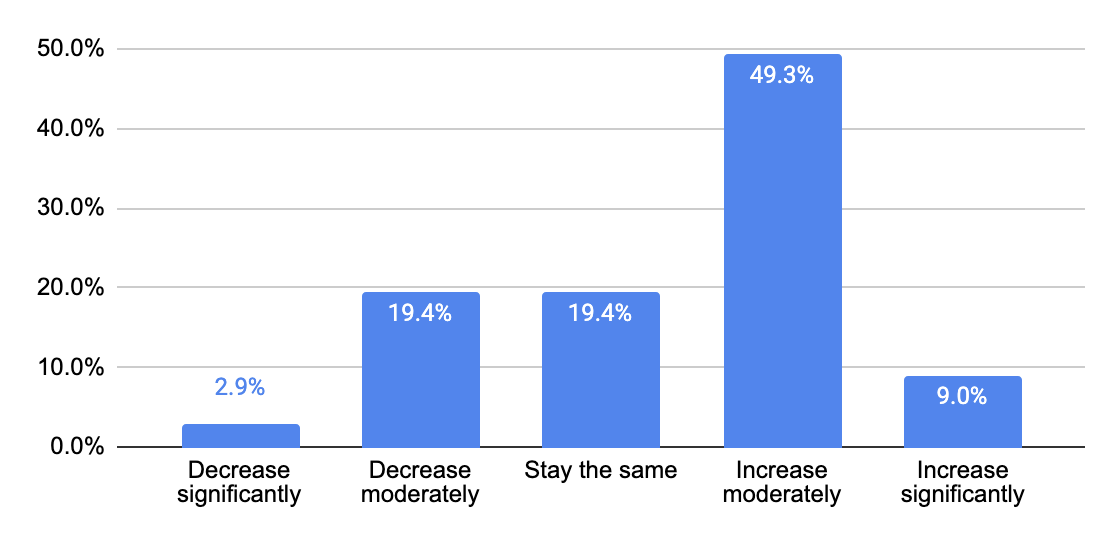
Expectations for the next year lean toward moderate growth in the demand for IT professionals.
Most respondents expect demand for IT professionals to rise. 58.3% of respondents anticipate growth, with 49.3% of respondents pointing to a moderate increase. Only 9.0% of respondents expect a hiring spike.
A significant share of respondents expect demand to remain flat or decline. 38.7% of respondents indicate this scenario, signaling budget discipline and selective hiring.
Only 2.9% of respondents predict a significant drop, which limits concerns about broad contraction.
Overall, companies plan for measured expansion and moderate hiring activity in 2026.
Expected Demand in IT: Year-to-Year Comparison
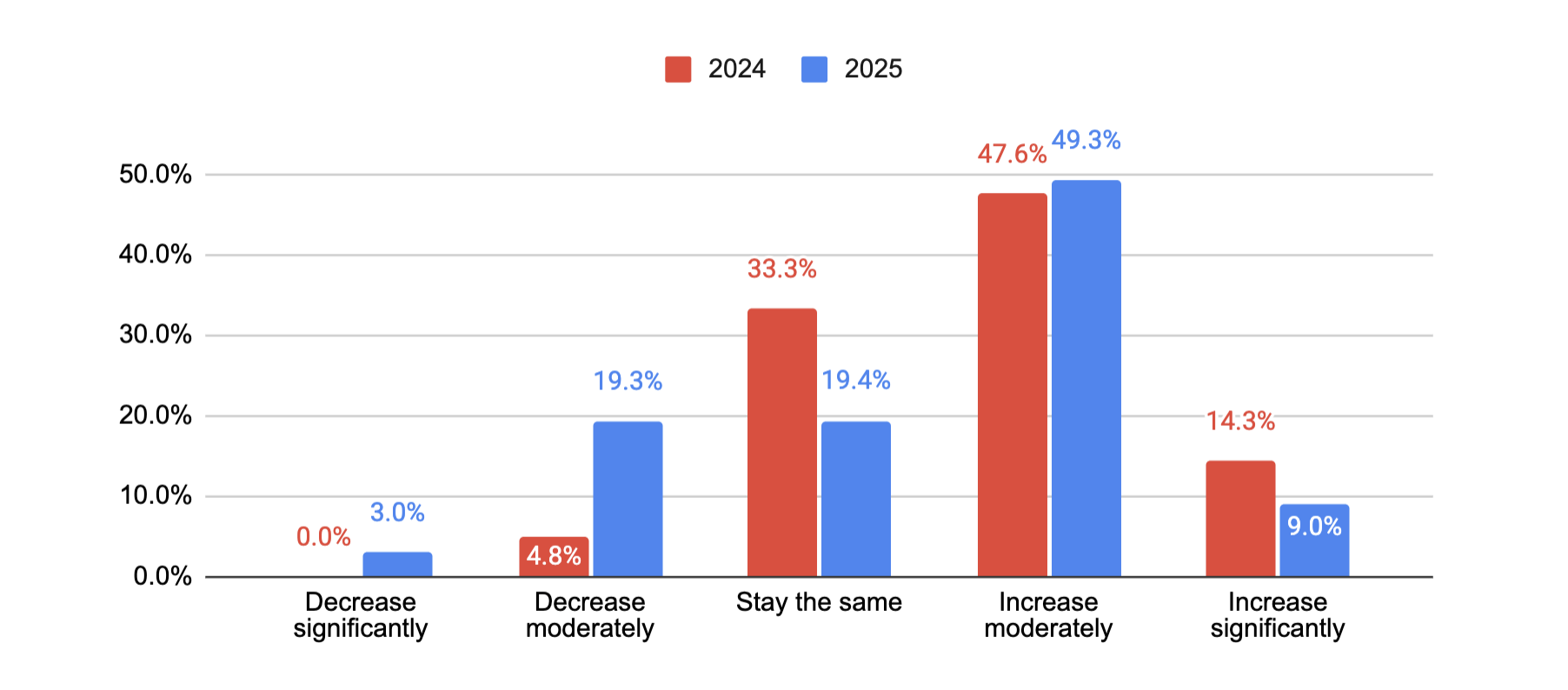
Compared to the previous year, we don’t see significant shifts in positive expectations in demand. Demand growth expectations dropped from 61.9% of respondents in 2024 to 58.3%, which represents a minor change.
However, we see a significant shift from stable expectations to a moderate decrease. Thus, 33.3% of respondents in 2024 expected the demand to remain unchanged, while in 2025 this number decreased to 19.4%. Meanwhile, we see a notable increase in negative expectations from 4.8% to 22.3%. Many respondents who previously expected stable demand have shifted to moderate decline.
The net-demand expectation remains positive, with a notable increase in the decline in demand expectations.
The World Economic Forum describes this as selective growth. Tech roles such as software development, AI, data, and cybersecurity continue to expand, while economic uncertainty and skills mismatches limit broad hiring. Demand becomes uneven across roles and companies.
This aligns with the survey findings: growth expectations persist, while stable hiring shifts toward cautious expansion and targeted reductions.
Conclusion
Let’s draw the big picture of the IT labor market heading into 2026.
- The IT labor market remains net-positive, with demand expected to grow. Hiring pressure centers on skill fit and compensation, as companies seek role-specific skills and manage high salary expectations. Companies respond with structural measures, emphasizing upskilling, reskilling, training, internal development, and remote work as key HR strategies.
- Work has settled into a flexible middle. Hybrid leads preferences, and remote-first remains a norm-sized segment. Retention still holds, with strategies rated as effective, and daily work conditions dominate the retention drivers: work-life balance, pay, flexibility, and growth and stability.
- AI is viewed as both a workflow accelerator and a driver of skill transformation. Productivity gains are anticipated from AI implementation, with a high or significant impact expected on required IT skills. Concerns about job displacement remain limited, and cost reduction is rarely cited as a primary effect. Companies are clearly optimizing for capability, flexibility, and faster skill cycles, moving away from static hiring plans.
In summary, teams that treat talent as a core asset, invest in continuous skill development, hire selectively, and design flexible work models will scale more reliably in 2026.
Some of the companies that participated in the survey:
LimaRank, Big House Technologies, Grituz, ONEXT DIGITAL, Exemplifi, Avid Brio, Avori, Graphiters, Talmatic, World Web Technology, Ramam Tech, Celestials Technologies, DevVibe, ORIL, Capicua, Easify Technologies, ND LABS, Ailoitte, TestFort, Sailotech, Chudovo, Kyanon Digital, Scand, Mallow Technologies, FIX Partner, CleverDev Software, Cloudester Software, launchOptions, Seedium, ITGix