Software Development Company Rates in 2026: Market Trends
In 2026, software development company rates reflect a global market in rapid transition, and Techreviewer’s latest survey shows how AI adoption, specialization, and rising demand for value are reshaping the pricing landscape.
Techreviewer is a B2B research and development platform that helps businesses find technology partners to improve software projects through detailed rankings and market insights.
This survey was conducted between January and February 2026 among 127 software development service providers. It provides a full picture of hourly rates and market trends, along with comparisons to 2023 and 2025. It also talks about how AI and machine learning trends have affected the industry.
To read Techreviewer’s past rate studies, click on the links below:
Overview of Participating Software Development Companies
Company size
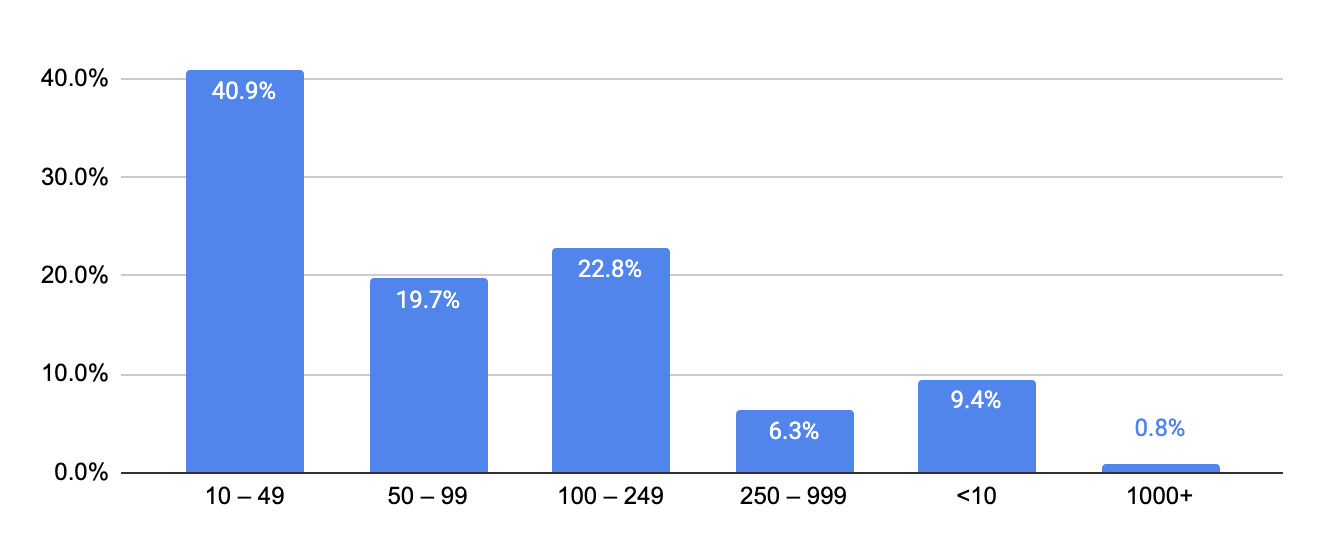
- The largest percentage of survey respondents, 40.9%, are in companies with 10-49 employees.
- 22.8% have 100 to 249 people in their companies.
- 9.4% of respondents work with a group of under 10 employees.
- Only 0.8% of respondents are enterprise-level and have over 1,000 employees.
Key Takeaways
70% of the 127 professionals who took the survey said they worked for small- to mid-sized software development companies with up to 100 employees. The high number of non-enterprise organizations here may indicate the presence of specialized teams delivering complex projects without typical corporate overhead.
Locations of Software Development Companies
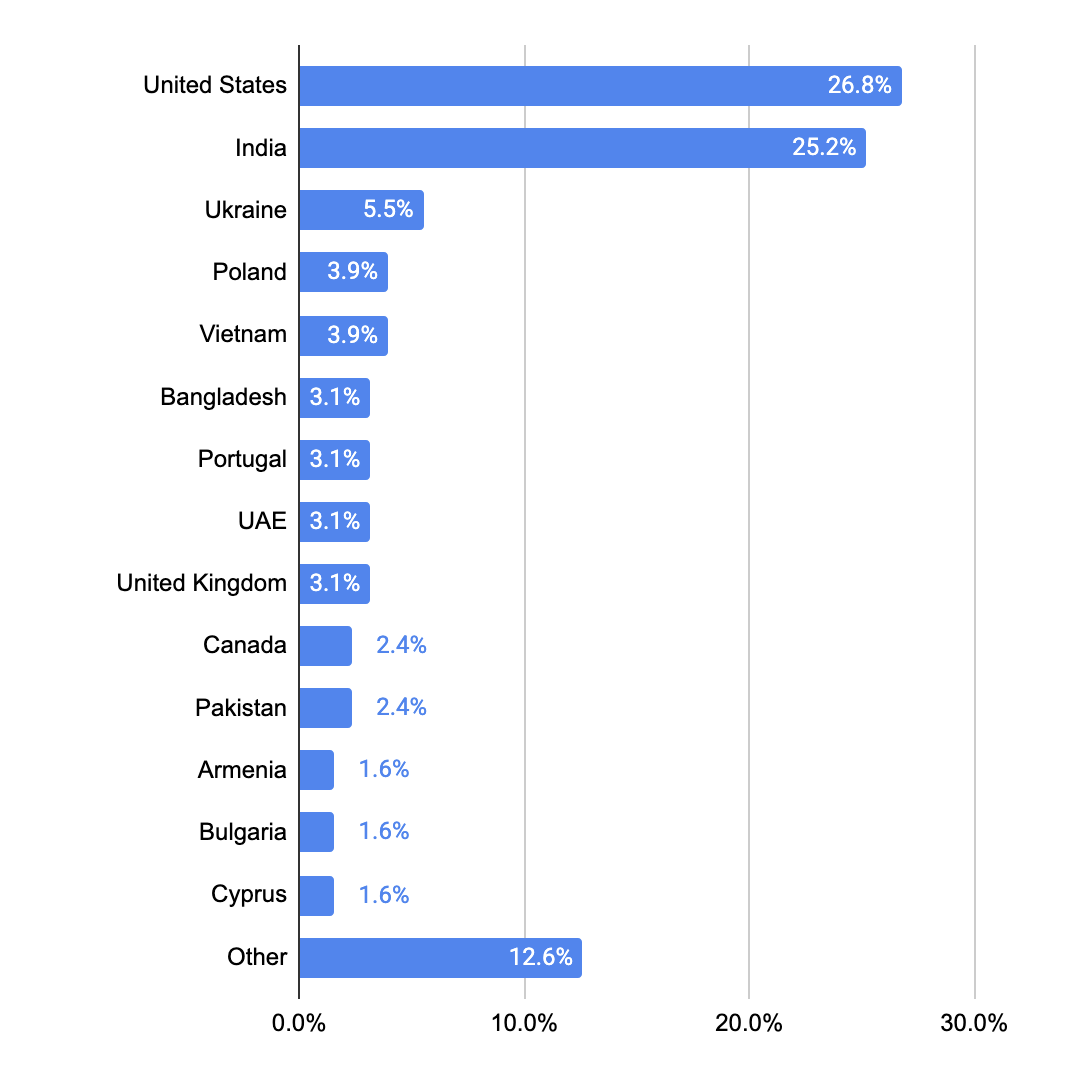
- 26.8% of the software development professionals in this survey were from the United States and 25.2% were from India.
- Ukraine made up 5.5% of responses, which was the third-highest percentage overall.
- Poland and Vietnam were the fourth leading respondents. Each represented 3.9% of companies surveyed.
- Portugal, Bangladesh, the UK, and UAE were right behind Poland and Vietnam at 3.1% each.
- Canada and Pakistan each made up 2.4% of the survey, which shows that the software development market is becoming more diverse.
Key Takeaways
The US and India both have some of the biggest pools of developer talent globally. India alone is estimated to have more than five million software engineers and one of the biggest developer communities on GitHub.
The gap between the top two locations and all others was expansive. This shows how big the US and Indian technology sectors are in the global marketplace.
Despite ongoing wartime disruptions in Ukraine, the country’s tech ecosystem keeps growing. A report by IT Ukraine found that Ukraine had over 2,600 active tech startups in 2024, and the ecosystem had tripled in value since 2020.
Main Target Regions of Software Development Companies
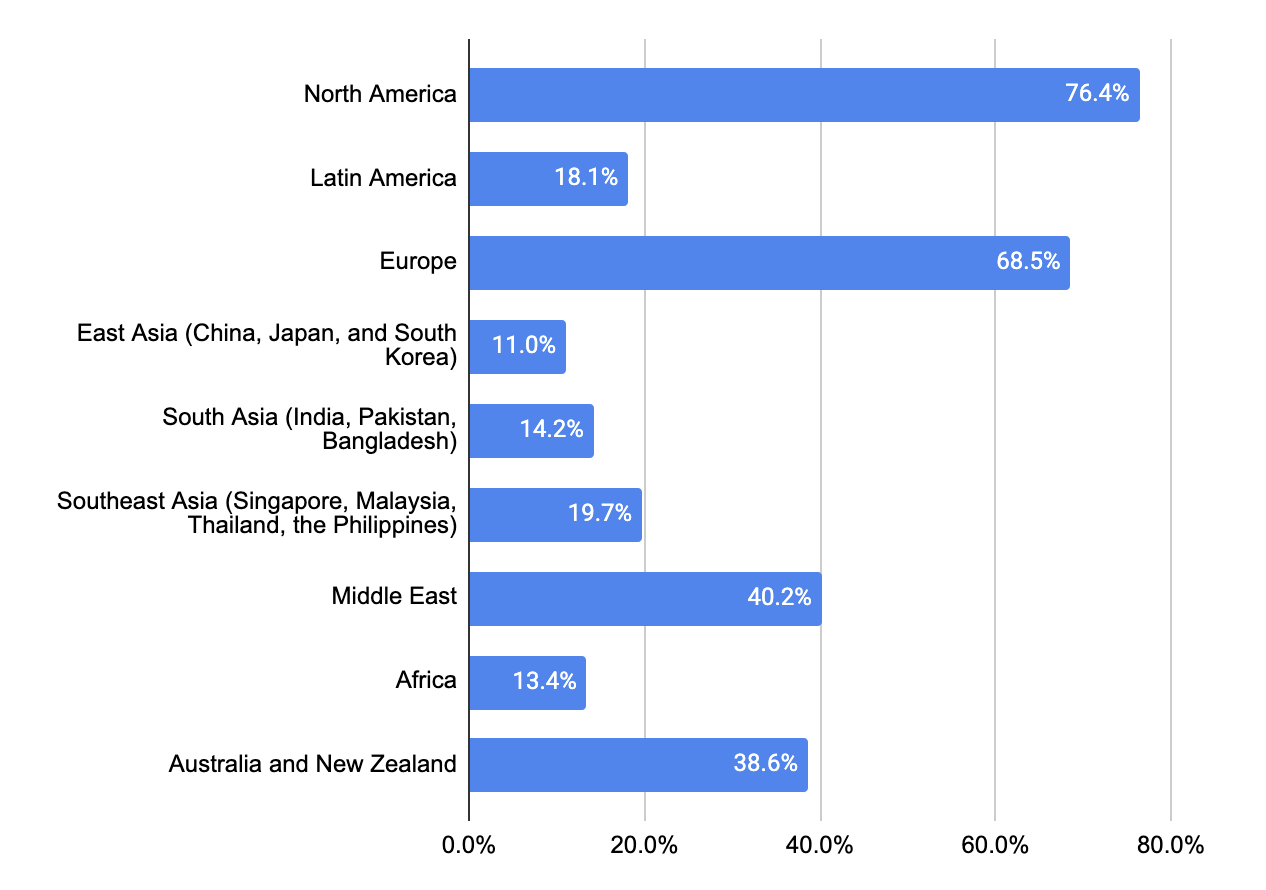
- North America was the most targeted region in the software development market, coming in at 76.4%. Next was Europe at 68.5%.
- The Middle East was third-most targeted at 40.2%, just ahead of Australia and New Zealand at 38.6%.
- Southeast Asia attracted 19.7% of respondents, followed by 18.1% for Latin America and 14.2% for South Asia.
Key Takeaways
The traditional markets in North America and Europe are very important for software development. However, companies are moving into new areas, which shows that the global market is becoming more diverse.
List of US software development companies
The Middle East, Australia and New Zealand, and East Asia are all growing quickly. This aligns with trends, AI initiatives, and the world's growing digital infrastructure.
Survey respondents are showing mixed interest in other regions. This could be due to volatile economic conditions, regional stability considerations, and business access constraints in those areas.
Comparison of Main Target Regions
.png)
North America
- In 2026, 76.4% of respondents said they’re targeting North America, a moderate decline from 2025 and a more significant drop from 2023. While interest in other regions is growing, North America continues to represent the strongest market for software development service providers.
- 76.9% of respondents prioritized the North American market in 2025.
- In 2023, 86.4% of respondents marketed their services to North America.
Europe
- Europe was the second-most targeted region for software development services in 2026, with 68.5% of companies reporting high interest in this market.
- Tech-forward and innovative, Europe continues to invest heavily in technology education and digital transformation initiatives, and the European Commission’s Digital Europe Work Programme allocated €1.3 billion for 2025–2027 to deploy strategically important technologies.
- 73.2% of respondents prioritized Europe in 2025, and 72.8% did so in 2023.
Middle East
- The Middle East continues to rank third among regions for companies seeking software development clients – reaching 40.2% in 2026 from 38.5% in 2025.
- 31.8% of companies targeted the Middle East for services in 2023.
- From heavy investment in smart cities and AI initiatives to governments pushing large-scale digital transformation strategies, the Middle East is emerging rapidly in the technology space.
Australia and New Zealand
- Over 38% of all software development companies surveyed are prioritizing marketing their offerings to Australia and New Zealand in 2026.
- With startup ecosystems growing quickly in these countries, the demand for technology partners is expected to increase simultaneously.
- In 2025, 30.8% of companies targeted Australia and New Zealand for software development, up from 28.8% in 2023.
East Asia
- Interest in East Asia rose significantly in 2026, with 22.8% of companies reporting their intent to target the region. Growing investment in AI and digital transformation, along with advances in manufacturing, may be why this area has become so attractive recently.
- The share of companies targeting East Asia was just 9.2% in 2025 and 9.1% in 2023.
Southeast Asia
- Southeast Asia has seen slightly more interest from software development companies this year than in 2025, rising to 19.7% from 16.9%.
- 21.2% of companies targeted this region in 2023.
Latin America
- Dropping moderately from the 20% mark, 18.1% of companies reported planning to target Latin America for services in 2026. This is still a notable change from 13.6% in 2023.
South Asia
- South Asia saw a slight decline in interest from software development companies in 2026, with 14.2% reporting plans to target the region compared to 15.5% the previous year.
- 6.1% of companies targeted this region in 2023.
Africa
- Interest in Africa has more than doubled since 2025, with 13.4% of companies reporting their plans to target the continent for new business.
- In 2023, this number reached 12.1%. The drop to 6.2% in 2025 could be attributed to temporary market uncertainty and slower investment in digital infrastructure across some national economies in Africa.
Current Price Range
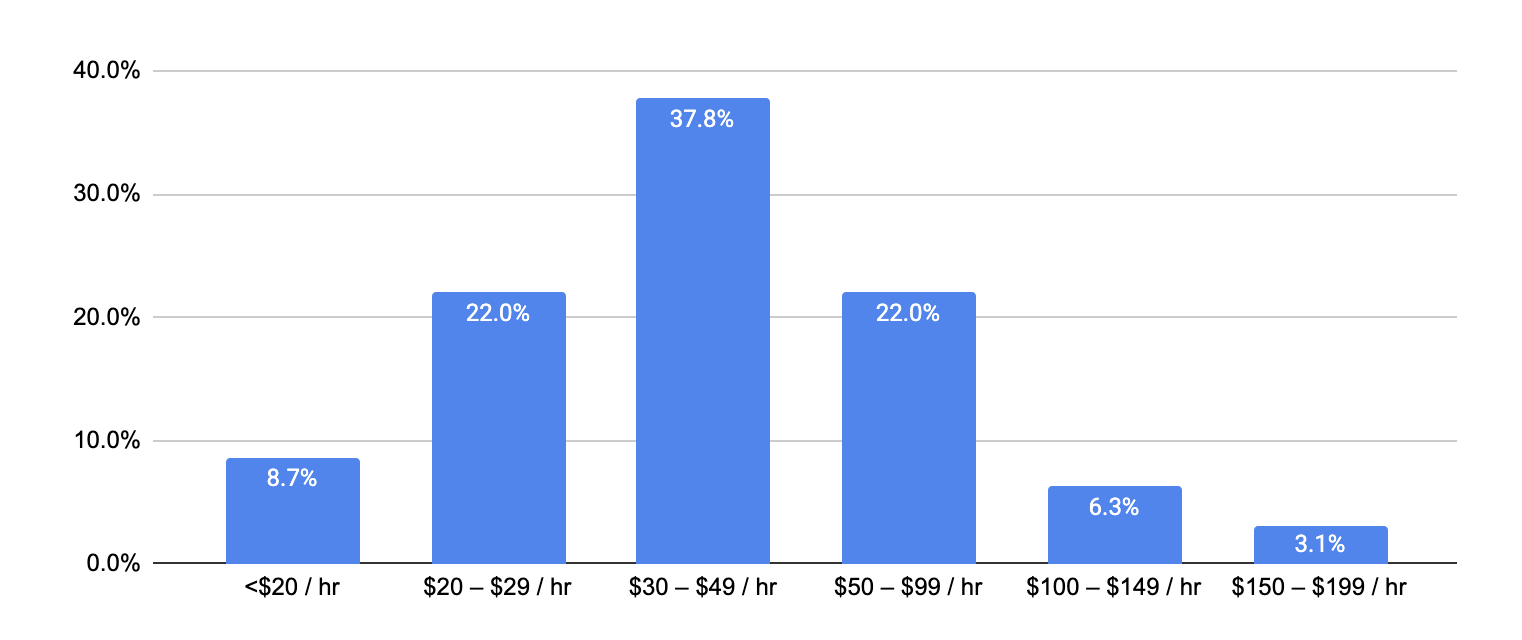
<$20/hr (8.66%): This level of service is common in areas where operating costs are lower.
$20-29/hour (22.05%): This price range is between mid-tier and low-cost providers. It often attracts businesses looking for expertise and value in the market.
$30–$49/hour (37.8%): Statistically, the largest category reported in 2026, this mid-tier pricing level is often signified by affordability and specialization.
$50-99/hour (22.0%): Here is where high-quality work and experience come together and offer a unique service that’s still reasonably priced.
$100-149/hr (6.3%): Well-established, enterprise-level software development companies typically offer services in this price range.
$150-199/hr (3.15%): The premium pricing in this category represents the highest level of service available, with developers working alongside niche industries and enterprise-level clients.
Key Takeaways
Pricing in the $30-49 range was the largest tier reported in the survey, and reliability, coupled with cost-effectiveness, may have pushed it to 37.8%.
Research from the KPMG's 2025 outsourcing survey reinforces these results, as it reported that companies increasingly prioritize outsourcing to partners that can combine technical capability and innovation with cost efficiency.
The high prices in this group mean that the service is the best available, with developers working with niche industries and big businesses.
Price Range Comparison: 2023 vs 2025 and 2026
.png)
- In 2026, the three core price ranges of $20-29/hr, $30-49/hr, and $50-99/hr shifted back to an uneven distribution, similar to what happened in 2023. Those core ranges were more balanced in 2025.S
- The $30-49/hr price range was the clear leader in 2026 at 37.8%, and it represents the highest concentration of any price tier across all three years.
- Higher-priced service tiers have increased steadily year over year, revealing a growing demand for enterprise-level and specialized expertise.
- Higher-priced services between $100-149/hr and $150-199/hr have steadily increased year over year, indicating growing demand for specialized or premium expertise.
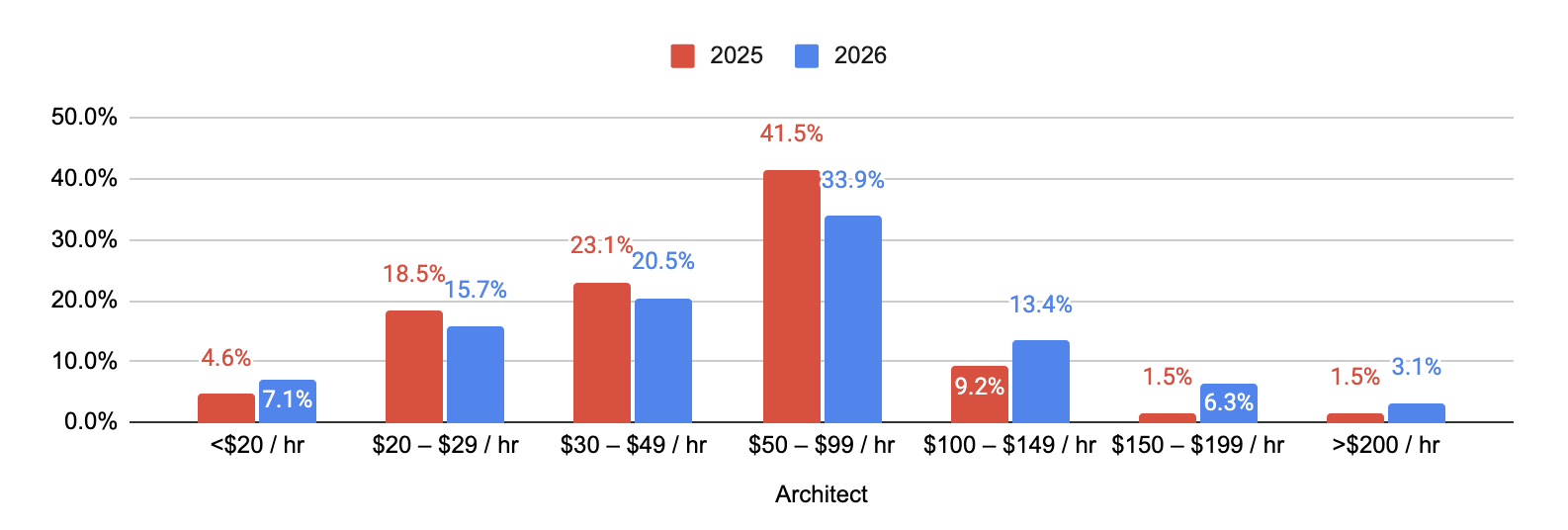
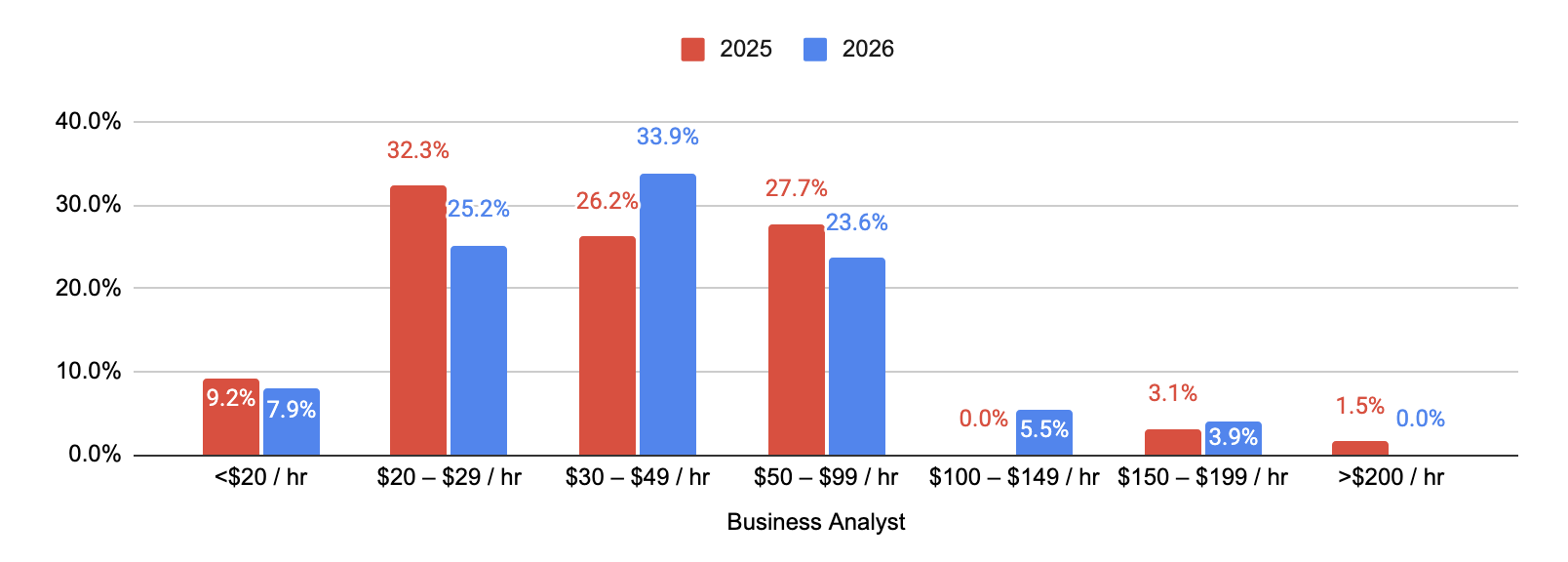
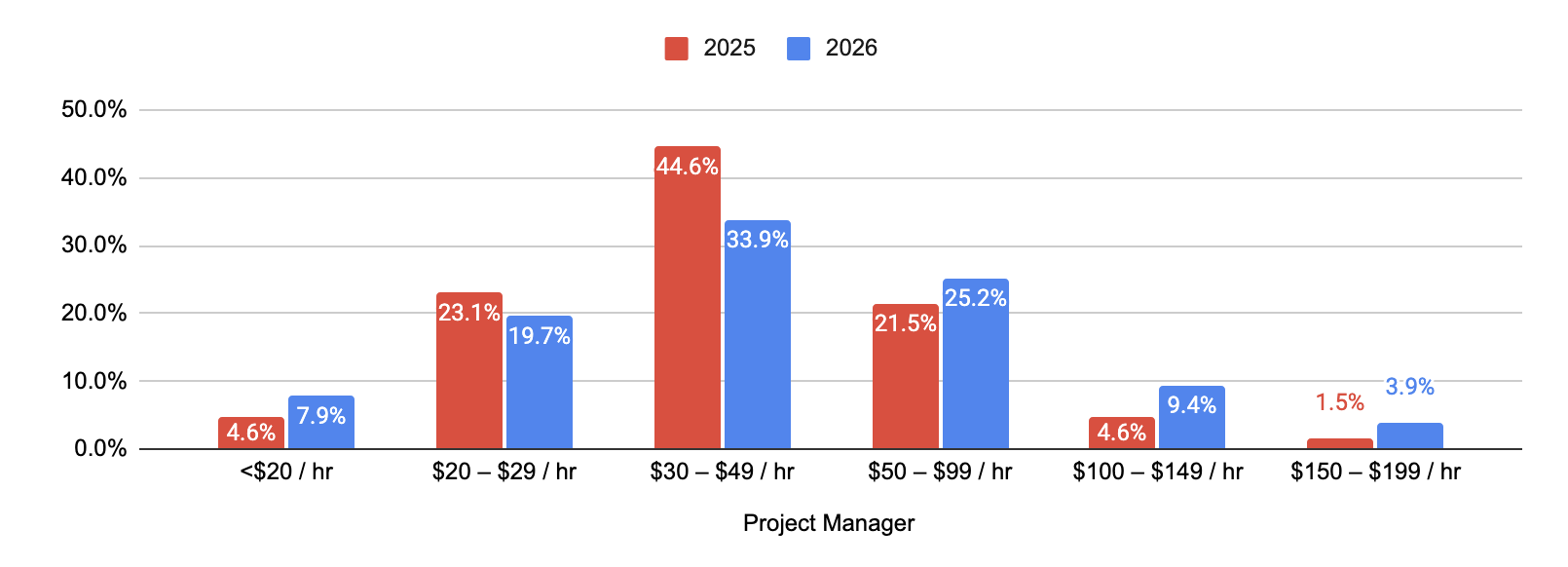
Price Range for Individual Job Roles in 2025 and 2026
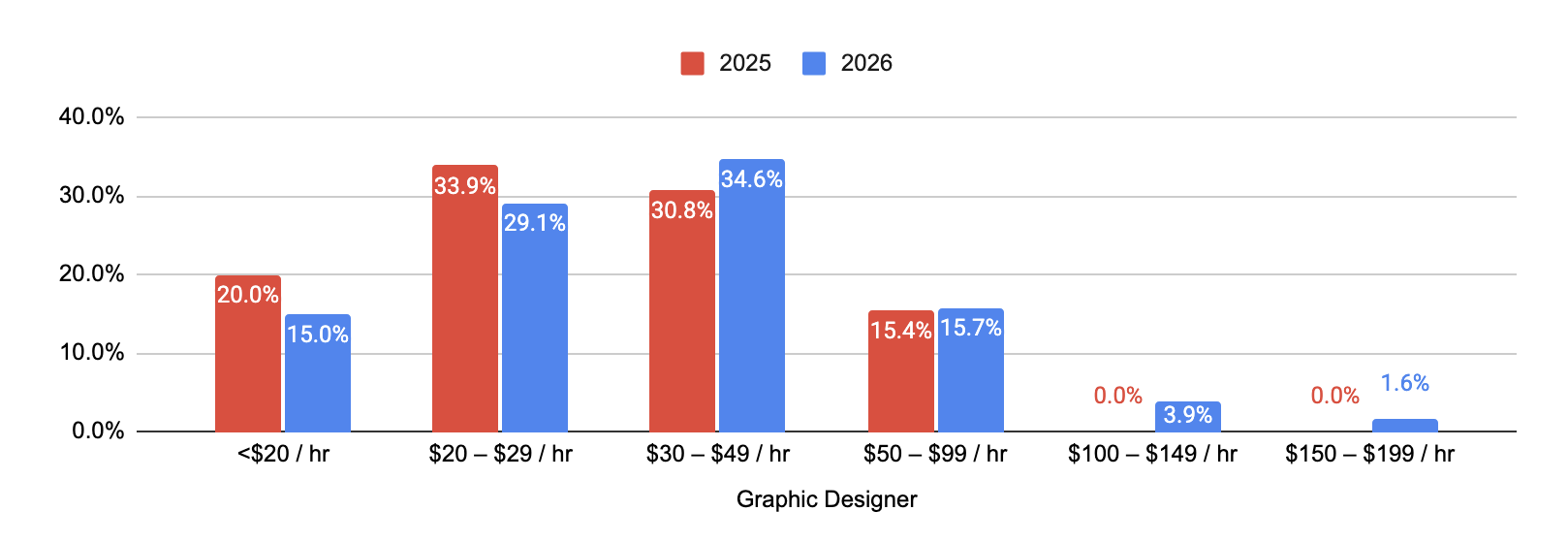
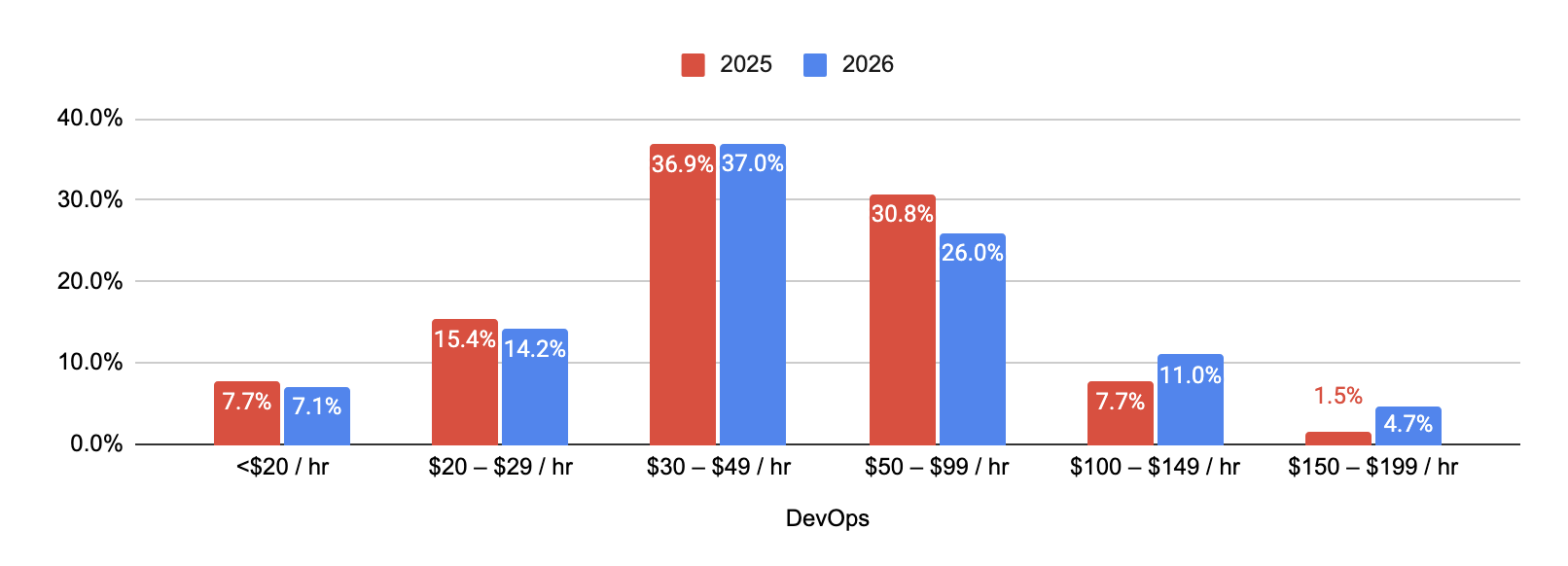
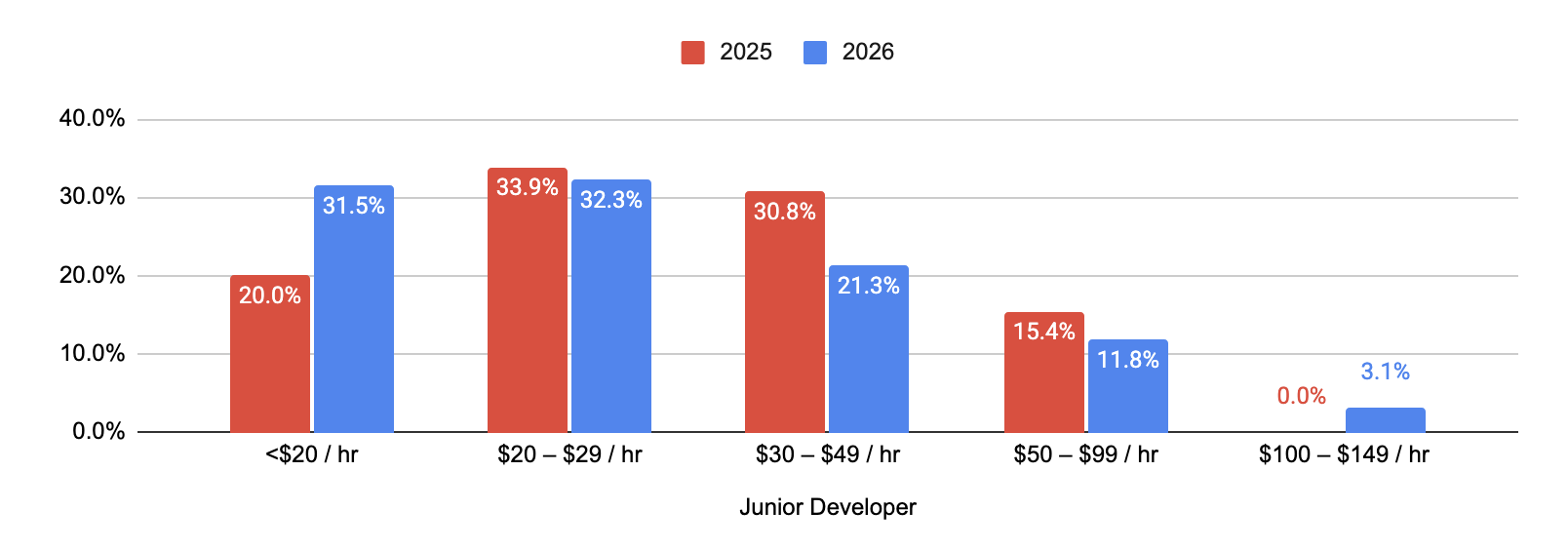
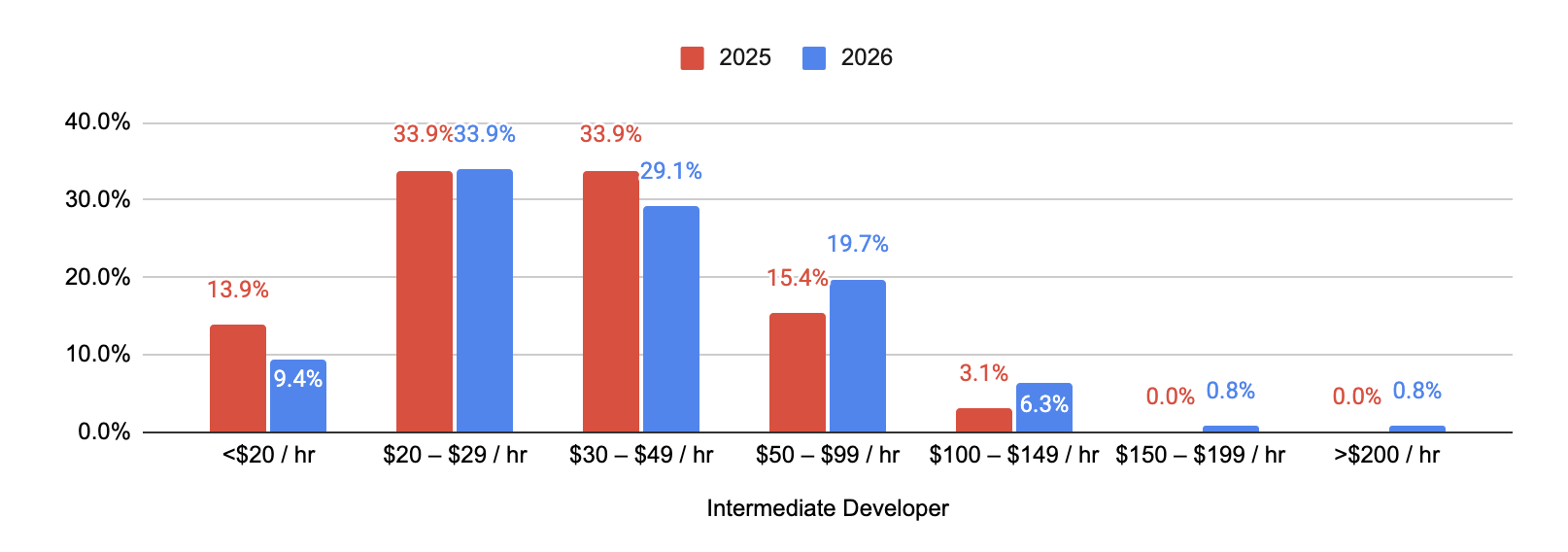
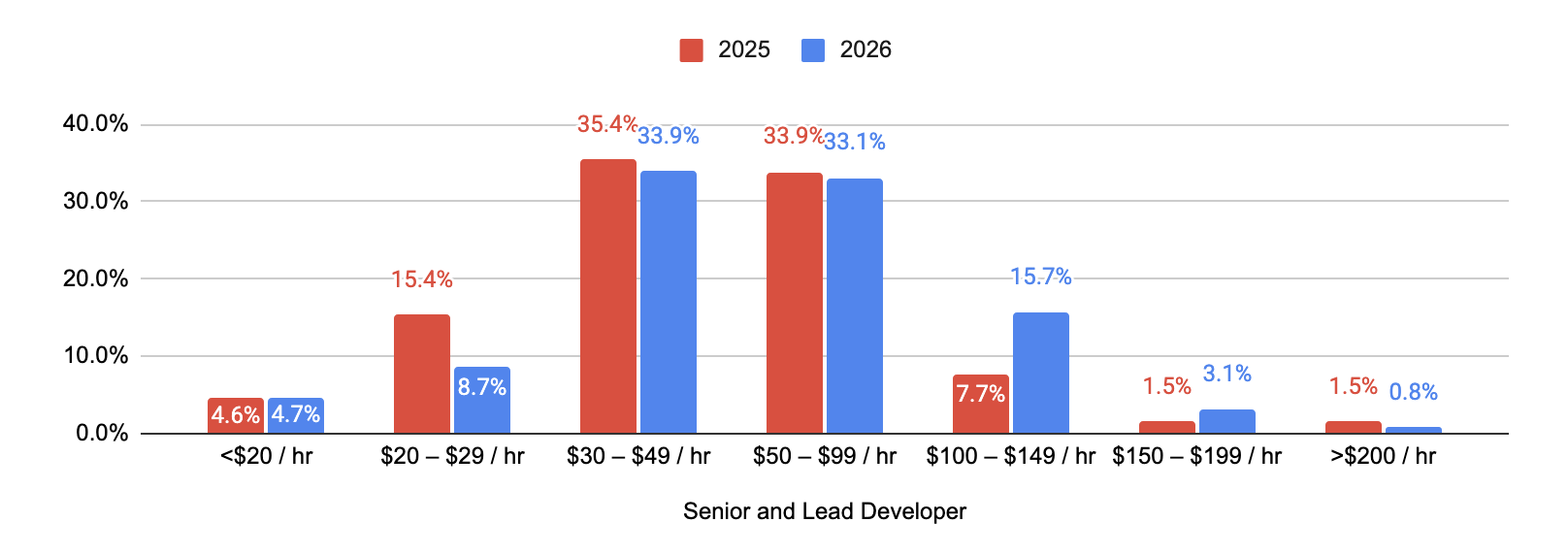
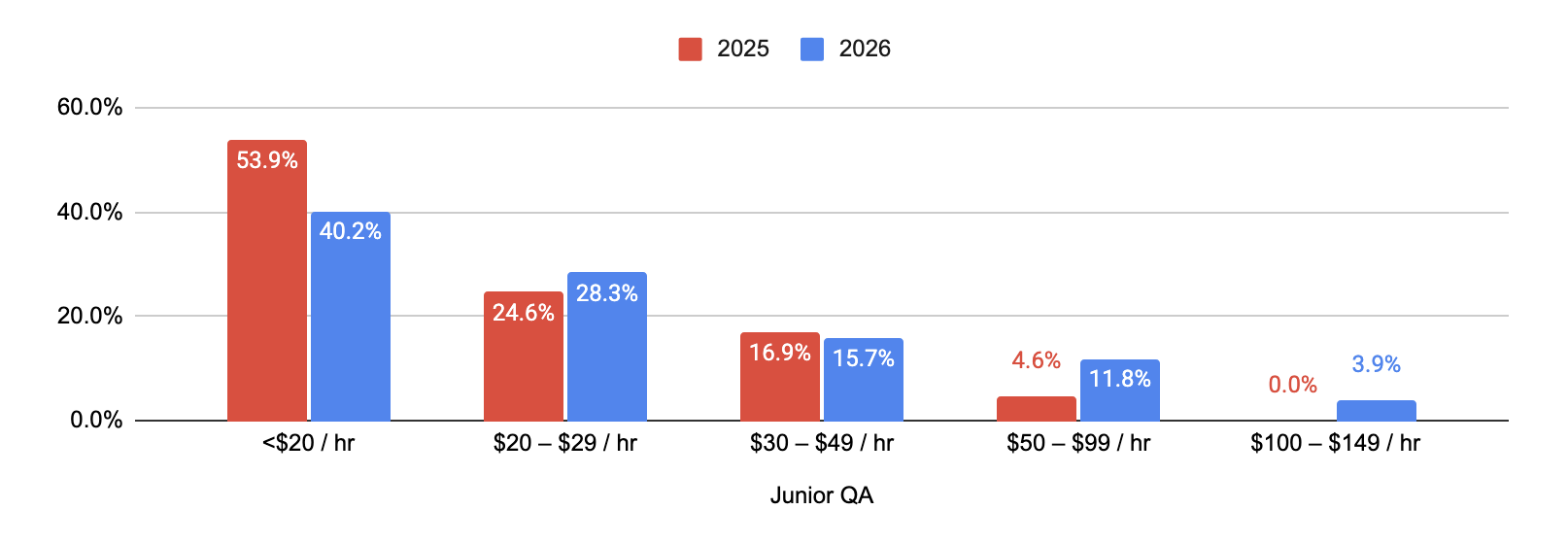
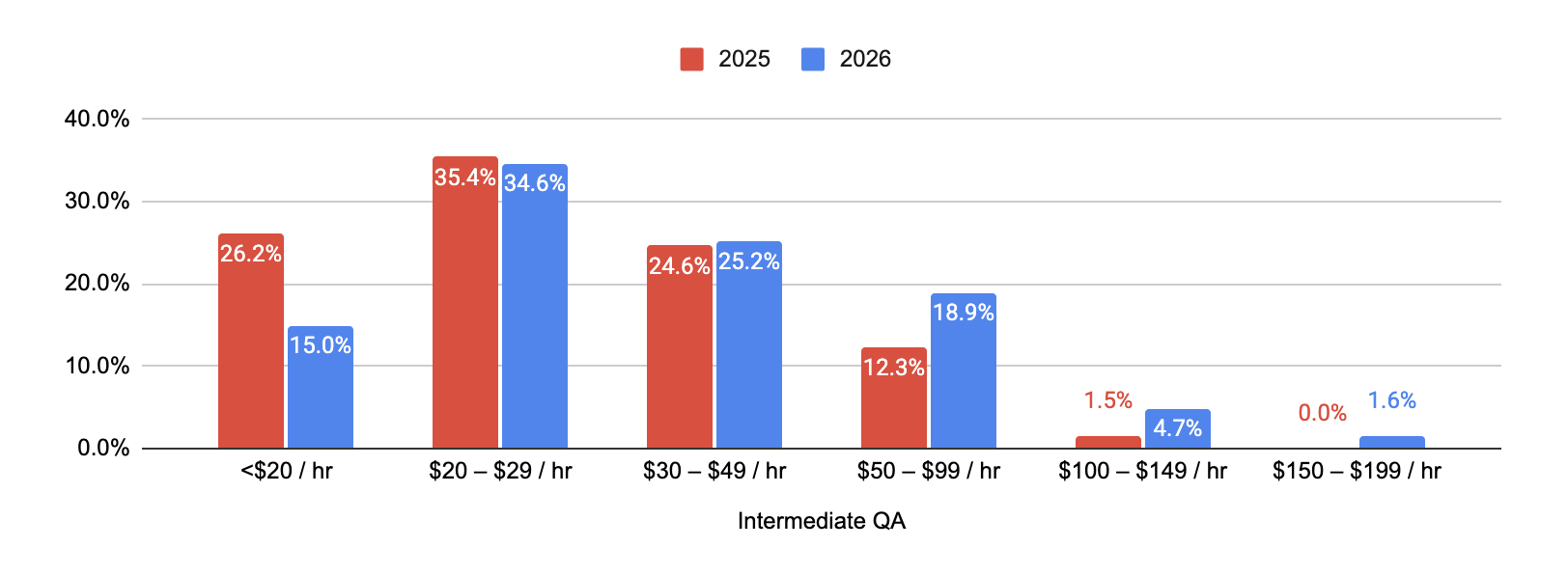
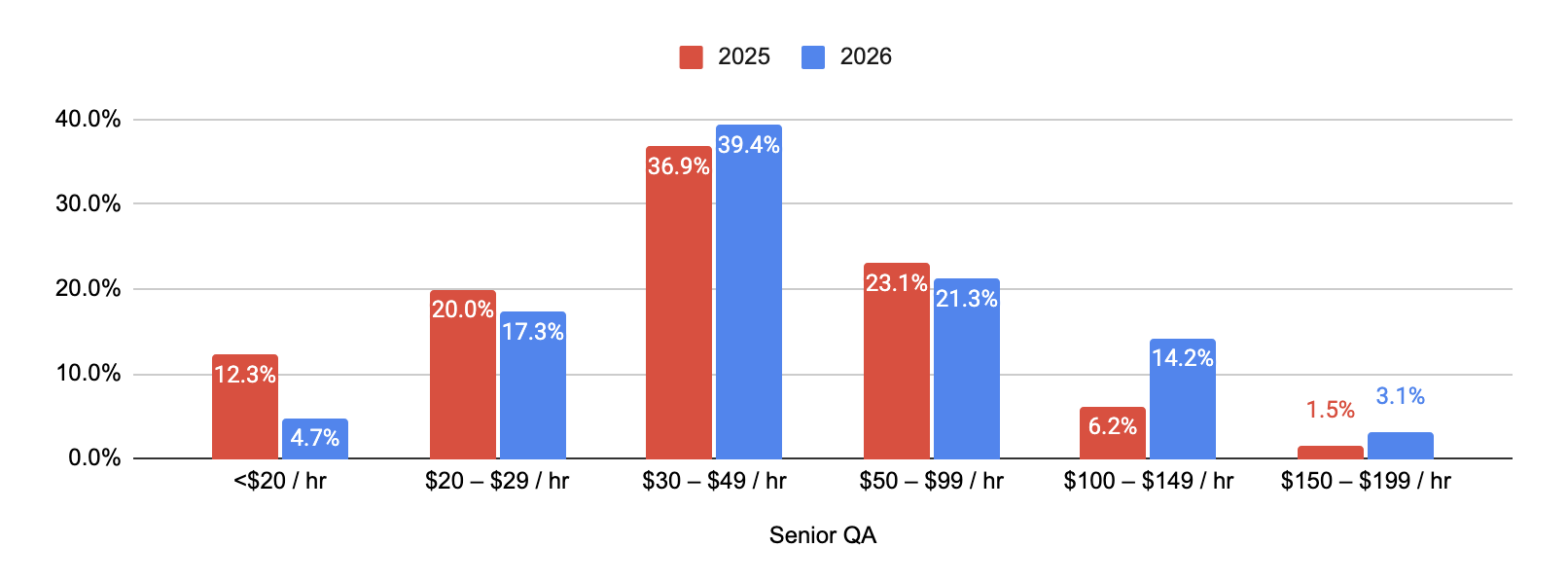
Software development involves many specialized roles and levels of expertise, and Techreviewer surveyed professionals in the following positions about their hourly rates:
- Architect
- Business analyst
- Project manager
- Junior developer
- Intermediate developer
- Senior/Lead developer
- Graphic designer
- DevOps
- Developer
- Junior QA
- Intermediate QA
- Senior QA
Breaking out hourly rates by role and expertise helps buyers determine project costs according to the strategic and technical value they need, along with their budget considerations.
The following charts compare 2025 and 2026 survey results:
Software Development Company Rate Changes in 2026
Rates charged by software development companies were stable according to the latest survey, but a larger share of firms reported rate increases versus decreases.
This chart shows how companies adjusted their rates for the year.
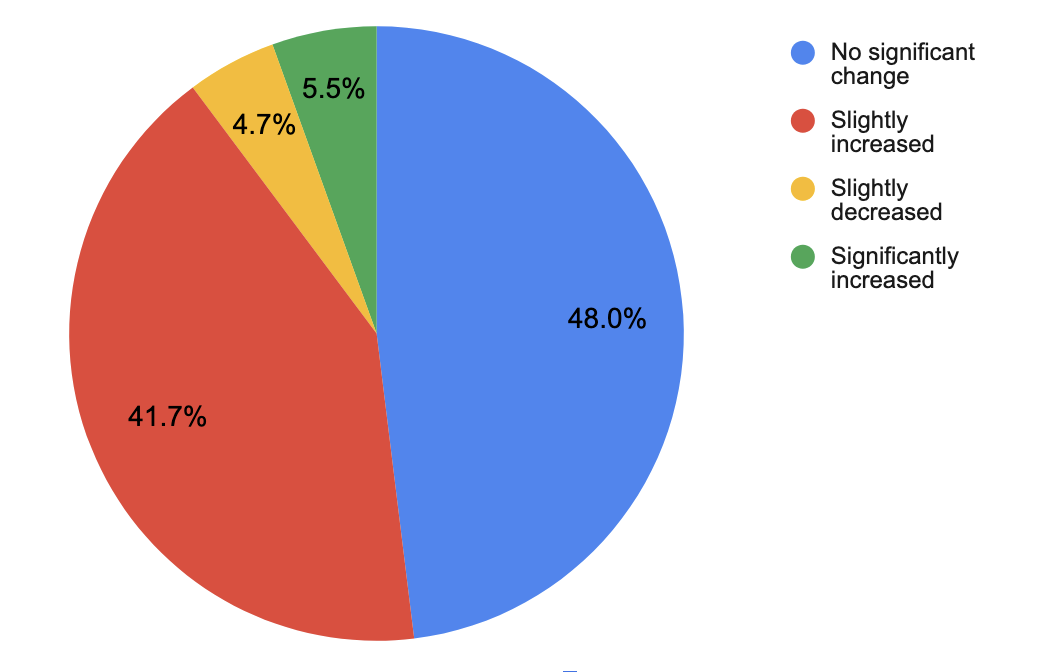
- 48% of respondents reported no significant changes to pricing for 2026.
- Many pricing trends are shifting upward, with 41.7% of companies saying they slightly increased prices for 2026.
- A small number of companies, 5.51%, reported significant price increases. Oftentimes, higher operating costs and expanding service capabilities are factors in these types of increases.
- Only 4.72% of software development companies decreased rates in 2026, per the report.
Key Takeaways
With almost half of companies reporting no significant changes in pricing, the data suggests ongoing stability across many market tiers – even as some adjustments continue in others. To this end, a 2025 CDAO Leadership Perspectives study by Evanta stated that 50% of chief data and analytics officers said their technology budgets remained unchanged from 2024.
However, with over 40% of respondents noting slight rate increases in 2026, steady upward price movement could shift buyer behavior in the near future.
Comparing Rate Changes: 2026 vs 2025 and 2023
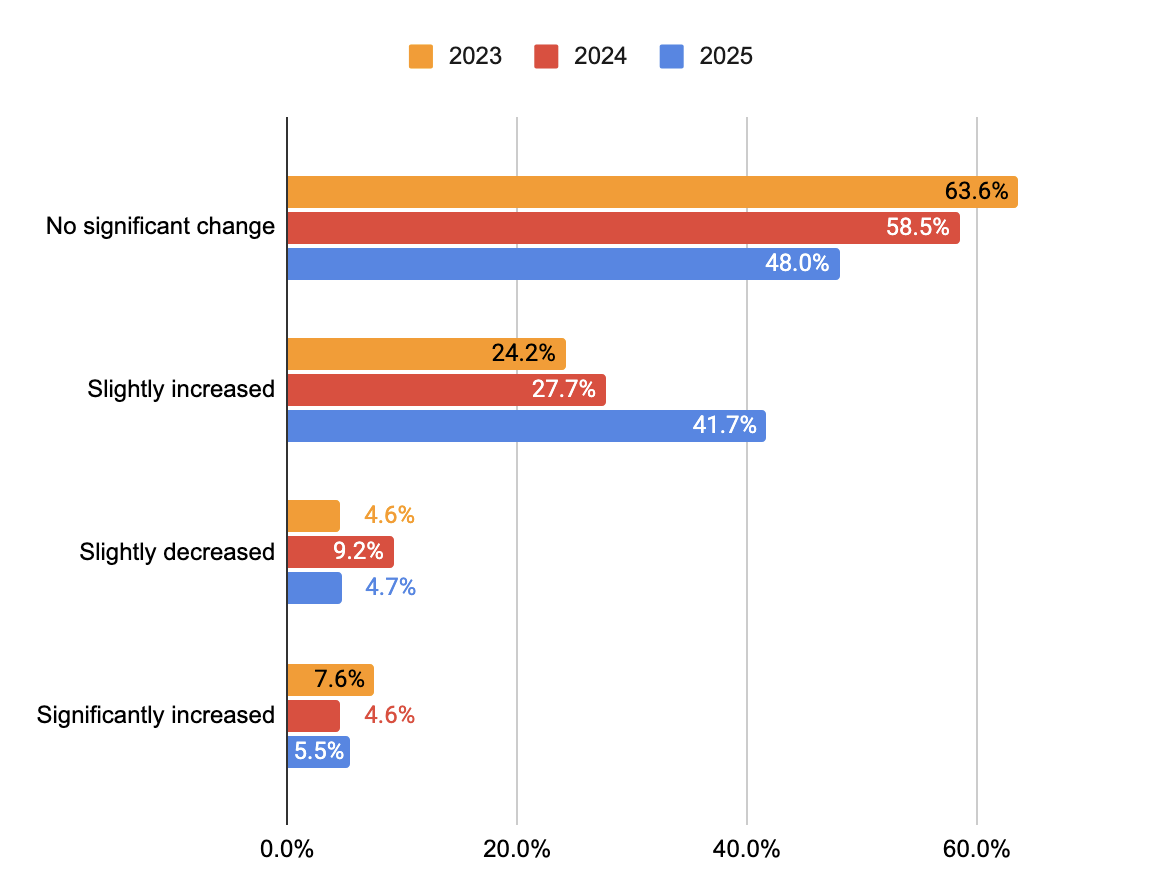
- In 2026, 41.7% of service providers said their rates went up slightly – 14% higher from 2025 and 17.5% from 2023.
- The number of companies reporting no significant changes to rates in 2026 dropped by 10.5% since 2025 and 15.6% since 2023.
- In 2026, the biggest rate hikes were only 5.5%, which is similar to 4.6% in 2025 and 7.6% in 2023.
What Companies Think About Market Rate Changes

- 40.9% of those who took the survey said prices have gone up a little over the past year, and 13.4% said prices have gone up a lot. This means that 54.3% of people who took the survey recognized price increases.
- 31.5% said rates stayed about the same.
- 13.4% of respondents said market rates went down a little. Along with 2.4% of those who said rates went down a lot, the total share of those reporting lower rates was 15.8%.
Key Takeaways
More than half of the professionals who answered the survey think that prices have gone up in the past year. Most of them have only noticed small increases.
While rates aren’t much higher than they were in 2025, this trend could mean that more organizations want to outsource work, there aren’t enough skilled workers, and there’s a growing demand for specialized expertise in AI and machine learning.
Perceived Market Rates vs Real Market Rates

- 48% of market rates were unchanged in 2026, but only 31.5% of respondents believed this was true.
- 13.4% of respondents believed rates had decreased slightly, while only 4.7% of rates actually did.
- 11.8% of respondents thought rates had significantly increased, but in reality, only 5.5% of rates actually did.
Key Takeaways
There’s a stark difference between market rates actually staying the same and the perception of those rates staying the same.
It’s not unusual to assume that prices for software development have increased recently. With a tight labor market in IT and operating costs rising across most industries, price decreases would be unlikely on a broad basis.
The majority of those who completed the Techreviewer survey believed market rates increased slightly, and of all perceptions offered, this one aligns the closest to actual market data.
Key Factors Influencing the Changes in Software Development Rates

- The majority of companies surveyed believe new AI technologies and tools (77.2%) are the main drivers of increasing software development rates in 2026.
- Other primary reasons respondents think rates are increasing is due to higher market demand for software development (58.3%) and changes in the global economic system (46.5%).
- Changes in a developer’s salary range (40.2%) is also viewed as a major reason for higher rates in the market, along with the introduction of automation and low-code to no-code platforms (38.6%).
- Level of expertise on a development team (33.1%) and changes in a company’s operational costs (22.8%) are two more factors influencing changes in software rates.
Key Takeaways
The introduction of AI tools and technologies is a call for broader process change as organizations learn to shift workflows and increase skillsets.
AI and machine learning trends are likely to play a major role in how software development rates change in the coming years, especially as the future of machine learning ties into software engineering strategy.
Comparison: Key Factors Influencing Changes in Software Development Rates
.png)
- The most common reason given for changes in software development rates in 2026 was the effect of new AI technologies and tools, which was 77.2%. That’s significantly above the 2023 total of 28.8%.
- 58.3% of survey respondents in 2026 said that changes in the market demand for software development were also a big reason for rate changes.
- 40.2% of respondents in 2026 said that the developer's salary range had changed, up from 32.3% in 2025
- The global economic situation was cited by 46.5% of respondents in 2026, compared with 52.3% in both 2025 and 2023.
Key Takeaways
AI tools and technologies are making it possible for developers to shift away from manual tasks and focus on more high-level, strategic work. This makes these advancements an essential part of modern software engineering.
It's also important to note that changes in the global economy and the demand for software development were always seen as reasons for rate increases every year.
Measures Companies Take to Stay Competitive

The most significant investments companies have made to remain competitive in the market involve implementing tools and processes geared to increase productivity and decrease workload.
In 2026:
- 85.8% adopted new AI tools and technologies
- 66.9% improved internal processes to increase productivity
- 59.1% invested in more efficient software development tools
- 26.0% reduced their operating costs
- 23.6% offered additional services at the same rate in order to attract clients
Only 16.5% of companies chose to boost their competitive edge by hiring more developers.
Comparison: Measures Companies Take to Stay Competitive
.png)
Techreviewer's 2025 and 2026 surveys added two more measures to show how businesses are dealing with competition: "Adopting new AI tools and technologies" and "Reducing operating costs."
"Adopting new AI tools and technologies" was the most common strategy across all measures and survey years. In 2026, 85.8% of respondents said it was a way to stay competitive.
Customer Relationships and the Pace of Software Development
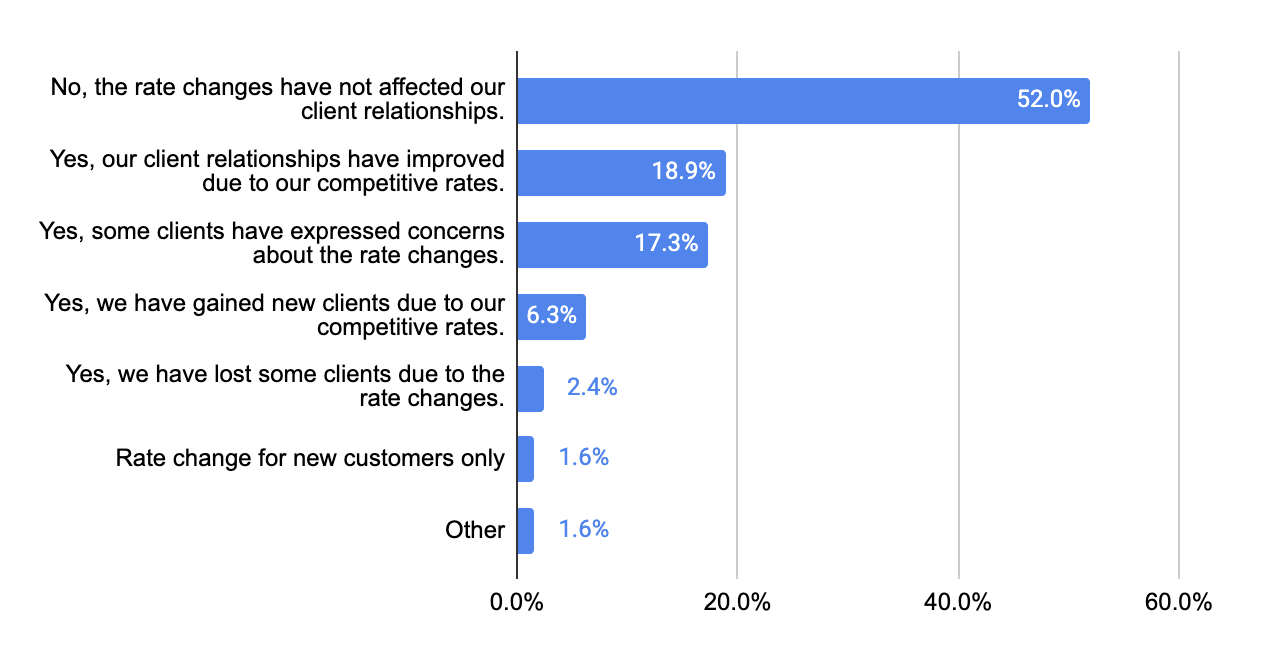
- 52% of respondents indicated that rate changes have not affected their client relationships.
- Staying competitive with pricing has its advantages, as 18.9% of respondents reported their client relationships have improved thanks to attractive rates.
- Some concern about rate changes exists, as 17.3% of respondents said their clients have addressed the topic of higher prices with them.
Key Takeaways
Clients are positioned to spend more when they perceive strong value, so regardless of rate changes, service quality appears to be driving retention.
25.2% of respondents have had competitive rates either improve existing client relationships or help them gain clients.
Comparison: Customer Relationships and the Pace of Software Development
.png)
In 2026, a combined total of 70.9% of respondents said rate changes either didn’t affect their client relationships or improved them, compared to 75.4% in 2025 and 80.3% in 2023. While overall numbers suggest that customer relationships have remained stable, pricing could become a factor in client decisions over time.
It’s important to note also that client losses due to rate changes dropped to 2.4% in 2026 from 7.7% in 2025. So even though a number of clients have expressed concern over rate changes, that concern isn’t translating into client losses.
Rate Change Predictions
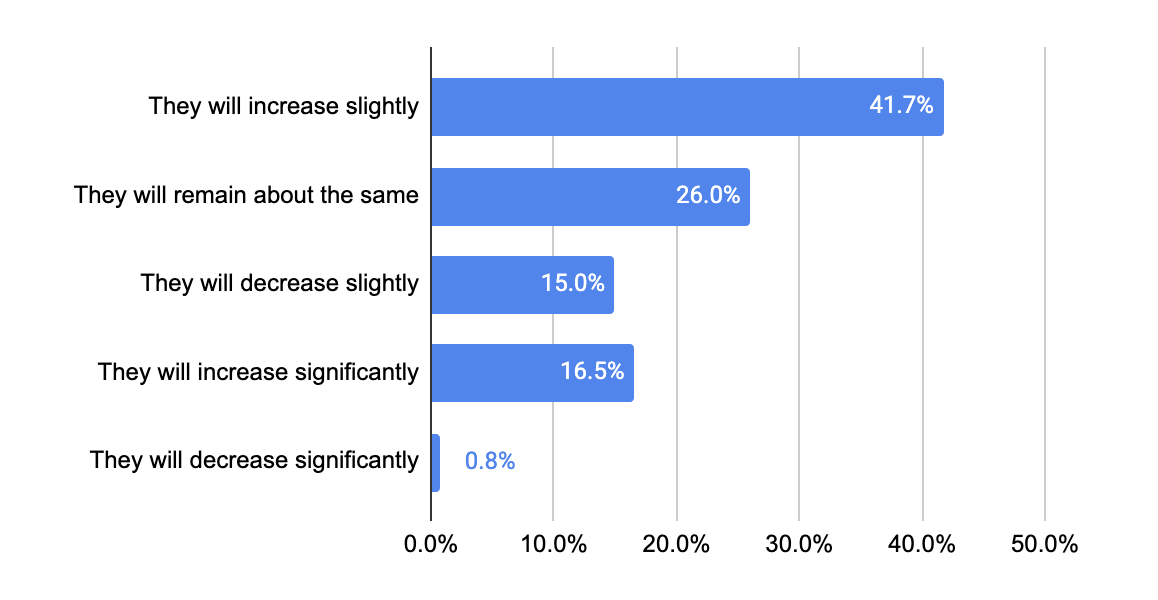
- At least 41.7% of those who answered the survey think software development company rates will rise slightly in 2026, meaning that slight upward price pressure is widely accepted.
- Another 26% think rates will stay about the same.
- 15% of respondents are predicting a slight decrease in prices, and this could be driven by competitive pricing along with greater operational efficiency.
- Only 16.5% of those surveyed anticipate large rate hikes while 0.8% expect the opposite.
Key Takeaways
Significant pricing shifts are less likely, according to survey results.
Over 40% of survey respondents believe software development company rates will increase in 2026, which aligns with the reality that AI tools and technology are taking a foothold in most industries.
As AI continues becoming more common in everyday business, companies are likely to face higher internal costs tied to process changes and employee upskilling. In turn, price increases may be more likely.
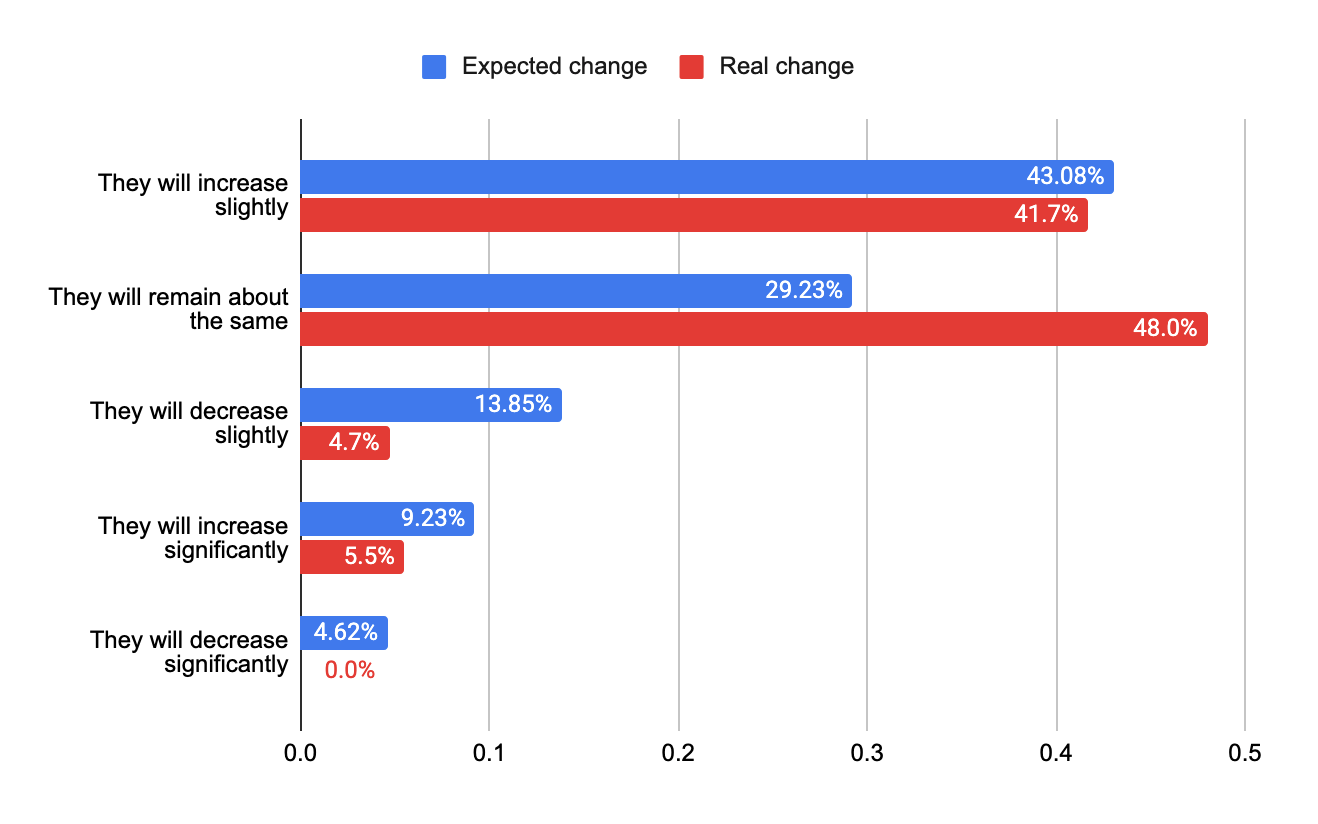
Comparison: Expected Rate Changes vs Real Rate Changes
Key Takeaways
The clearest takeaway from this comparison is how 48% of actual software development rates remained unchanged, while only 29.2% of respondents believed it would. In other words, prices remained much more stable than expected.
The belief that rates would increase slightly was very close to what actually transpired.
Expectations were defied after 13.85% of respondents anticipated price decreases and only 4.7% actually lowered their prices.
Selected Respondent Perspectives
Beyond the quantitative findings in this article, survey respondents also shared anonymous comments explaining their perspectives on the current market environment.
Across these responses, several recurring themes emerged, including the extent of AI’s influence and the need for workforce adaptation.
The comments below highlight some of the broader ideas and concerns respondents are observing in the market today:
“We see pricing stabilizing through efficiency gains from AI, automation, and low-code platforms. Clients increasingly value domain expertise, accelerators, and faster time-to-value over pure hourly cost.”
“In 2026, software development rates are less about geography alone and more about expertise, AI adoption, and domain knowledge. AI has flattened basic coding costs, but senior engineers, architects, and compliance-heavy work still command premium rates.”
“Clients are becoming more quality- and outcome-focused. While there is pressure on rates, long-term partnerships, reliability, and domain expertise continue to matter more than the lowest price.”
“In 2026, software development pricing will be defined less by hourly rates and more by delivered impact. Clients are prioritizing partners who can demonstrate speed, quality, and measurable business outcomes.”
“There is still demand and need for software development regardless of AI. Businesses still want the comfort of having someone on the team that knows what they are doing. AI is making the development job easier, but it will not replace intelligent developers.”
“The rise of AI tools has shifted the role of software developers. Founders can build MVPs with AI, but they still rely on experienced engineers to secure and scale their applications.”
Summary
- Although pricing is still stable in the software development market, there’s a clear shift toward moderate rate increases in 2026. Almost 42% of reporting companies said they slightly increased rates, and the share of companies reporting this change was up significantly from 2025 and 2023.
- Core pricing in the market is concentrating in the $20-$99/hr range, and within that, the $30-49/hr price tier is the largest category at 37.8%. Although higher-priced tiers don’t claim nearly as much of the pricing, these tiers are growing year over year, likely due to demand for specialization and high-level expertise within certain industries.
- A gap exists between perception and reality in how software development providers view market pricing. While 31.5% of survey respondents thought rates had increased over the past year, real market data shows that 48% of rates stayed the same.
- AI and machine learning technology are leading many pricing discussions, and in the 2026 survey, 77.2% of respondents believed AI technologies and tools were a primary reason for rate increases. That’s a dramatic change from 2023, when just 28.8% of survey takers tied these technologies to higher rates.
- Instead of hiring more staff members, software development companies are adopting more AI technology and working on process improvements to stay competitive in the market. In 2026, 85.8% said they adopted new AI tools, 66.9% improved internal processes, and 59.1% invested in more efficient development tools, while only 16.5% said they hired more developers.
- Customer relationships are resilient despite changes in pricing, and a combined 70.9% of survey respondents said rate changes either didn’t affect client relationships or actually improved them. Client loss due to rate changes also dropped to 2.4% in 2026.
- Traditional markets in North America and Europe still lead the way as far as target regions, but the Middle East, Australia and New Zealand, and East Asia are growing in interest as they push harder for expanded digital infrastructure, higher AI investment, and better global opportunities.
Some of the companies that participated in the survey:
Wizard Labs, Saritasa, CleverDev Software, Patoliya Infotech, Celestial Infosoft, Seedium, Timspark, IT IDOL Technologies, KVY TECH, Kyanon Digital, TrueBays IT Software Trading, DATAFOREST, KeenEthics, Differenz System, Daffodil Software, launchOptions, Tuvoc Technologies, Agilie, SAQAYA, Core9 Digital, Anadea, Freshcode, Softlogics, StudioKrew, Diffco, Cabot Technology Solutions, NerdHeadz, DeepInspre, Beitroot, Mihiverse Technologies, Chudovo, BitBreeze, PCD Consultancy Services, Radixiy, Troy Web Consulting, Travancore Analytics, Lizard Global, LBM Solutions, Kalp Technocrats, Plus8soft, Adamo Software, Tech.us, Coderfy, Mallow Technologies, Master of Code, Promatics Technologies, Radixiy, Nexbyt Technology, Siyol Tech, Technocrackers, Caron Infotech, Codearies, Flashyminds, Innov8world, Soluntech, findyIoT, Complete Soft, TrueBays IT Software Trading, Stfalcon, Lamp Techs, BuzzClan, Whale Song, Emvigo, Justo Consulting, Streamlogic, Codmonks Technologies, Digital4design, Fuse Web, Agile Infoways, Binmile Technologies, Reenbit, GMTA Software, Budventure Technologies, Softellar, RELA-TECH, Off Grid Studio, Escolhadigital, Flying V Group, ChicMic Studios, ICTS Custom Software, Alphavima Technologies, Vivasoft, CODECAVE, Graphiters, Scand, Future Processing, Bravado Solutions, Easify Technologies, Opencollar Technologies