AI in Software Development in 2026: Scaling Productivity, Managing Risk
The new frontier of AI in software development is nothing short of remarkable. From generating code and producing documentation to automating work and performing security analysis, this technology is now used by software development companies worldwide.
Along with this increased use, questions and concerns are appearing about security, over-reliance on AI tools, transparency, and accuracy, among other considerations.
For the third consecutive year, Techreviewer surveyed software development companies about their use of artificial intelligence in software development. A total of 127 companies responded to this year’s survey, sharing interesting insights on code generation, productivity, training, and more.
To see survey results from the past two years, follow these links:
- AI in Software Development 2025: From Exploration to Accountability
- The Transformative Impact of AI in Software Development
Some of this year’s most significant findings:
- A substantial portion of production code is now being written by AI. 89% of companies say that their AI writes or offers assistance with some of their code, the median response indicates a figure of 26 to 50%, and around one in four state that AI carries out more than half the coding. 62.2% of the companies surveyed report that most or all of their developers use AI tools on a daily basis.
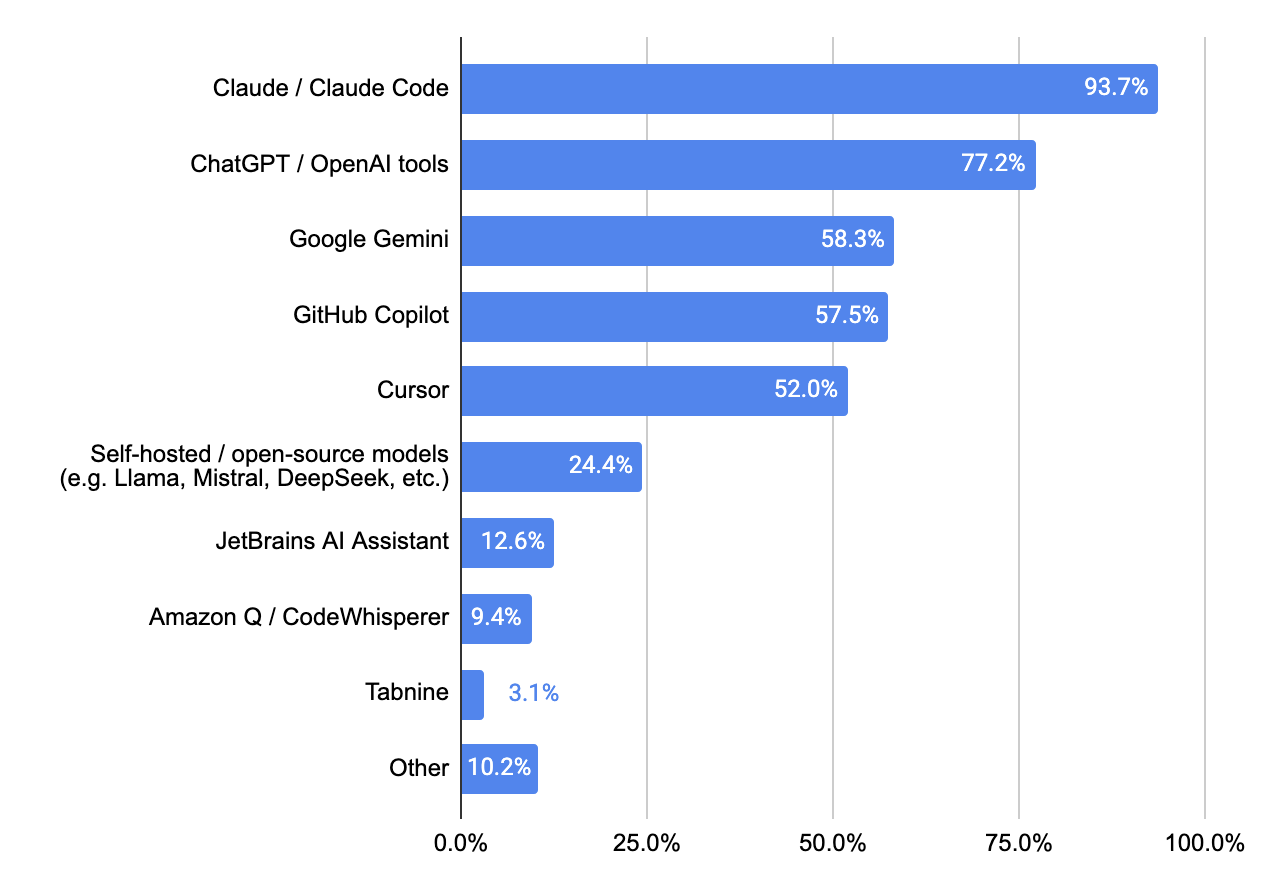
- On average, companies are simultaneously using about four AI tools, with the highest rate of adoption being for Claude/Claude Code at 93.7%, then ChatGPT/OpenAI at 77.2%, followed by Gemini at 58.3%, GitHub Copilot at 57.5%, and finally Cursor at 52.0%. The current situation is that of a multi-tool environment rather than a winner-take-all one, and this has real consequences for governance, data access, and client confidentiality.
- The proportion of companies reporting productivity gains of more than 50% increased fourfold, rising from 7.5% in 2024 to 30.7% in 2026 — a rise of 23.2 percentage points. Almost 97% said they had experienced some improvement, and there was not a single company that reported a decline.
- About 90% of the companies also suffered at least one adverse effect. In 52.8% of cases, the suggestions were hallucinated or incorrect, 44.1% stated that the AI had increased the amount of code review work, and 33.1% came across security or vulnerability problems in the code generated by the AI.
- 37.0% said that there was an over-reliance or a decline in developer skills, especially among junior developers, so that skill erosion became a problem cited more frequently than technical debt (23.6%) or an increase in defects (22.0%).
- Expertise is developed internally rather than being obtained through hiring. The amount of in-house training increased to 72.4%, whereas the dependence on hiring external AI specialists decreased from 35.0% in 2024 to 15.0% in 2026.
- Data privacy and security were the main implementation difficulty, being named by 58.3% of the respondents. However, 15.0% of companies have no AI training strategy established, and 21.3% have neither in-house AI specialists nor arrangements with providers.
Survey Methodology
In July 2026, Techreviewer carried out an online survey among 127 software development companies in its network.
Respondents. Participants included CEOs and presidents (48.0%), marketing managers (23.6%), CTOs (8.7%), CMOs (3.9%), and smaller numbers of founders, developers, project managers, sales and SEO staff, and other professionals. Companies' headquarters are in the United States (26.8%), India (18.1%), Europe (approximately 30% across Poland, the UK, Estonia, Ukraine, Cyprus, Bulgaria, Croatia, and Germany), and more than a dozen other markets.
Sample composition and its limits. Respondents were recruited from Techreviewer's own network of software development companies.
About three-quarters of the respondents (74%) employed fewer than 100 people, while one company had more than 1,000 employees, meaning that these results relate to AI adoption among small and medium-sized firms rather than enterprise-level adoption. The number of marketing managers and CMOs put together (27.5%) was greater than the total number of CTOs and developers (11.1%). Hence, technical figures such as the proportion of code written by AI or the rate of hallucinated suggestions are based on the views of senior leaders rather than on independent measurements or direct reports from developers.
Comments from experts. The participating companies were asked for their expert comments using an optional section in the survey. The respondents who were quoted were chosen on the basis of the particularity of their responses, not because of their connection with Techreviewer.
Sample sizes and margin of error. This report compares the results from 2026 (with n=127) to those from Techreviewer's 2024 (n=44) and 2025 (n=83) surveys. Not all of the respondents answered all of the questions; the number of respondents per question was about 40 in 2024 and 79 to 81 in 2025.
At the 95% confidence level, the margin of error for a single reported share is about ±8.7 percentage points in 2026, ±10.8 points in 2025, and ±14.8 points in 2024.
Reporting conventions. Some questions allowed multiple selections, so those percentages add up to more than 100%. Year-on-year changes are given in percentage points (pp), that is, the simple difference between the two shares. In cases where a relative change is more useful, it is indicated as such.
For some questions, the way the question was phrased and the range of answer options changed from year to year, and where possible, the comparisons use categories that can be directly compared.
Respondent Profile
Software Development Company Size
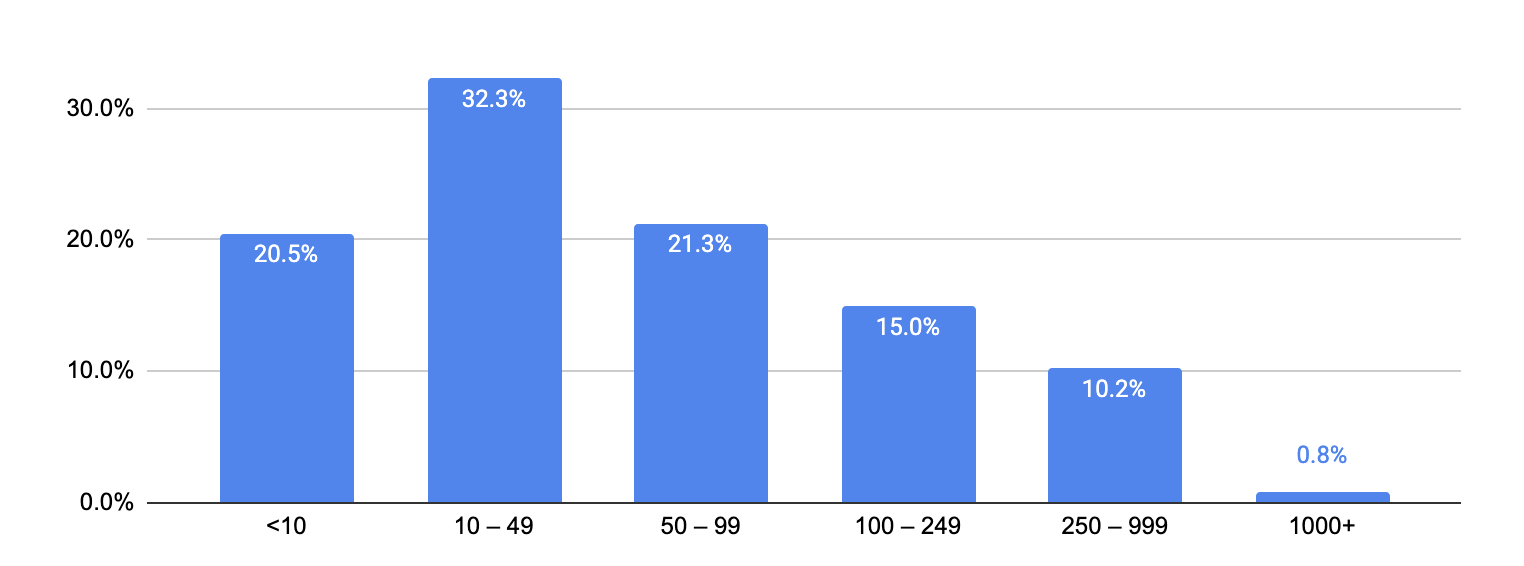
- The largest group of software development companies responding to the survey, at 32.3%, had 10–49 employees.
- 74% of surveyed companies had fewer than 100 employees, making this primarily a view of AI adoption among small- and mid-sized software firms.
- Companies with 100 or more employees accounted for 26% of the survey sample.
- The smallest group of software development companies responding to the survey, just 0.8%, had over 1,000 employees each.
Similar to the two preceding years, small- and mid-sized companies were strongly represented in the survey, with 74% of respondents employing fewer than 100 people.
Consequently, the findings mainly show the level of AI adoption in smaller software companies rather than in large ones. Since available budgets, in-house expertise, workforce arrangements, development requirements, and the degree of governance maturity can differ according to company size, this point should be taken into account when interpreting the results.
Work Roles of Survey Respondents
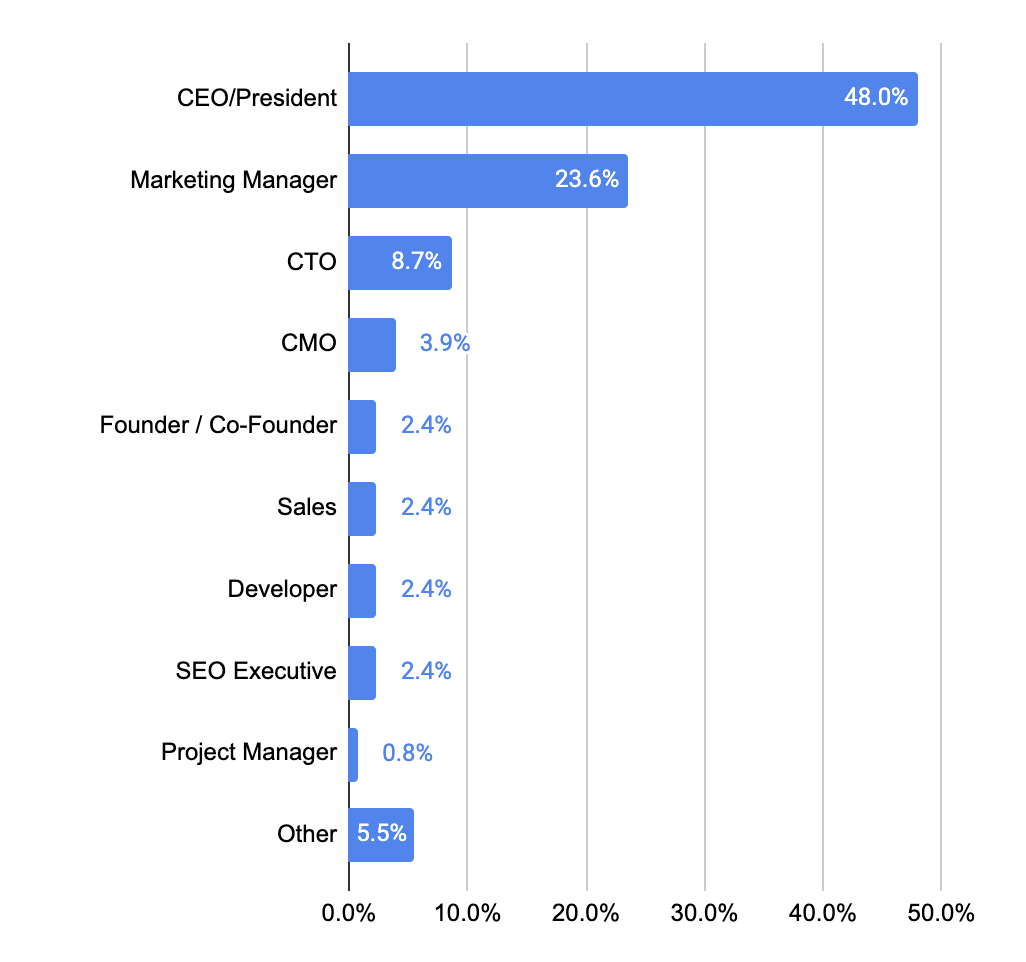
- Together, CEOs, presidents and marketing managers made up 71.6% of the survey sample.
- CTOs accounted for 8.7% of respondents, and developers accounted for 2.4%, equaling just 11.1% of the survey sample.
- The number of marketing managers and CMOs together (27.5%) is greater than that of CTOs and developers combined (11.1%), which indicates that technical measures such as hallucination rates and the proportion of AI-written code are mostly reported by people who are not technical.
The survey provides a predominantly leadership-level view of AI in software development. Nearly 72% of respondents were CEOs, presidents and marketing managers. This is a strength when examining how companies evaluate AI in relation to budgets, operating costs, staffing, strategic direction, and service positioning.
However, the composition of the sample must also be taken into account when interpreting results. There are metrics like the percentage of code written by AI and the rate of hallucinated or incorrect suggestions, but those are mostly based on leadership-level reporting. They aren’t about independently measured performance or direct feedback from developers.
Company Office Locations
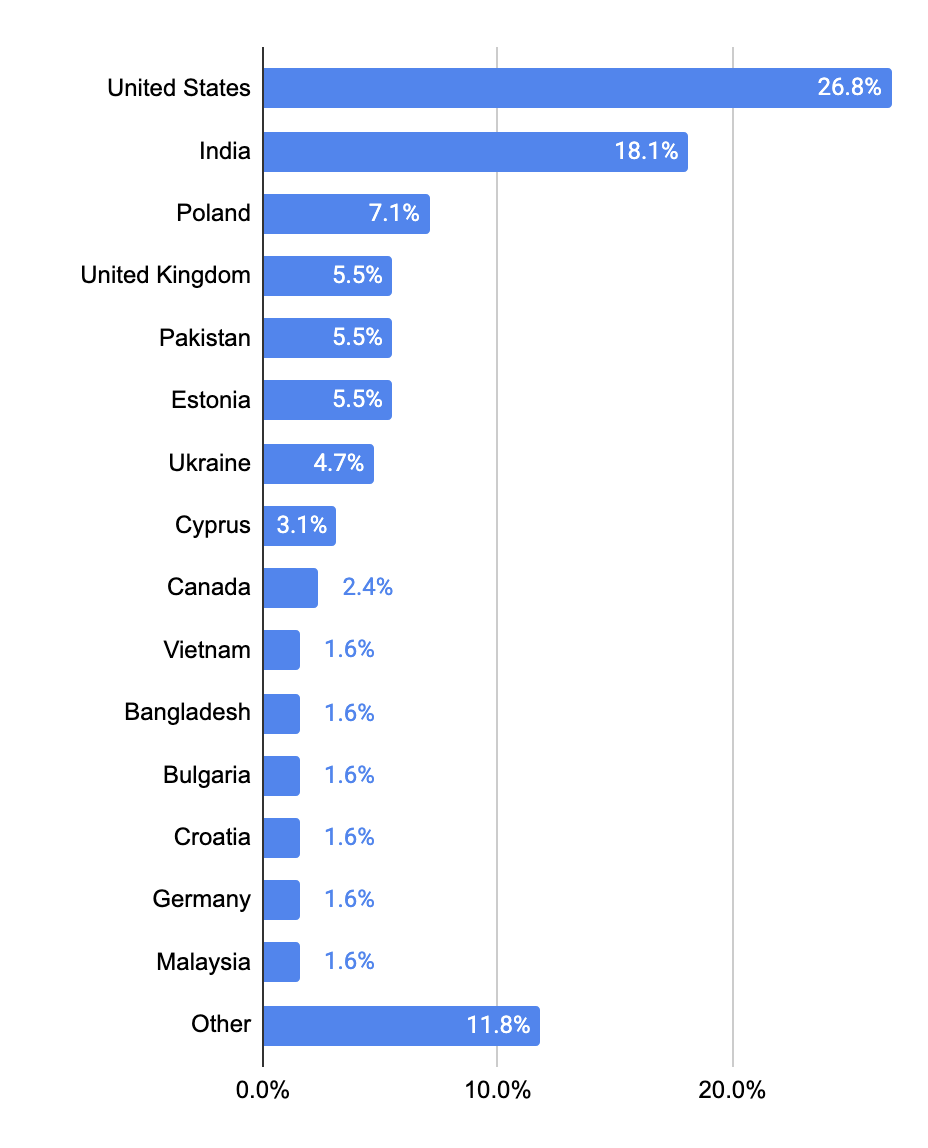
- The United States stood out significantly as the leading office location, representing 26.8% of participating companies, while India ranked second at 18.1%.
- All remaining software development companies were distributed across Europe, North America, South Asia, Southeast Asia, and countries grouped under "Other."
- Roughly one in five respondents were headquartered in the EU, which is a relevant context for the survey's results on regulation and data handling.
As the chart shows, the software development industry is geographically diverse and spans a wide range of international software markets. Although the United States and India have strong representation, over half of all companies are located elsewhere.
Buyers researching vendors in the United States can explore Techreviewer’s list of the country’s top US software development companies.
Research here backs common knowledge about the prominence of developer communities in the United States and India. In fact, GitHub’s 2025 Octoverse report also found that the United States had the largest developer community, at approximately 28 million developers, followed by India at approximately 21.9 million.
How Companies Are Using AI
How Are Companies Using AI in Software Development?
Key Takeaways
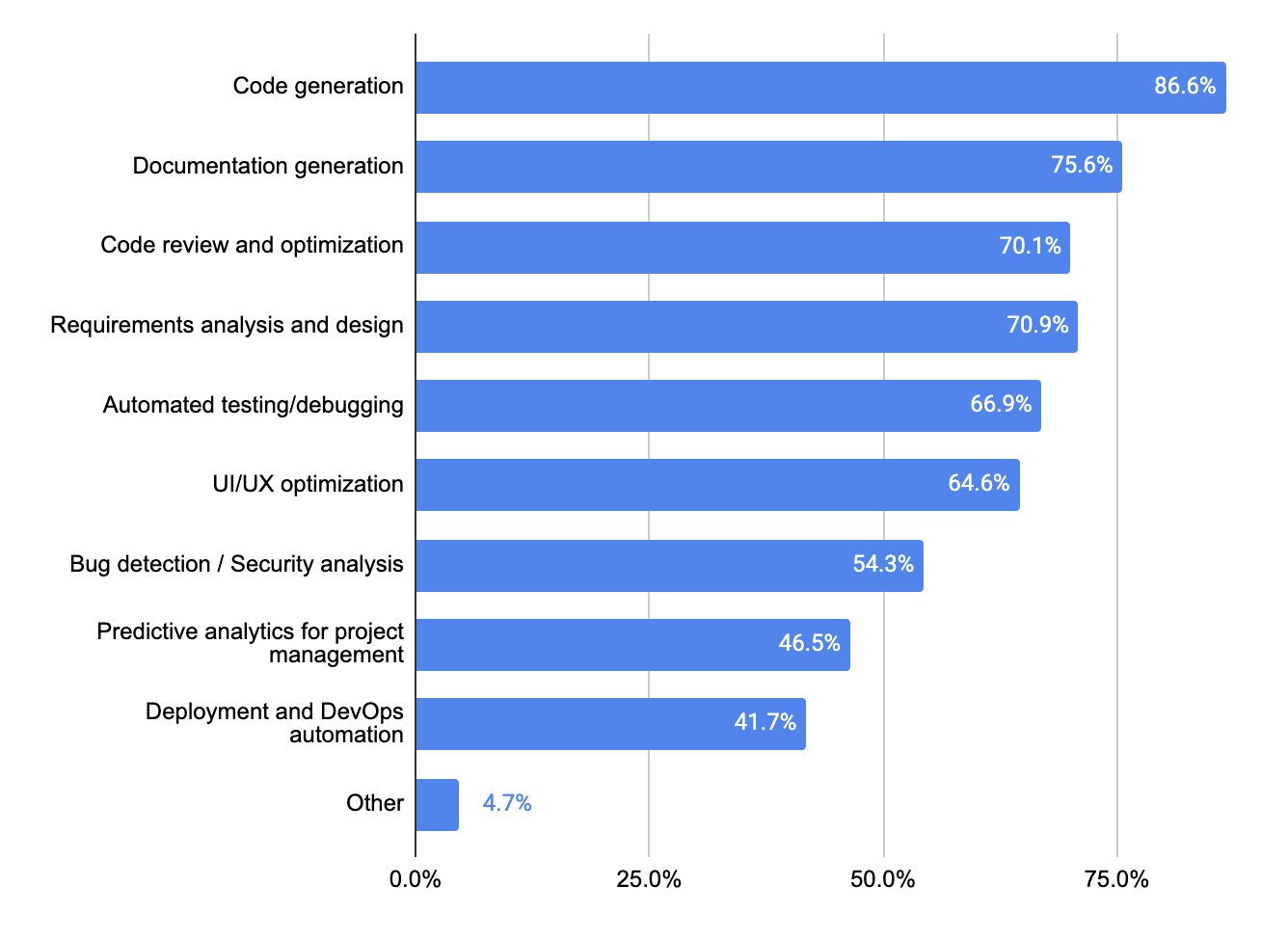
- In 2026, code generation was the most common AI application, at 86.6%, followed by documentation generation at 75.6%.
- Roughly two-thirds to 70% of companies use AI for requirements analysis and design (70.9%), code review and optimization (70.1%), and automated testing or debugging (66.9%).
- Predictive analytics for project management and DevOps automation remained the least commonly named applications, despite both increasing from 2025.
AI adoption ranges from 65% to 87% for high-volume tasks such as generating code and documentation, analyzing requirements, reviewing code, and testing software—applications that produce outputs that development teams can inspect, test, and refine before the wider development process is affected.
Looking more closely at predictive analytics and DevOps automation, adoption drops to approximately 42%–47%. In any use case, expertise, training, and review will continue to be critical to successful implementation.
"Using AI to catch security issues, logic gaps, and architectural drift before merge has a better risk-to-reward ratio than using it to write the code in the first place."
— Rishi Ram, CTO at GMTA Software
Changes in AI Use for Software Development Since 2024
.webp)
Key Takeaways
- Every named AI application area increased in use between 2025 and 2026. The "Other" category fell from 13.9% to 4.7%, and bug detection/security analysis has no 2025 baseline because it was measured for the first time in 2026.
- UI/UX optimization made the largest three-year increase of all application types this year, rising 32.1 percentage points – from 32.5% in 2024 to 64.6% in 2026.
- Bug detection/security analysis reached 54.3% in 2026, its first year of measurement by Techreviewer.
- Requirements analysis and design rose 25.9 percentage points between 2024 and 2026, from 45.0% to 70.9%.
These findings reinforce the trends documented in Techreviewer’s 2024 survey and 2025 survey, which show AI use spreading beyond code generation into requirements, testing, UI/UX, and other development work.
To that end, in 2026, at least two-thirds of all surveyed companies were using AI for documentation, code review, requirements analysis, and testing, while UI/UX optimization approached the same level.
For software development companies, speed and consistency are definite benefits of this technology, but the need for proper review and accountability also becomes paramount as a result.
The AI Toolsets Powering Software Development
Key Takeaways
- Claude/Claude Code were leaders in AI tool use by software developers, at 93.7%, followed by ChatGPT/OpenAI at 77.2%.
- More than half of the companies surveyed used Gemini, GitHub Copilot, and Cursor in 2026.
- There’s a sizable interest in self-hosted and open-source AI models, with 24.4% of respondents using AI tools such as Llama, Mistral, and DeepSeek.
Although Claude and ChatGPT had the broadest adoption, most software development companies also used at least one of the next three leading options. Survey findings suggest that AI in software engineering is becoming a multi-tool environment, not just a market where a single product will replace everything else.
While using different tools to complete tasks can be helpful, it can also complicate governance and require companies to develop clear policies on tool use, access to proprietary information, subscription costs, and output metrics. A software development company’s clients may also need to know what tools are being used and how those tools are being managed, for the sake of confidentiality.
"Tying our entire industry's productivity to a handful of giant LLM providers is incredibly risky. If their platforms go down or their pricing changes, our workflows halt. We need AI as a copilot, not the pilot."
— Shraddha Dubey, Technical Architect at ACL Digital
Monthly Spending on AI Development Tools
Key Takeaways
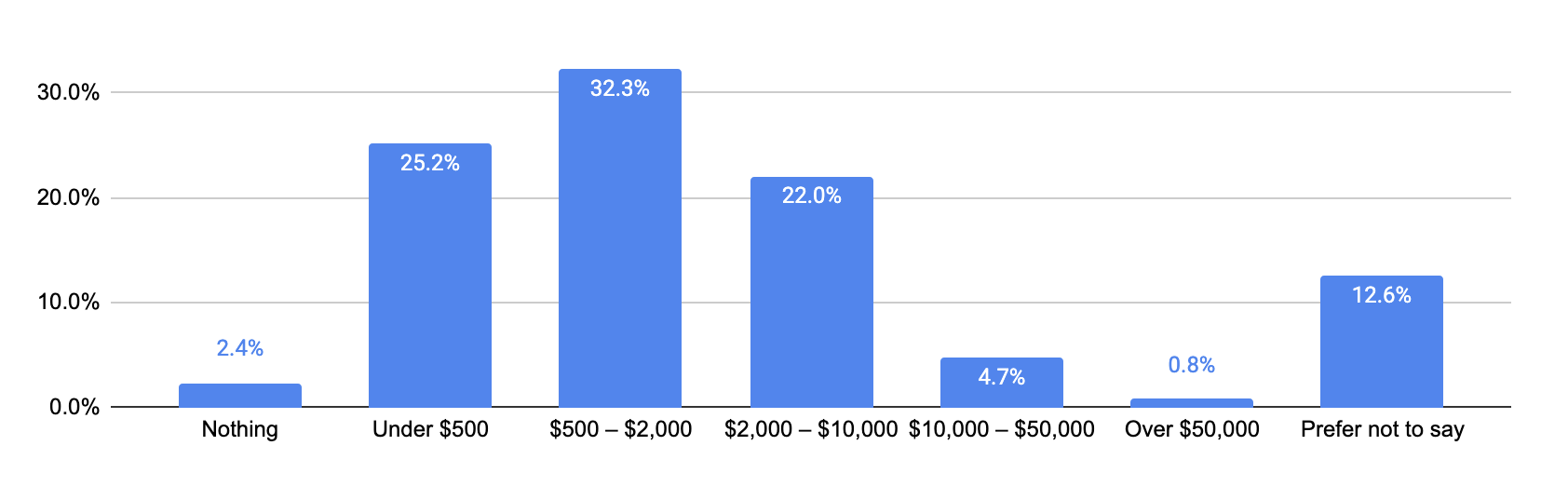
- Nearly 60% of companies spend under $2,000 per month on AI development tools, including 2.4% that report no spending.
- Only 5.5% of companies spend more than $10,000 per month, and a single respondent reported spending over $50,000.
- 12.6% of participating companies didn’t disclose spending information.
- Given that 74% of respondents have fewer than 100 employees, the modal spend of $500–$2,000 per month is consistent with per-seat tool subscriptions rather than infrastructure or custom model investment.
For most companies, present expenditure on AI development is fairly low. Approximately 60% spend less than $2,000 a month, which may indicate a slow rate of adoption, the fact that only certain teams have access to these resources, or the fact that they are trying to assess the results before deciding to increase their budgets.
At the same time, high implementation costs emerged elsewhere in the survey as the fastest-rising concern about AI adoption. The contrast may indicate that companies are less concerned about their current monthly costs than the future cost of expanding AI across operational systems.
It wasn't the case that all the respondents saw increasing costs as a hindrance; in fact, one person held the contrary view, believing that prices might eventually have to change and also questioning whether any particular tasks should be automated at all:
"We think companies should keep a healthy balance between AI and human talent — AI is getting more expensive, and there may come a point where certain tasks are once again better handled by people."
— Max Kashcheiev, CBDO at Artjoker
The Expanding Footprint of AI in Programming
Key Takeaways
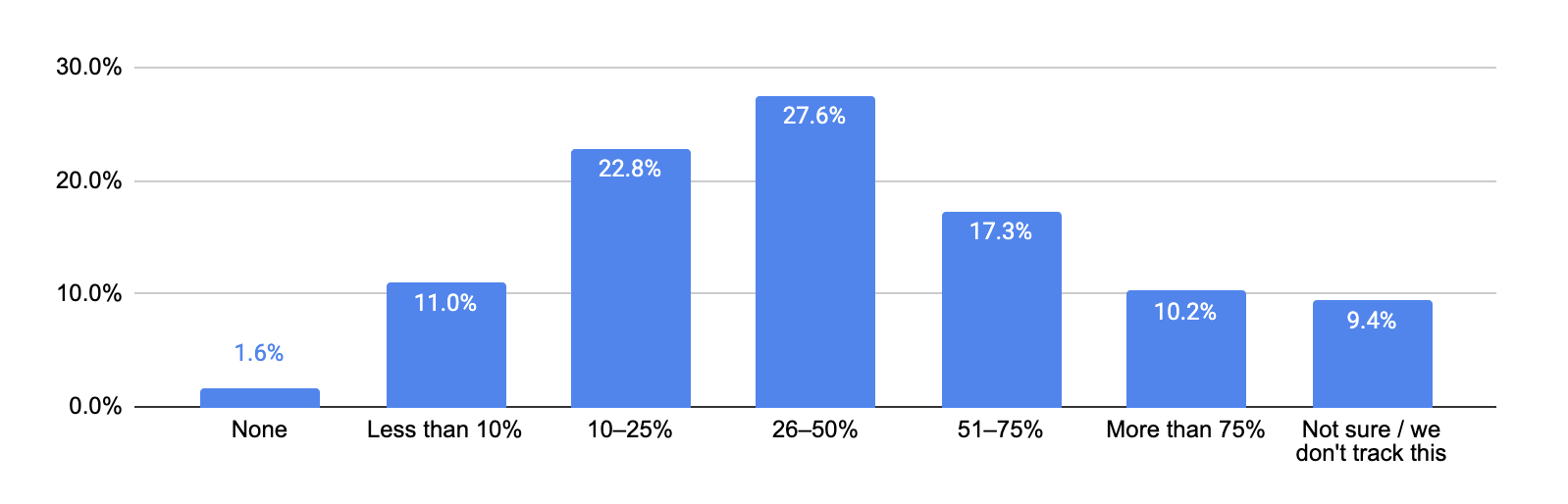
- Of the 127 companies responding to Techreviewer’s 2026 survey, 89% reported that AI writes or assists in writing at least some of their teams’ code.
- Over 50% of software development companies said that AI touches between 10% and 50% of their teams’ code.
- Just 1.6% of companies responding said AI had no involvement in their coding, while 9.4% weren’t sure or didn’t track it at all.
- About 1 in 4 respondents said that AI assists with over half of their regular coding work.
AI in programming is now so common that nearly all software development companies surveyed by Techreviewer reported using it in their work. And because the median survey respondent said AI writes 26%-50% of their code, it’s reasonable to say that AI is present in many companies’ development workflows.
The level of adoption seen in 2026 makes oversight increasingly important. If standards haven’t been developed yet, now is the time to establish standards for reviewing AI-generated code, protecting proprietary information, documenting use, and ensuring security.
Asked what worries them most about AI's effect on the industry, one respondent answered in a single line:
"A flood of low-quality 'vibe-coded' software, that lowers trust in the whole software industry."
— Austin Serb, Full Stack Engineer at Serbyte Web Design & Development
The Proportion of Developers Using AI Tools In Their Daily Work
Key Takeaways
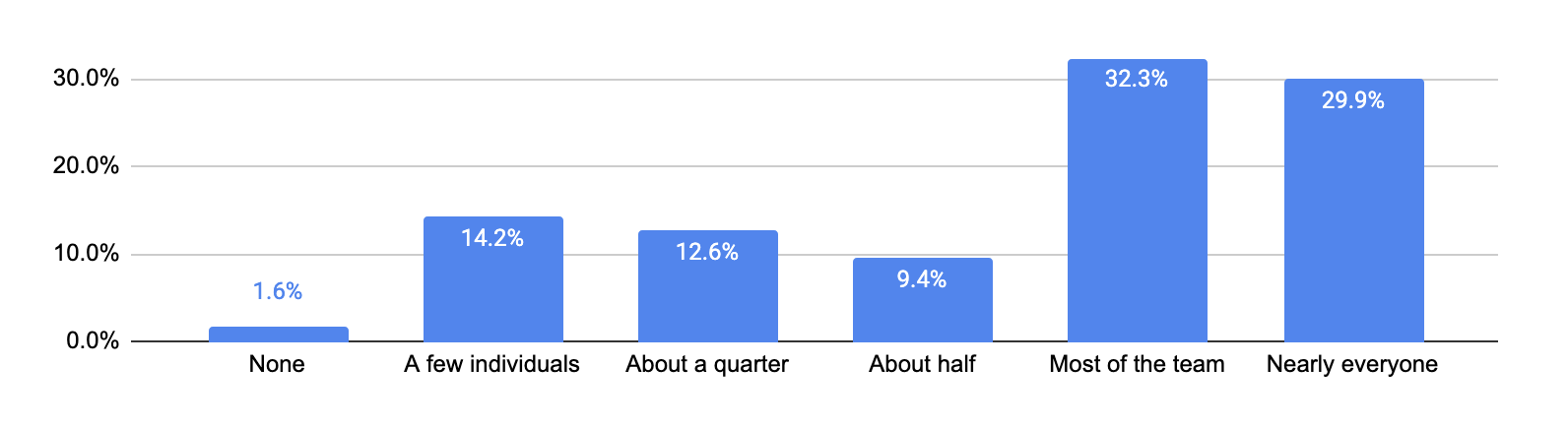
- A total of 62.2% of companies report that AI tools are used daily by most or all of their developers.
- More than 70% say that at least half of their developers use AI tools each day.
- Only 1.6% report no daily AI use among their developers.
For most companies, AI in the workplace has gone well beyond occasional or project-specific use. With over 60% of companies reporting that AI tools are used daily by most or all of their developers, these tools are becoming part of standard software development workflows.
The level of adoption varies throughout the rest of the market, since about 28% of companies report that less than half of their developers use AI tools every day. This might be due to differences in company size, project requirements, security policies, or because there is unclear guidance regarding AI-generated outputs.
As the use of AI grows within development teams, managers are going to have to set up expectations organisation-wide regarding training, security, human inspection, and its use. Such measures will aid in keeping accountability as usage increases.
What AI Is Delivering
The Impact of AI On the Software Development Lifecycle
Key Takeaways
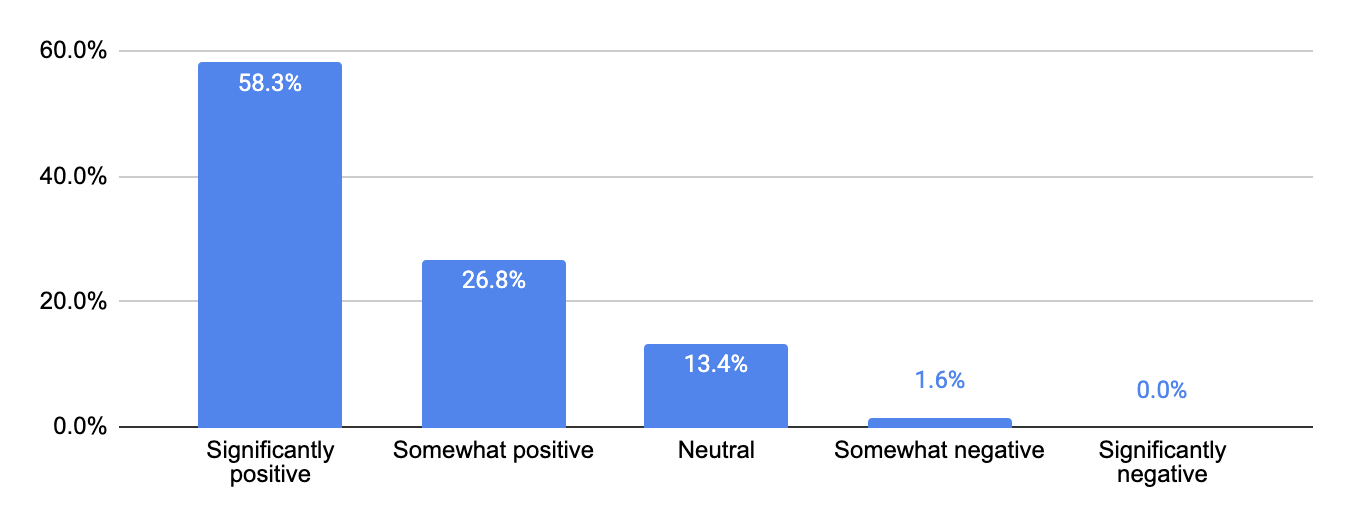
- Among 127 software companies surveyed, 58.3% said AI’s impact on their development lifecycle had been significantly positive in 2026.
- A combined 85.1% of respondents reported either a significantly or somewhat positive impact.
- Only 13.4% said the impact of AI on the lifecycle was neutral, and under 2% said it was somewhat negative or significantly negative.
Several years ago, AI may have just been supporting isolated coding tasks, but the overwhelmingly positive assessments from 108 of the 127 software development companies surveyed tell a different story. From analysis and documentation to code review, testing, and deployment, this technology is reshaping the entire development lifecycle.
Despite positive overall perceptions, these results aren’t objective measurements of performance. Tracking outcomes at each lifecycle stage will provide a clearer picture of AI’s actual impact.
The Impact of AI On the Software Development Lifecycle: A Comparison
.webp)
Key Takeaways
- The percentage of respondents who stated that the impact of AI was significantly positive rose from 40.0% in 2024 to 58.3% in 2026.
- Positive sentiment combined was 82.5% in 2024, peaked at 92.4% in 2025, and then dropped slightly to 85.1% in 2026.
- Neutral responses fell from 17.5% in 2024 to 13.4% in 2026, but recovered from their 2025 low of 6.3%.
- Negative evaluations were uncommon across all survey years.
The three-year comparison here shows that companies are gaining more confidence in the value AI delivers to software development. Overall positive sentiment was highest in 2025, but the share reporting a significantly positive impact continued rising in 2026.
Seeing respondents' assessments shift from "somewhat positive" to "significantly positive" is a notable change, meaning that cumulative benefits across multiple stages of the lifecycle may be materializing.
Productivity Gains from AI-Assisted Development
Key Takeaways
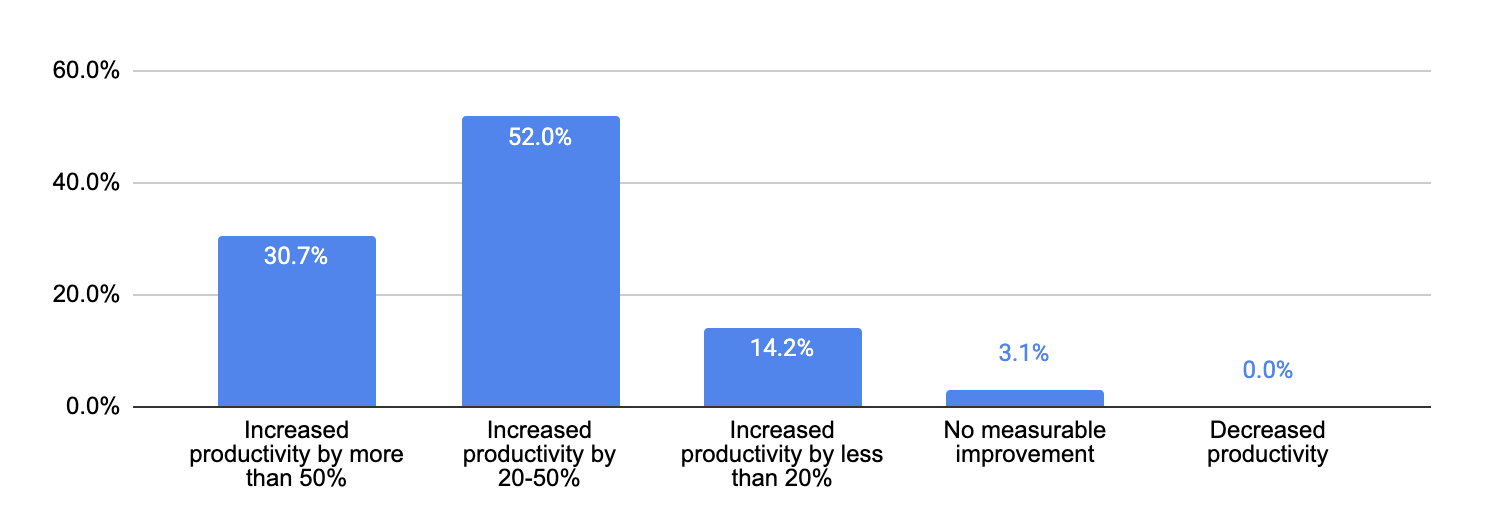
- Almost 97% of surveyed software development companies said AI improved their teams’ productivity.
- More than half of the respondents estimated that their productivity increased by 20%–50%.
- Only 3.1% of respondents said they haven’t seen any measurable improvement from using AI in software development, and no one said productivity had decreased.
The benefits of AI in software development are becoming measurable, with almost 97% of respondents reporting some degree of productivity improvement. These survey findings are similar to a trial conducted by Google researchers, which found that AI reduced the time Google software engineers needed to finish a complex development task by 21%.
Moving forward, software development companies should measure whether these gains translate into faster delivery, stronger code quality, and fewer defects. The real value of AI comes from improving the entire development process, not just producing faster code.
AI Productivity Gains from 2024 to 2026
.webp)
Key Takeaways
- In every survey year, the most common estimated productivity improvement was between 20% and 50%.
- The percentage of respondents reporting productivity gains above 50% rose from 7.5% in 2024 to 30.7% in 2026 — a gain of 23.2 percentage points, or roughly fourfold.
- No survey respondents reported decreased productivity in any of the three survey years.
A significant rise in productivity gains above 50% occurred across the survey years, suggesting that companies are increasingly more capable of turning AI adoption into substantial workflow improvements. This trend points to the software development industry moving beyond AI experimentation and into workflow development and management.
Main Goals for AI in Software Development
Key Takeaways
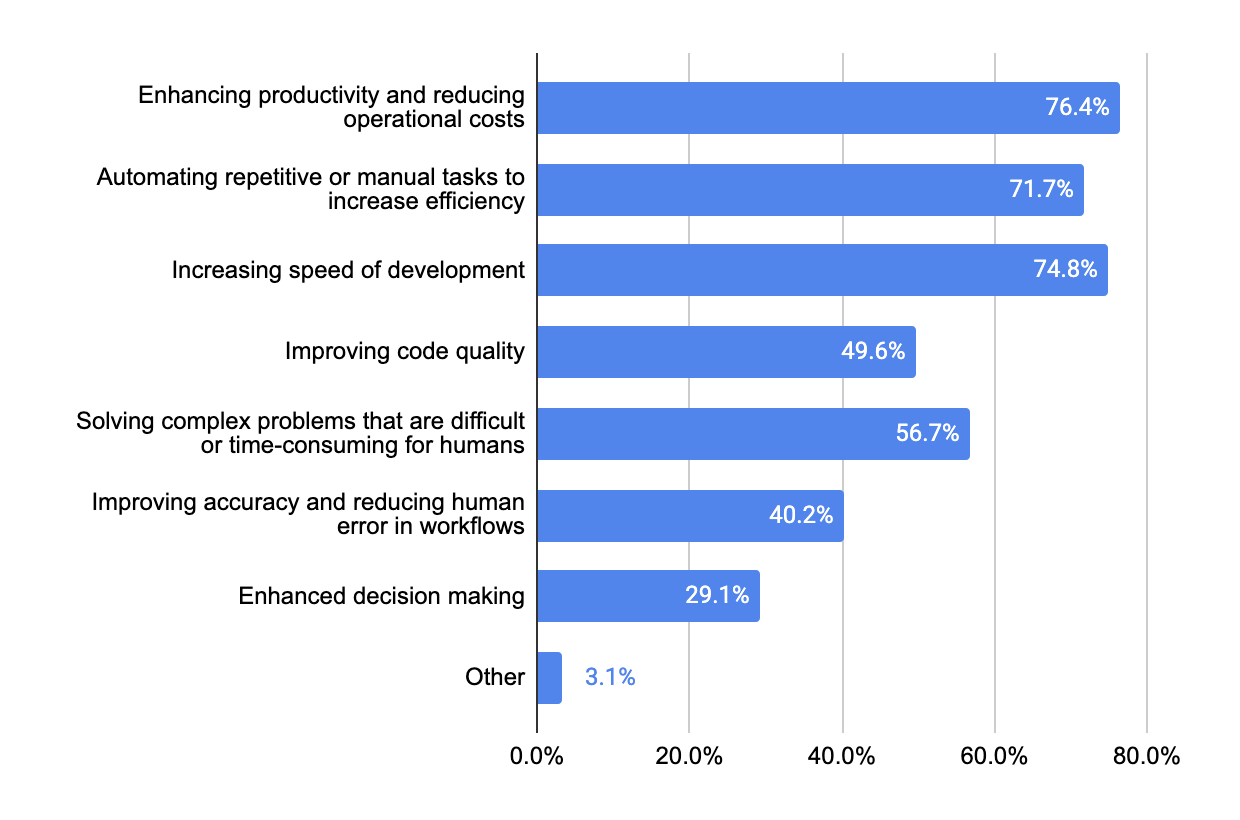
- More than three-quarters of respondents use AI to improve productivity and control operational costs.
- Close to three-quarters of respondents said that automating repetitive or manual tasks was a priority.
- Over half of the software development companies surveyed used AI to help solve complex or time-consuming problems.
The survey results reveal three clear priorities for AI use: reducing manual effort, accelerating delivery, and increasing output without a corresponding rise in resources or costs.
"AI lowers the barrier to generating code, but not to building good software. Without strong engineering expertise, it's easy to create insecure, unmaintainable systems that appear to work initially but become costly over time."
— Oleg Roberman, Delivery Director at Eastern Peak
To help gauge whether AI is delivering those benefits, companies should connect each goal to measurable outcomes. Relevant metrics can include cycle time, manual hours, development costs, defect rates, and rework.
Main Goals for AI in Software Development: A Two-Year Comparison
.webp)
Key Takeaways
- Across two survey years, productivity and cost reduction represented the leading goal for software development companies, despite falling from 84% to 76.4%.
- Automation and increasing development speed were also two of the top goals of software development teams in 2026.
- Code quality and decision-making had very small increases.
- Improving accuracy and reducing human error declined 11.7 percentage points, from 51.9% in 2025 to 40.2% in 2026.
The year-on-year changes in 2025 and 2026 show that companies are altering their expectations about what AI can achieve, this being a sign that there is an increasing recognition that while AI can enhance the capabilities of developers it will still produce output that needs to be validated.
Instead of randomly applying AI tools, development teams should match them to well-defined use cases, because there are obvious efficiency gains in repetitive tasks, documentation, code explanation and initial code generation. On the other hand, architecture, security and higher risk decisions will need more supervision by humans.
What It Costs
The Development Challenges AI Brings
Key Takeaways
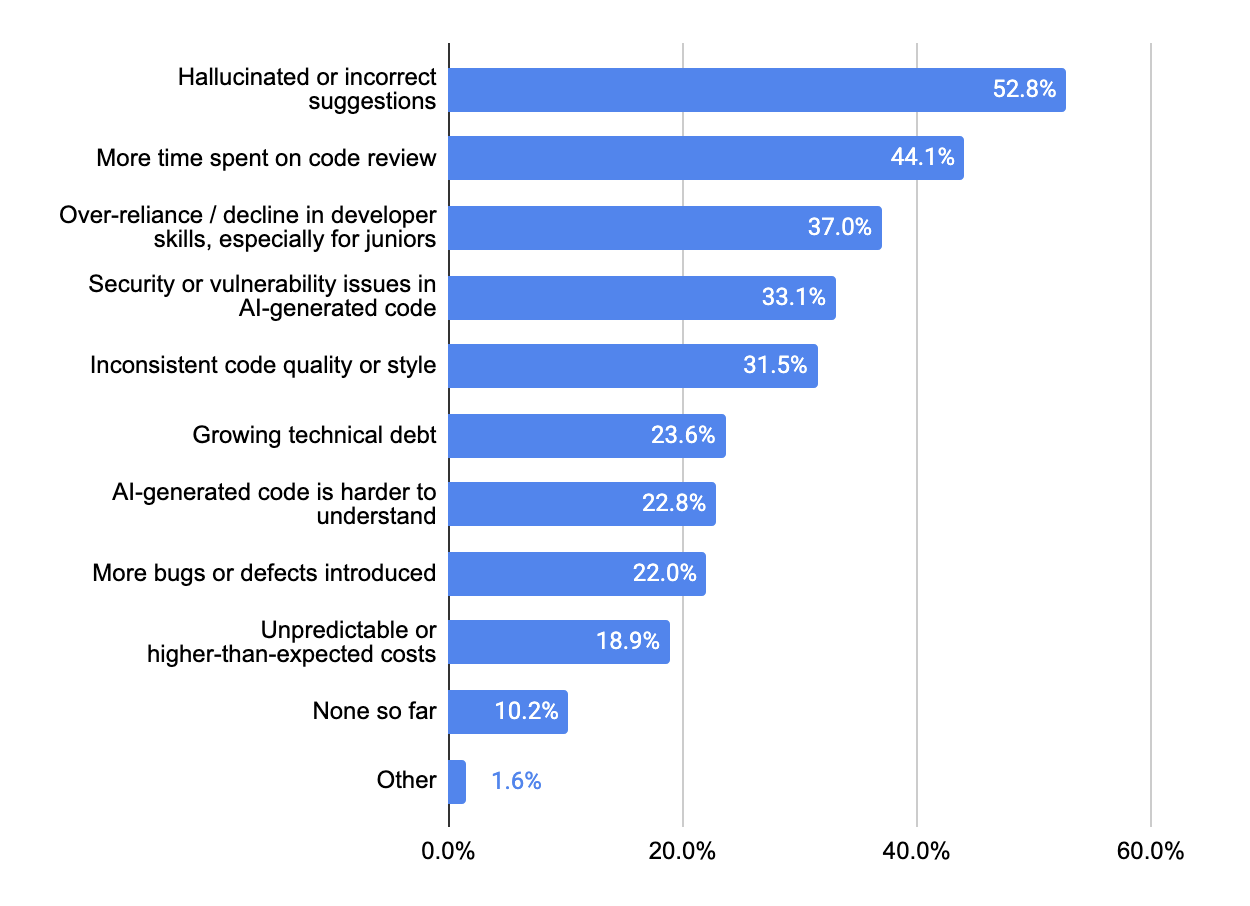
- Hallucinated or incorrect suggestions were the leading challenges cited, affecting 52.8% of software development companies.
- Almost one in five companies experienced unpredictable or higher-than-expected AI costs.
- About 90% of respondents experienced at least one downside from using AI in software development.
- One-third of software development companies in the survey experienced security or vulnerability issues with AI-generated code.
Three of the downsides respondents reported — technical debt, security issues, and inconsistent code quality — trace back to the same underlying pressure:
“At Cubix, we see AI as an accelerator, not a replacement, for software engineering. Our biggest concern is the growing tendency to prioritize speed over quality, leading to technical debt, security vulnerabilities, and poorly architected solutions generated without proper human oversight.”
— Salman Lakhani, Founder & CEO at Cubix
Although AI is increasing productivity significantly, the outputs it provides require significant human oversight. The results in this survey may indicate that AI is shifting part of the development workload from code creation to validation and correction.
The 37.0% reporting over-reliance or declining developer skills points to a slower-moving problem. Several respondents described the same mechanism: the work junior developers once learned from is the work AI now absorbs.
"AI makes you feel like you can build anything with it and that you're good at everything when you're not, so teams ship fast while quietly losing the ability to reason about their own systems. The layer where juniors used to learn by doing the grunt work is exactly what agents now absorb, which leaves no clear path to the next generation of seniors."
— Ivan Lovrić, CEO & Founder at Workspace
In the future, software development companies may benefit from reviewing standards that match the volume and type of AI-generated code coming into their workflows. Automated testing, security scanning, code review, and human accountability can play a role in preserving productivity gains while curbing defects and vulnerabilities.
Biggest Challenges of Implementing AI in Software Development
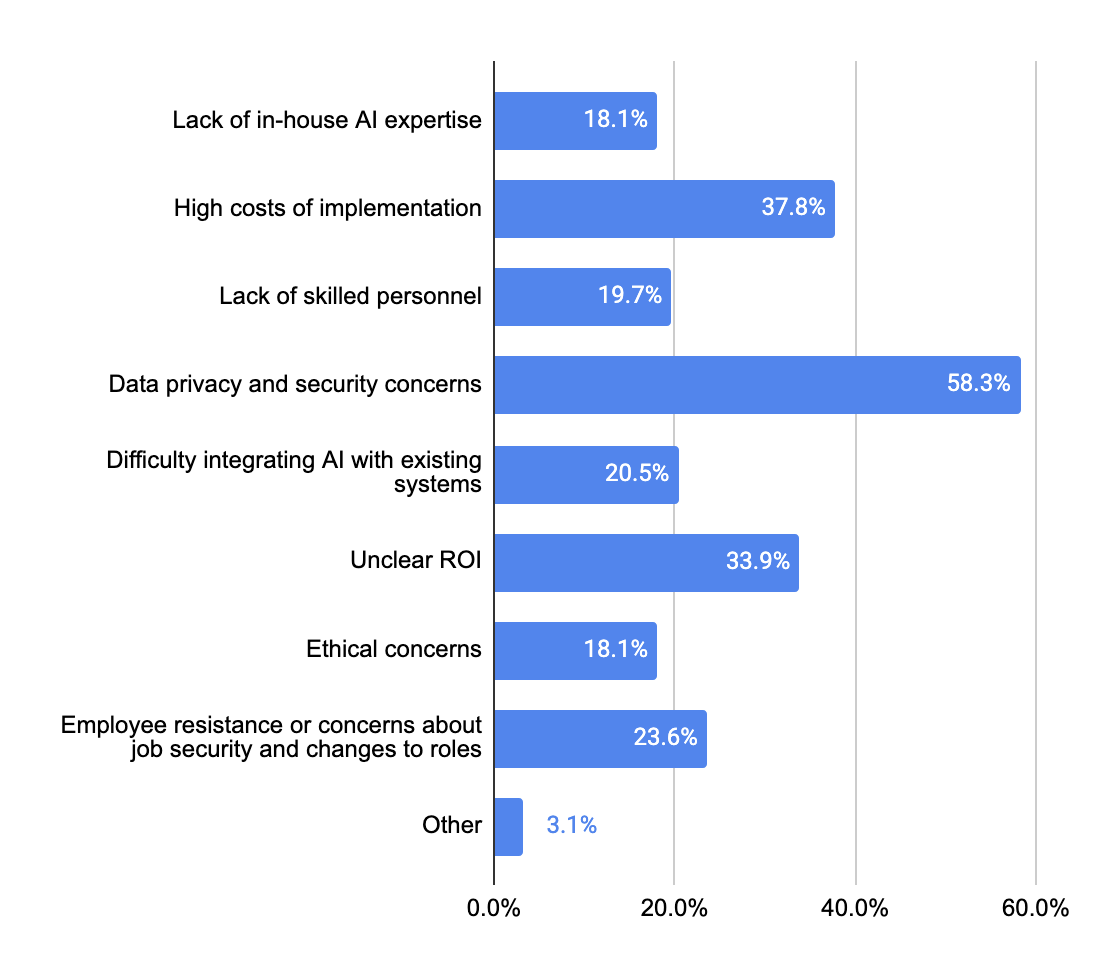
Key Takeaways
- Almost six in ten companies surveyed identified data privacy and security as an implementation challenge.
- High implementation costs affected 37.8% of these companies.
- Employee resistance and job-security concerns (23.6%) were cited slightly more often than difficulty integrating AI with existing systems (20.5%).
- About one-third of respondents struggled with unclear ROI.
- Respondents selected an average of 2.3 challenges each, indicating most companies face multiple simultaneous barriers.
When considered together, these findings show that implementing AI is as much of an organizational challenge as it is a technical one. Besides choosing capable technology, software development companies need to think about how to manage sensitive data, justify investments, prepare employees for new roles, and integrate new tools—without disrupting established environments.
"AI models are trained on the same patterns, so they keep reproducing the same solutions — and the same bugs, gaps, and anti-patterns — across thousands of products… Without human review and actual product thinking on top, AI doesn't raise the bar — it averages everything down to it."
— Vasyl Hrebeniuk, CEO & Founder at Yual
The risks of implementing AI are materializing too. IBM’s 2025 Cost of a Data Breach Report found that 13% of surveyed organizations experienced breaches involving AI models or applications, and of those organizations, 97% lacked the right AI access controls.
Biggest Challenges of Implementing AI in Software Development: A Comparison
.webp)
Key Takeaways
- Data privacy and security concerns rose 10.8 percentage points, from 47.5% in 2025 to 58.3% in 2026.
- High implementation costs increased 14.0 percentage points, from 23.8% to 37.8% — the largest year-over-year increase of any challenge measured.
- The difficulty of integrating AI into existing systems fell 8.2 percentage points (28.7% to 20.5%), while the lack of in-house AI expertise fell 10.6 percentage points (28.7% to 18.1%).
The comparison here suggests that AI adoption is becoming less constrained by technical readiness because reports of insufficient in-house expertise dropped 10.6 percentage points, and integration difficulties declined 8.2 percentage points. A smaller decrease in the lack of skilled personnel (23.8% to 19.7%, or 4.1 percentage points) points in the same direction, though this gap falls within the survey's margin of error and should be read as directional rather than conclusive.
Although this level of maturity brings with it another set of difficulties, security became the top concern in 2026, and the proportion of companies citing high implementation costs rose by roughly 59% relative to 2025 levels (23.8% to 37.8%). In other words, companies are getting better at implementing AI while at the same time becoming more aware of what is required for responsible and scalable adoption.
Software development companies may want to focus on controlling the total cost and risk of AI, not just expanding access. Before scaling a tool, leaders need to set up security requirements, estimate infrastructure and oversight costs, and define the outcomes that can demonstrate ROI.
Ethical Considerations for AI in Software Development
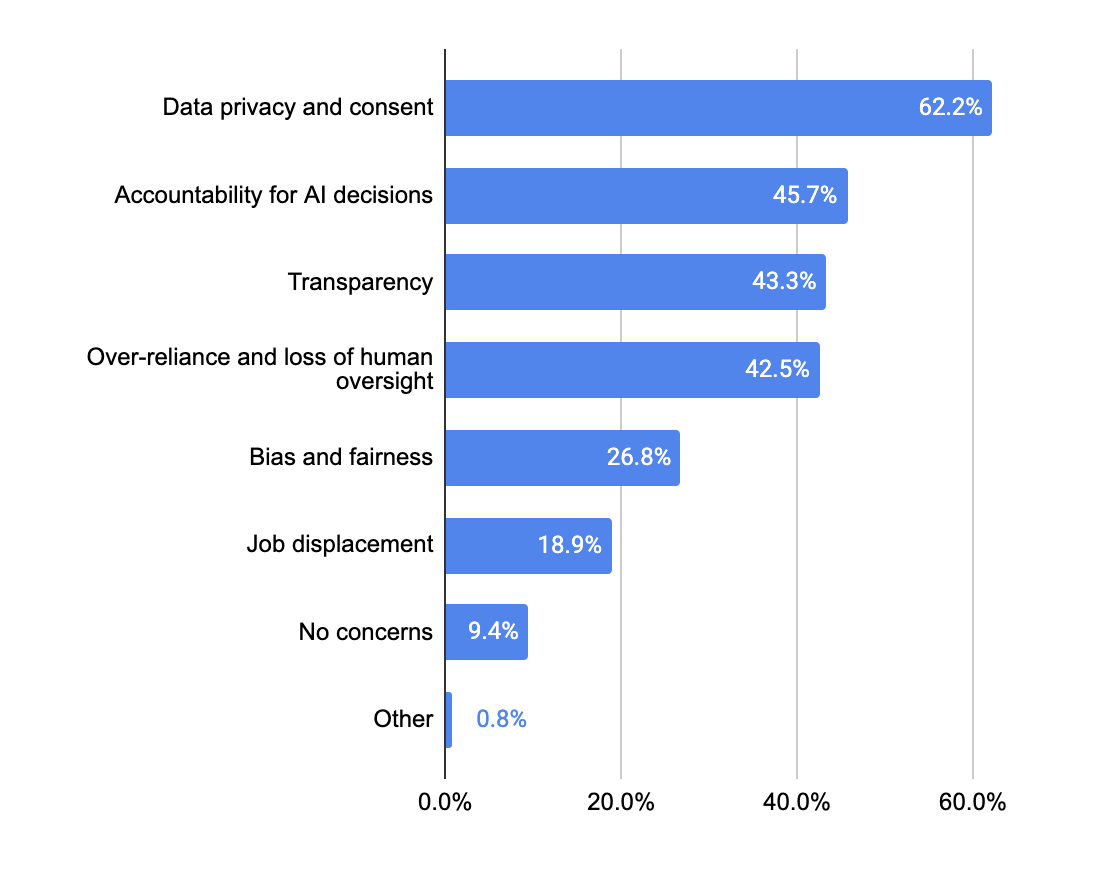
Key Takeaways
- Data privacy and consent were the leading ethical concerns, cited by 62.2% of companies.
- Accountability for AI decisions is a concern for close to half of these companies.
- Respondents selected an average of 2.4 ethical concerns each, and 90.6% named at least one.
- Only 9.4% of software development companies reported having no ethical concerns about implementing AI.
- Over-reliance and loss of human oversight (42.5%) was cited nearly as often as transparency (43.3%) and far more often than bias and fairness (26.8%) or job displacement (18.9%), indicating that practitioner ethical concerns center on control rather than on the societal issues that dominate public debate.
Ethical considerations extend well beyond preventing biased outputs and job displacement. It isn’t surprising that leading responses involve how companies collect and protect data, who’s responsible for AI-assisted decisions, and maintaining transparency.
For companies working with client data, the concern extends past protection to ownership:
"Using public AI tools may create uncertainty about ownership of generated code or expose proprietary information if prompts are not handled securely."
— Olena Petrashchuk, CEO at 4IRE Labs
These results align with Stack Overflow’s 2025 Developer Survey, where 46% of more than 49,000 developers said they didn’t trust the accuracy of AI-generated output. While AI can assist with analysis, coding, and recommendations, development teams still need people to verify outputs and accept responsibility for end products.
Software development companies can address these concerns by establishing data-handling rules, documenting where AI is used, and assigning responsibility for reviewing the outputs.
How Companies Are Adapting
In-House AI Expertise Leads the Market
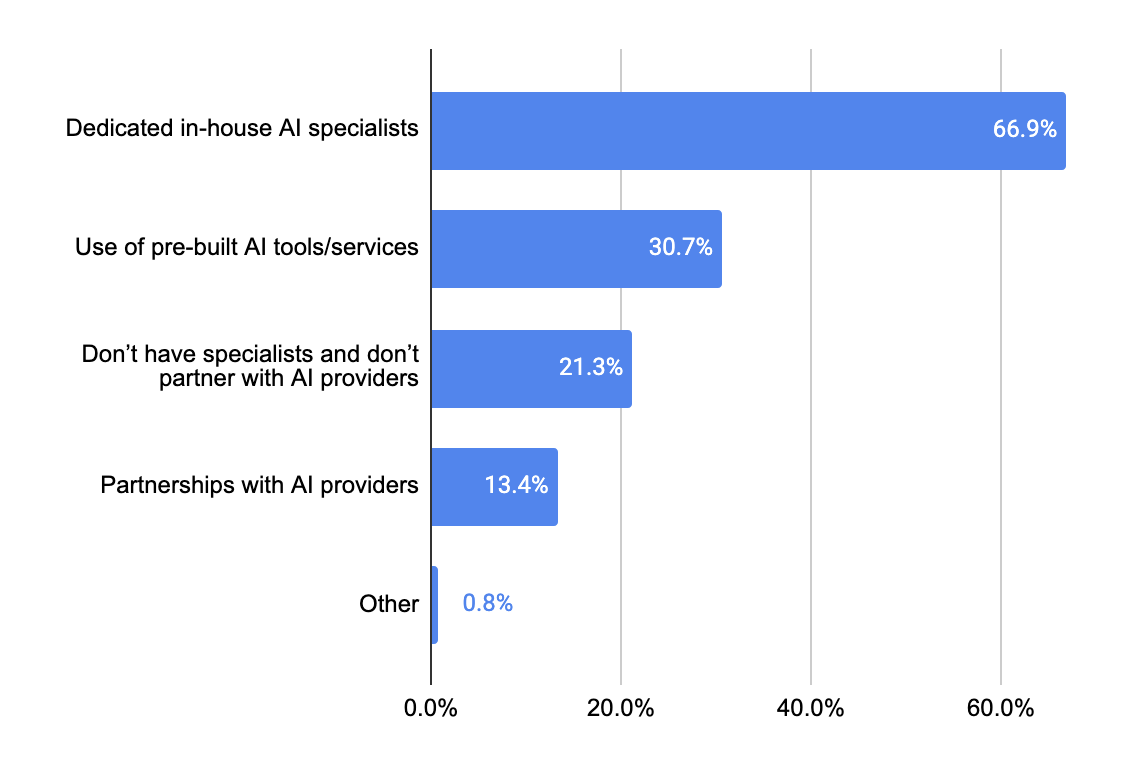
Key Takeaways
- Survey respondents were able to select multiple answers, meaning that some companies used a combination of internal expertise, commercial tools, and provider partnerships to manage their AI use.
- Dedicated in-house specialists were the leading source of AI expertise for software development companies, at 66.9%.
- More than one in five respondents had neither dedicated AI specialists nor partnerships with AI providers.
Two-thirds of respondents maintain dedicated in-house AI specialists, and that share has risen every survey year — evidence that these companies treat AI expertise as a core internal capability rather than a bought-in service. By keeping and investing knowledge within the company, a software development group can maintain more control over how models and tools are integrated, monitored, and applied to client projects.
Still, in-house specialists shouldn't be the only people responsible for AI systems. A combination of centralized ownership, broader training, and external expertise, when appropriate, can help maintain a strong foundation.
In-House AI Expertise Leads the Market: A Comparison
.webp)
Key Takeaways
- In-house AI specialists are the main source of AI expertise, the figure rising from 45% in 2024 to 59.5% in 2025 and then to 66.9% in 2026.
- In 2024, the proportion of people using ready-made AI tools and services was 30.0%, which dropped to 17.7% in 2025 and then rose again to 30.7% in 2026. This kind of dip followed by a recovery in small samples is more likely to be due to the way the question was worded or the makeup of the sample than to an actual change in behavior and therefore needs to be interpreted with caution.
- Partnerships with AI providers moved from 7.5% in 2024 to 13.4% in 2026 — a difference of only two or three companies at 2024's base, and not a reliable trend.
The three-year comparison shows that companies are looking at AI expertise as an internal capability, and building dedicated teams can give organizations greater control over how AI is put into workflows.
At the same time, growth in the use of pre-built tools/services and provider partnerships seems to point toward a blended approach. Here, internal specialists can guide AI strategy and governance, while outside experts can help fill capability gaps or support specialized applications.
How Software Companies Develop AI Expertise
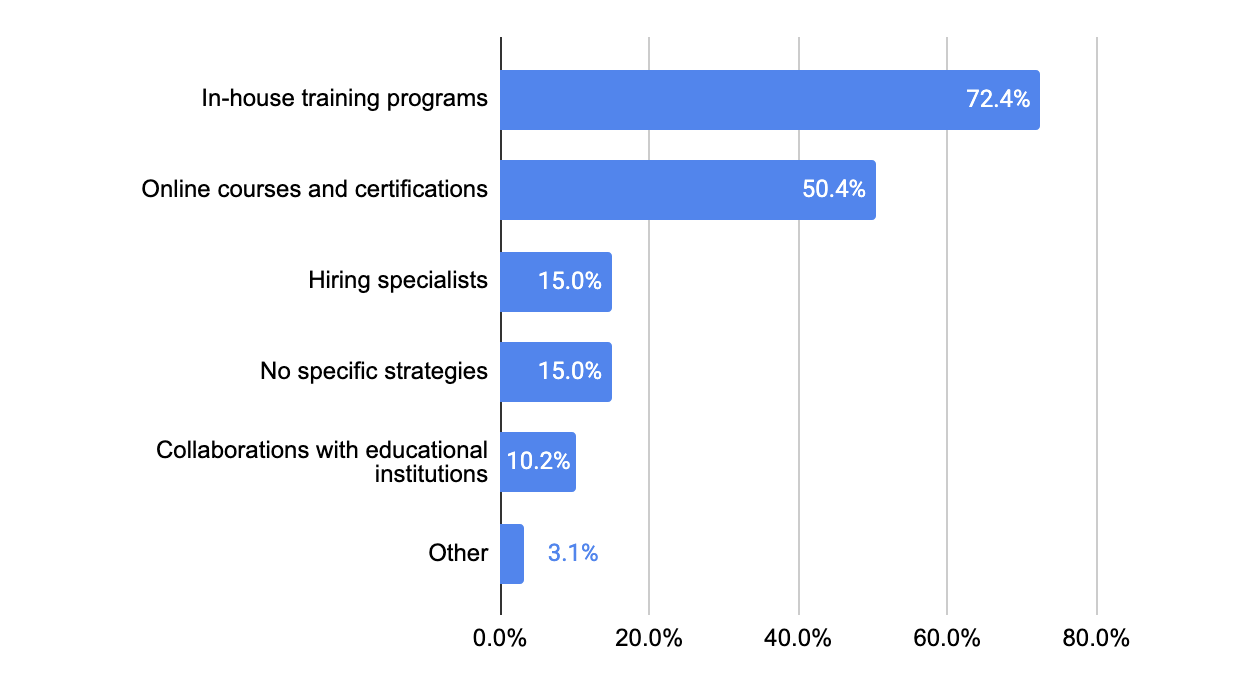
Key Takeaways
- In-house training programs were the leading strategy used to develop expertise, according to 72.4% of respondents.
- Just over half of participating companies used online courses and certifications to help employees develop skills.
- Fifteen percent of software development companies surveyed reported having no specific training strategy in place.
Software development companies significantly favor developing AI skills within their existing teams, and in-house training was almost five times as common as hiring specialists.
When searching for training resources, companies will likely want to look for programs that cover more than just the operation of specific tools. Development teams will also need resources for reviewing AI-generated code, protecting data, identifying security concerns, and screening outputs for inaccuracies. Across these functions, the main goals will be to preserve code quality and human accountability.
“We believe AI is a powerful tool that is here to stay, but the most effective way to use it is by combining its capabilities with human expertise. When implementing AI tools, companies need to properly train developers so they understand exactly how to use them, when to rely on them, and when human review is essential.”
— Damian Wasserman, Co-Founder at BEON.tech
How Software Companies Develop AI Expertise: A Comparison
.webp)
Note: the "No specific strategies" and "Collaborations with educational institutions" options were not offered identically in all three survey years. The move from 0.0% to 21.5% for "No specific strategies" between 2024 and 2025 reflects a change in response options, not a change in company behavior. These two series should not be read as trends.
Key Takeaways
- In-house training increased from 57.5% in 2024 to 72.4% in 2026 — a gain of 14.9 percentage points.
- Online courses and certifications held steady between 44.3% and 50.4% across all three years.
- Reliance on external AI specialist hiring fell 20.0 percentage points, from 35.0% in 2024 to 15.0% in 2026 — a drop of roughly 57% in relative terms.
- The overall trend favors developing existing employees over recruiting outside specialists.
The results Techreviewer has gathered show a clear movement toward developing AI expertise inside software development company teams through in-house training. Online coursework is also a preferred method of helping employees develop more expertise, and this could be convenience-based or situational, depending on the subject of interest.
Overall, the findings here point toward AI becoming a broadly distributed development capability rather than knowledge held exclusively by contracted specialists. Companies increasingly appear to be integrating AI education into ongoing workforce development as an educational requirement.
Access to Software Developers with AI Expertise
Key Takeaways
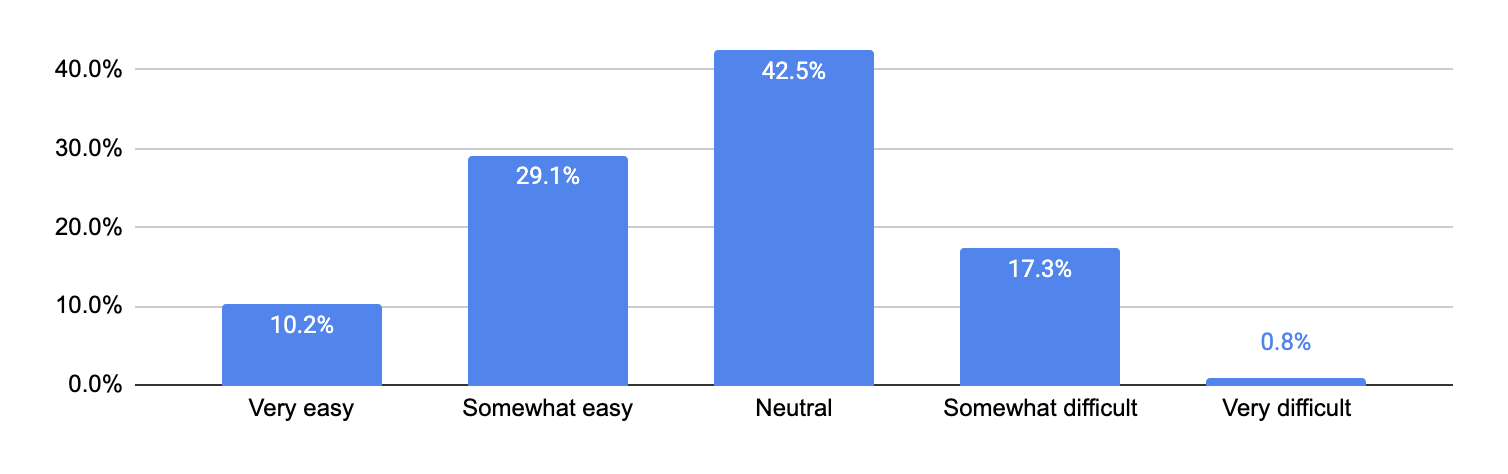
- A combined 39.3% of software development companies surveyed found it very or somewhat easy to recruit developers with AI expertise.
- Just one of the 127 companies surveyed described recruitment as very difficult.
- The results Techreviewer received indicate there isn’t a severe, widespread shortage of AI-capable developers.
The results of Techreviewer’s survey related to finding AI expertise present a relatively balanced talent market rather than a skills shortage. While 42.5% of respondents remained neutral, companies reporting an easy search for expertise outnumbered those experiencing difficulty.
The fact that there is a steady supply of candidates doesn't automatically imply that there is a steady demand. One outsourcing company gave an example of a change in what clients are requesting:
"We're already seeing clients reduce the number of developers they request and increasingly prefer hiring only senior engineers who can effectively leverage AI tools and handle more complex responsibilities."
— Karen Hovhannisyan, Co-Founder & CTO at BeeWeb
Nevertheless, employers shouldn’t assume that familiarity with generative AI tools represents comprehensive AI expertise. To improve hiring decisions, companies can identify the exact technical capabilities each position requires and evaluate candidates through relevant, practical assignments. They can also combine targeted recruitment with internal training to develop expertise around internal systems, clients, and development standards.
Access to Software Developers with AI Expertise: A Comparison
.webp)
Key Takeaways
- The combined percentage of respondents finding recruitment very or somewhat easy barely changed, moving from 39.5% in 2025 to 39.3% in 2026.
- Meanwhile, the combined percentage of respondents having some degree of recruitment difficulty increased slightly from 16% in 2025 to 18.1% in 2026.
- Despite the overall increase, the percentage describing the search for AI-skilled developers as very difficult fell from 3.7% to only 0.8%.
- These combined results indicate there isn’t a major year-over-year change in the availability of software developers with AI expertise.
The two-year comparison shows little overall movement in companies’ ability to find developers with AI expertise. Although combined difficulty rose by 2.1 percentage points, the share of companies describing recruitment as "very difficult" fell sharply. Both movements are smaller than the survey's margin of error and should not be read as a confirmed trend. This could mean that the talent market hasn’t become constrained, although some employers may still encounter challenges finding candidates with the precise combination of AI, software engineering, and industry-specific knowledge they require.
Software development companies can respond by defining AI expertise by role rather than treating it as a universal skill set. Separating basic proficiency with AI development tools from deeper experience in model integration, security, data engineering, or machine learning can help produce better job descriptions and candidate evaluations.
The Impact of Regulation on AI Development Practices
Key Takeaways
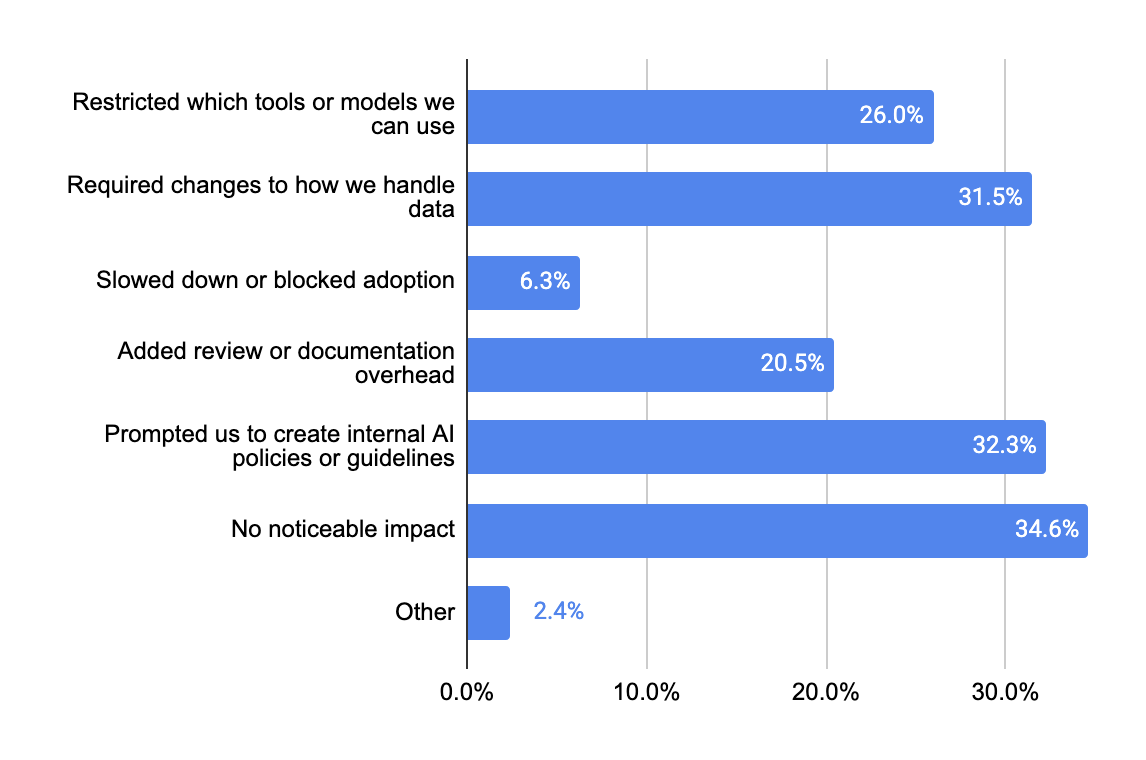
- Regulation prompted 32.3% of software development companies to create internal AI policies or guidelines in 2026.
- Twenty-six percent of the survey’s 127 respondents restricted the tools or models their teams could use.
- About one-third of the companies surveyed reported no noticeable regulatory impact, while 6.3% said regulation slowed or blocked AI adoption.
Regulation appears to be influencing how companies govern AI more than whether they adopt it—and many companies have changed their policies, data practices, and documentation requirements as a result.
For companies looking to create formal AI governance frameworks, it will be important to identify approved tools, define what kind of data developers can share, assign and monitor output review work, and document AI use in client work. Regular review is also essential.
The Future of AI in Software Development
Key Takeaways
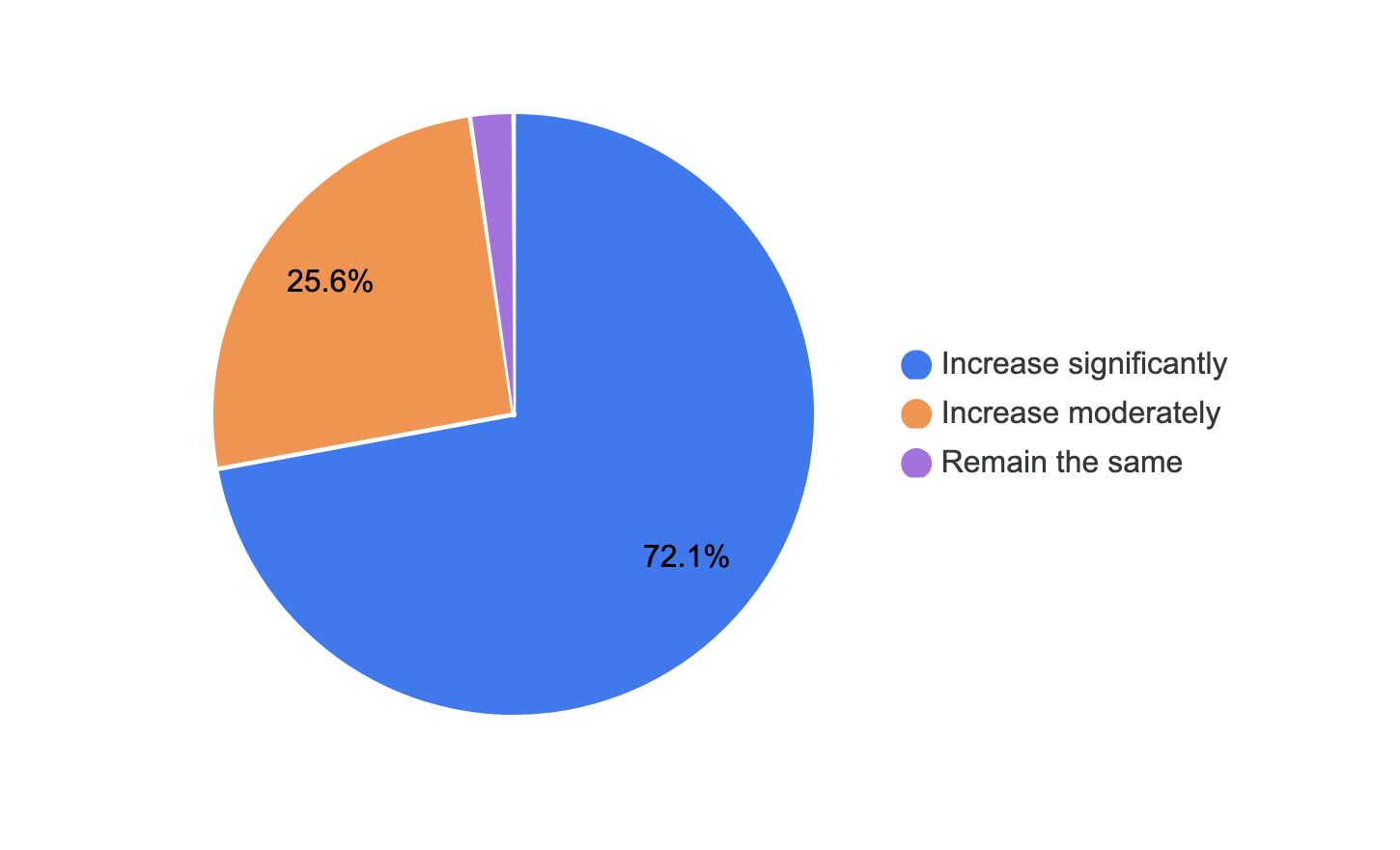
- Almost 98% of surveyed companies believe AI’s role in software development will increase in the next five years.
- More than seven in ten of the companies surveyed expect the role of AI to increase significantly.
- Only three of the 127 respondents expect AI’s role to stay the same.
Most software development companies believe AI will become increasingly influential in the coming years. Only 2.4% believe its role won’t change at all—and no respondents anticipate a decline. The consensus noted here shows that AI is becoming a large component of software engineering.
The results here don’t predict what this expansion will look like in the coming years. AI could very well assume a greater role in coding, testing, documentation, security analysis, project planning, and other parts of the development lifecycle. But its influence will also depend on a range of improvements, from reliability and governance to data protection and integration with existing systems.
Companies choosing to prepare now will be in a better position to gain benefits as they learn to manage risks. And overall, the competitive advantage will come from applying AI effectively—not merely adopting more of it.
Conclusion
What the 2026 Data Means for Software Development
Taken as a whole, Techreviewer’s 2026 survey points to a software development market entering a more mature phase of AI adoption. The competitive divide now forming is between companies that simply provide developers with AI tools and those that can turn those tools into reliable, secure improvements.
The central concern from the data gathered is that the benefits and risks of AI are growing together. Companies are reporting larger productivity gains and using AI across more of the development lifecycle, but they’re also coming across inaccurate outputs, additional review work, security concerns, and higher costs of implementation.
"Two companies can use similar models and get very different results. The stronger team defines where AI is allowed to act, what context it receives, how humans review the output, and how the result moves into production work."
— Roman Surikov, CEO at Ronas IT
Will AI replace programmers? Will AI replace software engineers? Techreviewer’s results point to a more complicated outcome: AI is changing how development work is performed, but companies still need human judgment, oversight, and accountability. As AI-generated work expands, that expertise is likely to become more valuable, not less.
Strategic Recommendations
- Compete on outcomes instead of on AI adoption. Buyers are going to increasingly expect vendors to use AI, so software development companies should demonstrate how that AI use can improve delivery, cost, quality, or responsiveness.
- Treat governance as part of service quality. Data protections, approved AI tool policies, human review, and accountability should become standard components of AI-enabled delivery.
- Acquire expertise that cannot be taken over by automation. Alongside being skilled with AI tools, make investments in architecture, security, client communication, employee knowledge, and technical judgment.
- Scale only what produces a verified value. Measure productivity gains against the time and money spent on reviewing outputs, correcting defects, maintaining infrastructure, and managing security.
- Make the responsible AI use clear to buyers. Vendors that explain where AI is used, how outputs are reviewed, and how client information is protected will be better positioned to earn trust from clients as AI use increases.
Some of the companies that participated in the survey:
ND Labs, Zfort Group, Notch, PowerGate Software, Akveo, Seaflux Technologies, Findy IoT, launchOptions, Workspace, Detach Solutions, Euristiq, Mystique Brand Communications, Innov8world, Scarfaze, BEON.tech, Cubix, Diffco, Lizard Global, Technocrackers, TaskFord, Techvoot Solutions, Cloudester Software, Seedium, Freshcode, Brocoders, Ein-Des-Ein, Stfalcon, ProductDock AG, Yellow Systems, BeeWeb, Kansoft Solutions, Smartym Pro, Artjoker, One Beyond, AQe Digital, C-Metric, Troy Web Consulting, CODECAVE PRO, Graphiters, Nesa Software, eSparkBiz, TestFort, Dev Centre House Ireland, Future Processing, GMTA Software, WebbyLab, Webisoft, Dizz Agency, Easify Technologies, Revolute X Digital, Peachr, Eastern Peak, Akoode Technologies, Yual Inc, Serbyte Web Design & Development, Wheeling Software, Plexteq, Altar.io, Travancore Analytics, Ronas IT, SoftwareOrbits, SAERIN TECH LLC, Tone Singleton, Bharat Swasth, SapientPro, Sailing Byte, PWN-ALL, Altabel Group, ACL Digital, Odeonus LLC, Kalp Technocrats, InspieNeo Solutions Pvt, DenebrixAI, Mallow Technologies, Solar Digital, SECL Group, Volts Consulting, Right Tail Corp, Orange Dice Solutions, Amplence, Downtown Applications, NetClubbed, WebEra Solutions PK, Coderfy, Dynamic Solution Innovators, Adamo APAC, Softellar